Trump Administration Officials Question Pennsylvania Measles Mortality Data
Federal health officials have publicly challenged the accuracy of reports linking two recent deaths in Pennsylvania to measles. The dispute raises questions regarding the reliability of state-level health reporting and potential implications for federal public health oversight.
Choseno Civic News Desk August 28, 2026 1 min read PA, US
Dateline: Washington, D.C.
On August 27, 2026, senior officials within the Trump administration expressed public skepticism regarding the official cause of death for two individuals in Pennsylvania. The state had previously attributed these fatalities to measles, but federal authorities are now indicating that the circumstances surrounding these cases remain unverified.
Policy & Taxpayer Impact
The dispute centers on the integrity of public health data reporting, which informs federal resource allocation and emergency response protocols. Taxpayers fund the Centers for Medicare and Medicaid Services (CMS) to ensure accurate health tracking; discrepancies between state and federal reporting can lead to inefficient distribution of medical supplies and public health funding, potentially impacting state-level health budgets.
Political & Legal Stakes
The intervention by CMS Administrator Dr. Mehmet Oz highlights a growing tension between federal oversight and state-level health reporting. By questioning the validity of the Pennsylvania data, the administration is asserting a more active role in verifying local health statistics, which could lead to future legal or administrative challenges regarding how states report infectious disease outbreaks to the federal government.
The Debate
Proponents of the federal inquiry argue that accurate data is essential to prevent public panic and ensure that federal interventions are based on verified clinical evidence rather than potentially flawed state reporting. Conversely, critics suggest that questioning established state health findings may undermine public trust in local health departments and complicate the ability of state officials to manage localized health crises without federal interference.
Public Accountability Context
As the investigation into the Pennsylvania cases continues, the public remains waiting for a definitive reconciliation of the data. This situation serves as a reminder of the importance of transparent communication between state health agencies and federal oversight bodies to maintain public confidence in the national healthcare infrastructure.
Related Coverage in Politics
See all Politics newsPolitics
US Aug 28, 2026
Wisconsin politicians joke about Lake Michigan name change
Wisconsin politicians made jokes out of President Trump’s executive order aiming to rename Lake Ontario, jesting about the renaming of Lake Michigan, another Great Lake. On Thursday, the president put his signature on an executive order formally changing the name of Lake Ontario to “Lake America” amid U.S.-Canadian trade tensions. “We’re going to be changing...
Read full article
Politics
US Aug 27, 2026
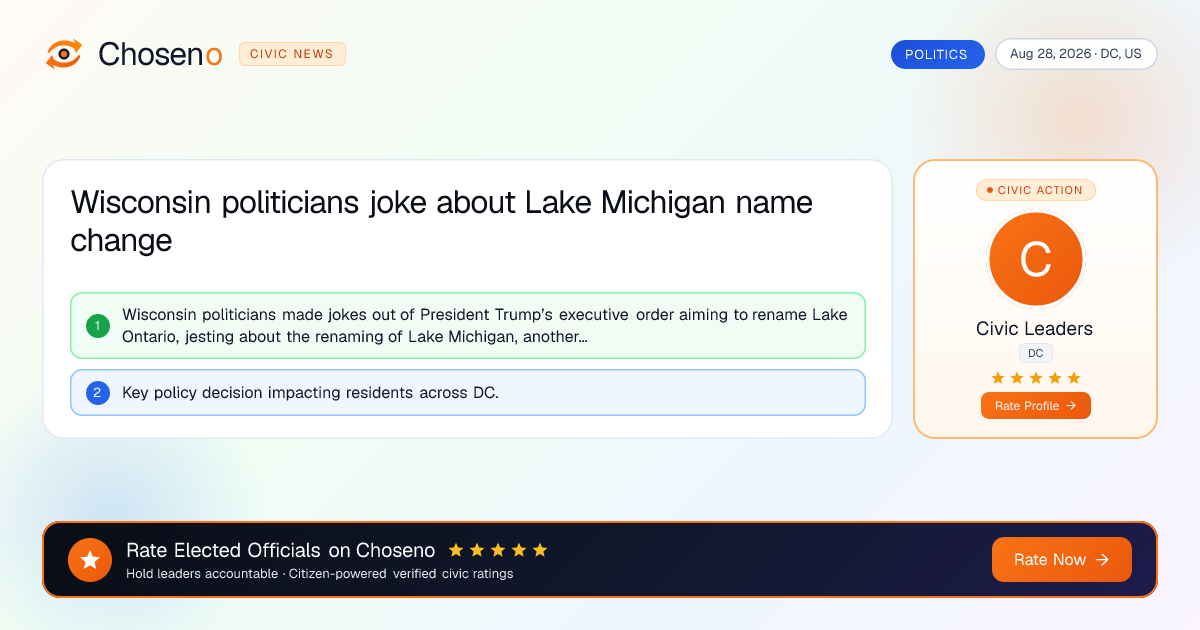
President Trump Navigates GOP Internal Friction Over Data Center Expansion
President Trump is managing internal Republican skepticism regarding the rapid expansion of data centers as the midterm elections approach. This political tension forces a reevaluation of federal support for the industry against growing concerns from within his own party.
Read full article
Politics
US Aug 27, 2026
FDA Authorizes Updated COVID-19 Vaccines for High-Risk Populations
The Food and Drug Administration has authorized new mRNA and non-mRNA COVID-19 vaccine formulations for individuals at higher risk of severe illness. This regulatory action initiates the distribution process to healthcare providers across the country.
Read full article