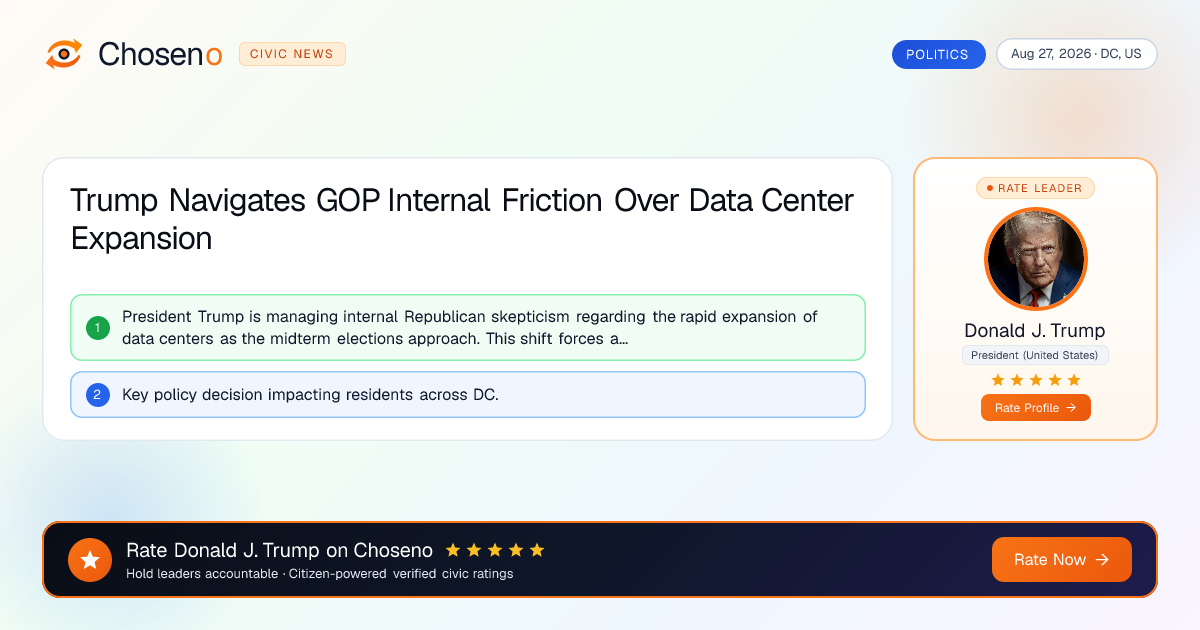
Trump Navigates GOP Internal Friction Over Data Center Expansion
President Trump is managing internal Republican skepticism regarding the rapid expansion of data centers as the midterm elections approach. This shift forces a reconciliation between the administration's pro-industry stance and growing concerns from party members about local infrastructure and resource impacts.
Choseno Civic News Desk August 28, 2026 2 min read DC, US
Dateline: Washington, D.C.
As the midterm election cycle intensifies, President Trump is facing a complex political landscape regarding the rapid proliferation of data centers across the United States. According to reporting by The Hill Politics, the administration is currently attempting to reconcile its long-standing support for the technology sector with increasing resistance from within the Republican party.
Policy & Taxpayer Impact
The expansion of data centers carries significant implications for local infrastructure, particularly concerning energy consumption and grid stability. While these facilities are often touted as economic drivers, the rapid development has prompted concerns regarding the strain placed on public utilities. Taxpayers are increasingly focused on whether the economic benefits of these facilities outweigh the potential costs associated with grid upgrades and resource allocation.
Political & Legal Stakes
The tension highlights a growing divide within the GOP. While the administration has historically championed the industry as a pillar of technological advancement, many rank-and-file Republicans are expressing skepticism. This friction creates a difficult political environment for the President, who must maintain his base of support while addressing the localized concerns of party members who are hearing from constituents wary of the rapid industrial footprint of these facilities.
The Debate: Proponents vs. Critics
Proponents of the data center industry argue that these facilities are essential for maintaining American competitiveness in the global digital economy, citing job creation and tax revenue as primary benefits. Conversely, critics within the Republican party argue that the industry's rapid growth is outpacing the capacity of local infrastructure. These opponents emphasize the need for more rigorous oversight and caution regarding the long-term impact on energy prices and the reliability of the power grid for residential and small business consumers.
Public Accountability Context
As the midterm elections draw closer, the administration's ability to navigate this internal party conflict will be a key indicator of its legislative priorities. Citizens are encouraged to monitor how their local and federal representatives balance the demands of the tech industry against the infrastructure and resource concerns raised by their communities. The ongoing discourse suggests that data center policy will remain a significant point of contention throughout the remainder of the election cycle.
Rate the people mentioned in this article

Related Coverage in Politics
See all Politics newsPolitics
US Aug 28, 2026
Wisconsin politicians joke about Lake Michigan name change
Wisconsin politicians made jokes out of President Trump’s executive order aiming to rename Lake Ontario, jesting about the renaming of Lake Michigan, another Great Lake. On Thursday, the president put his signature on an executive order formally changing the name of Lake Ontario to “Lake America” amid U.S.-Canadian trade tensions. “We’re going to be changing...
Read full article
Politics
US Aug 27, 2026
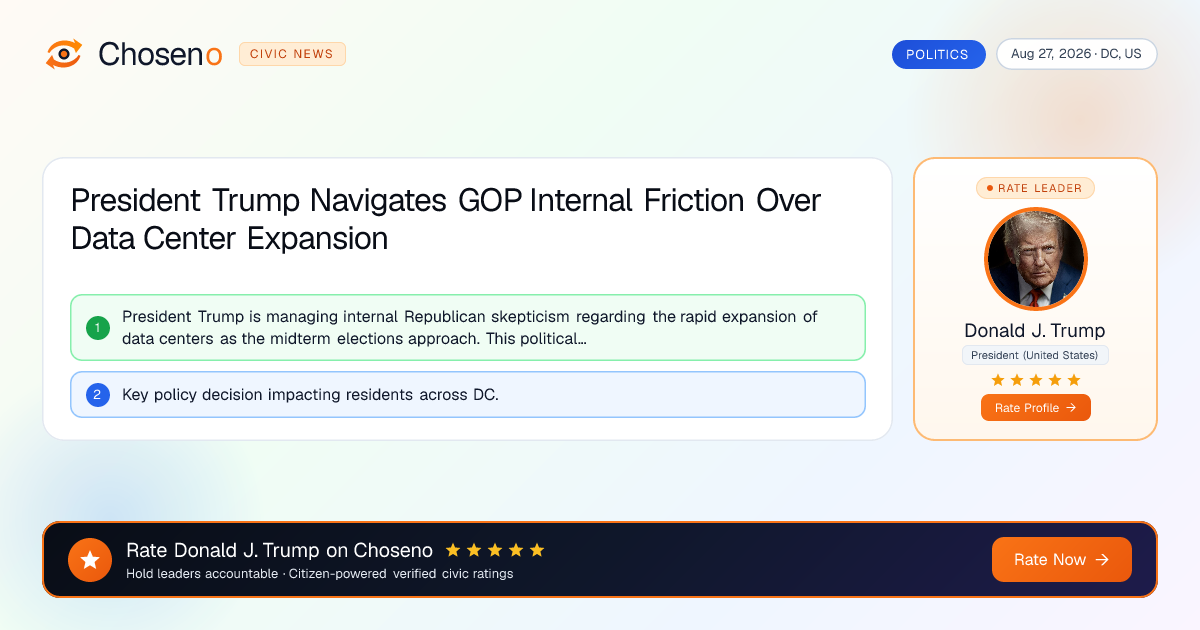
President Trump Navigates GOP Internal Friction Over Data Center Expansion
President Trump is managing internal Republican skepticism regarding the rapid expansion of data centers as the midterm elections approach. This political tension forces a reevaluation of federal support for the industry against growing concerns from within his own party.
Read full article
Politics
US Aug 27, 2026
FDA Authorizes Updated COVID-19 Vaccines for High-Risk Populations
The Food and Drug Administration has authorized new mRNA and non-mRNA COVID-19 vaccine formulations for individuals at higher risk of severe illness. This regulatory action initiates the distribution process to healthcare providers across the country.
Read full article