USS Theodore Roosevelt Scheduled for Middle East Deployment
The U.S. military is preparing to deploy the aircraft carrier USS Theodore Roosevelt to the Middle East to replace a currently stationed carrier. This rotation of naval assets represents a continued commitment of taxpayer-funded military resources to the region.
Choseno Civic News Desk August 27, 2026 2 min read DC, US
Dateline: Washington, D.C.
According to reporting by The Hill Politics, the U.S. military has confirmed that the aircraft carrier USS Theodore Roosevelt is scheduled to sail to the Middle East in the coming weeks. This movement is part of a standard operational rotation intended to relieve another aircraft carrier currently stationed in the area.
Policy & Taxpayer Impact
The deployment involves the movement of a major naval strike group, which requires significant logistical support and operational funding. While specific costs for this individual rotation were not disclosed in the source reporting, maintaining a continuous carrier presence in the Middle East represents a substantial ongoing expenditure of federal defense funds, covering fuel, personnel, and maintenance requirements for the vessel and its accompanying strike group.
Political & Legal Stakes
The decision to maintain a carrier presence in the Middle East is a core component of U.S. national security strategy. The legal framework for these deployments typically falls under the executive branch's authority to manage military assets for regional stability and deterrence. The rotation ensures that the U.S. maintains a consistent capability to respond to regional contingencies without gaps in naval coverage.
The Debate: Proponent vs. Critic
Proponents of the deployment argue that a persistent naval presence is essential for projecting power, deterring regional adversaries, and protecting international shipping lanes. They maintain that the rotation is a necessary administrative function to ensure the readiness of the fleet. Conversely, critics often question the long-term strategic necessity of maintaining such a high-intensity presence in the Middle East. Opponents may argue that these deployments strain military resources and personnel, potentially diverting focus from other global security priorities or increasing the risk of unintended escalation in a volatile region.
Public Accountability Context
Citizens are encouraged to monitor the Department of Defense's official announcements regarding fleet movements to understand how military assets are allocated. As the USS Theodore Roosevelt prepares for transit, the public can evaluate the effectiveness of these deployments in achieving stated national security objectives versus the fiscal and geopolitical costs associated with sustained regional military engagement.
Related Coverage in Politics
See all Politics newsPolitics
US Aug 28, 2026
Wisconsin politicians joke about Lake Michigan name change
Wisconsin politicians made jokes out of President Trump’s executive order aiming to rename Lake Ontario, jesting about the renaming of Lake Michigan, another Great Lake. On Thursday, the president put his signature on an executive order formally changing the name of Lake Ontario to “Lake America” amid U.S.-Canadian trade tensions. “We’re going to be changing...
Read full article
Politics
US Aug 27, 2026
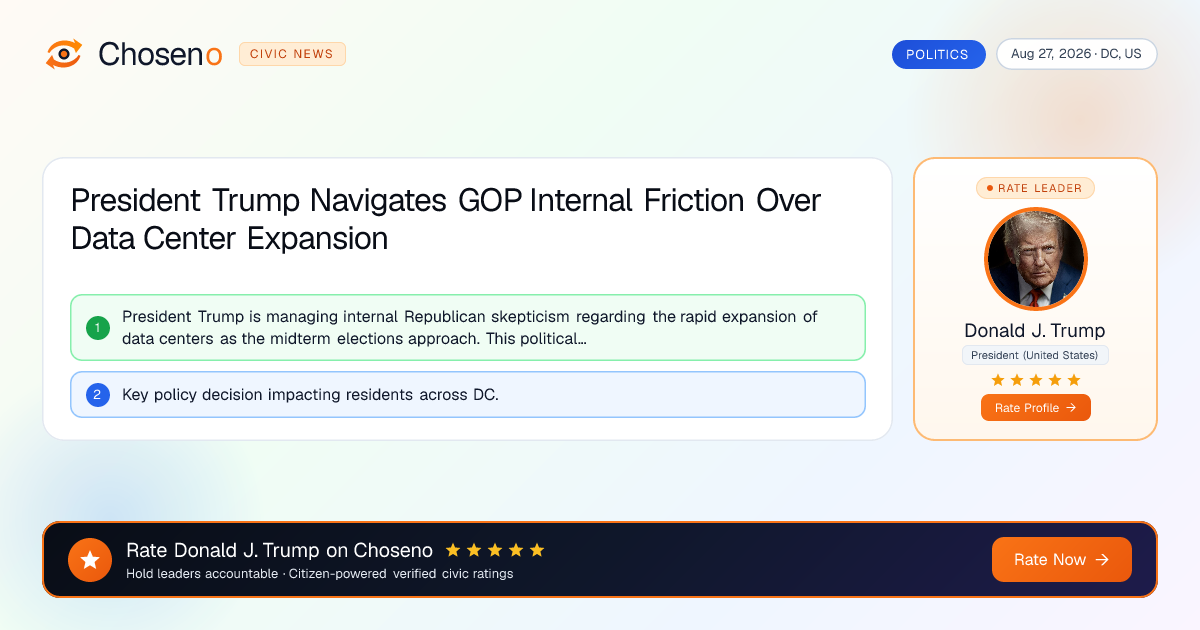
President Trump Navigates GOP Internal Friction Over Data Center Expansion
President Trump is managing internal Republican skepticism regarding the rapid expansion of data centers as the midterm elections approach. This political tension forces a reevaluation of federal support for the industry against growing concerns from within his own party.
Read full article
Politics
US Aug 27, 2026
FDA Authorizes Updated COVID-19 Vaccines for High-Risk Populations
The Food and Drug Administration has authorized new mRNA and non-mRNA COVID-19 vaccine formulations for individuals at higher risk of severe illness. This regulatory action initiates the distribution process to healthcare providers across the country.
Read full article