$2 Billion Tampa Bay Rays Stadium Development Clears City Council Approval
The Tampa City Council has officially authorized the progression of a $2 billion stadium project for the Rays. This decision marks a significant shift in the city's infrastructure and sports development landscape.
Choseno Civic News Desk August 28, 2026 1 min read FL, US
Dateline Lead
TAMPA, FL — The Tampa City Council has formally approved moving forward with a $2 billion stadium plan for the Tampa Bay Rays. This legislative action signals a major advancement in the long-discussed project, establishing a path for the development of a new home for the Major League Baseball franchise.
Policy & Taxpayer Impact
The approval authorizes the next phase of a $2 billion capital investment. While the project is framed as a cornerstone for urban revitalization, the financial structure involves significant public-private coordination. Taxpayers and city officials are now tasked with overseeing the fiscal execution of this multi-billion dollar commitment to ensure it aligns with municipal budgetary constraints.
Political & Legal Stakes
This decision represents a critical juncture for local leadership, as the council must now navigate the complexities of land use, construction contracts, and long-term economic projections. The legal framework surrounding the stadium agreement will likely dictate the city's financial exposure and the team's tenure in the region for decades to come.
The Debate
Proponents of the stadium plan argue that the facility will serve as a catalyst for economic growth, job creation, and increased tourism in the Tampa area. Conversely, critics have raised concerns regarding the allocation of public funds, questioning whether the $2 billion investment provides sufficient return on investment for the average resident compared to other municipal priorities like infrastructure or public services.
Public Accountability Context
As the project transitions from council approval to the implementation phase, the public is encouraged to monitor the specific terms of the development agreements. Transparency in the bidding process and adherence to the projected $2 billion budget will be the primary metrics by which citizens evaluate the efficacy of their representatives' decision-making.
Related Coverage in Municipal
See all Municipal newsMunicipal
US Aug 28, 2026
South Carolina Attorney General Clarifies Municipal Authority Over Chapin Legal Appointments
The South Carolina Attorney General’s office has issued a formal opinion stating that the Chapin Town Council, rather than the mayor, holds the legal authority to hire the town attorney. This clarification resolves a governance dispute regarding the town's administrative appointment powers.
Read full article
Municipal
US Aug 28, 2026
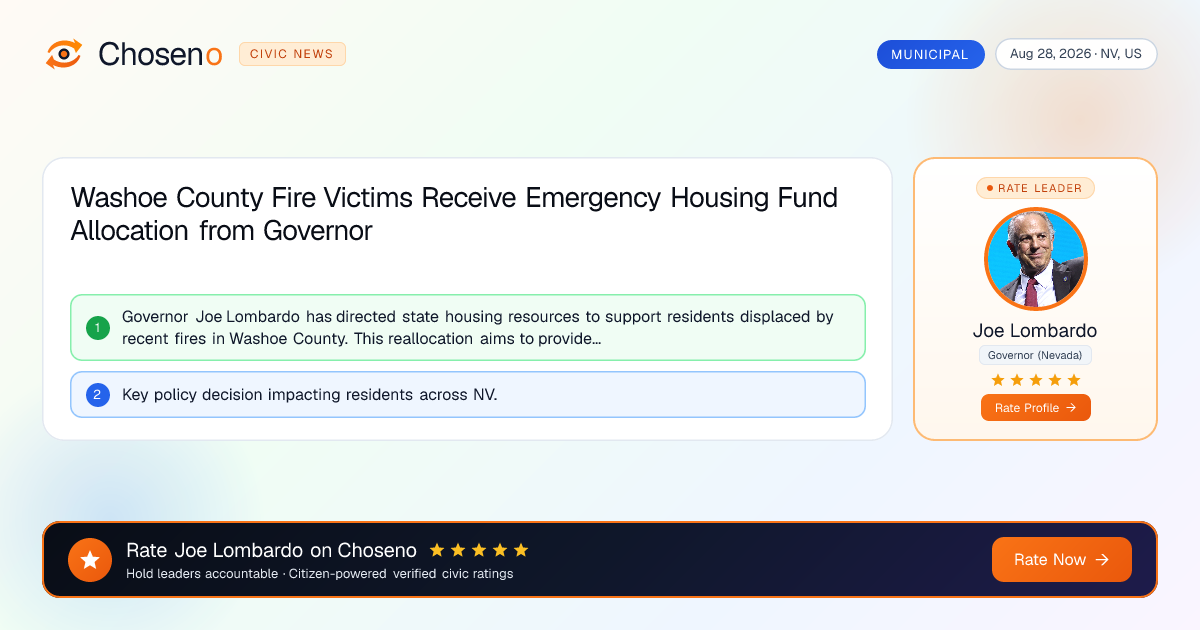
Washoe County Fire Victims Receive Emergency Housing Fund Allocation from Governor
Governor Joe Lombardo has directed state housing resources to support residents displaced by recent fires in Washoe County. This reallocation aims to provide immediate relief for those impacted by the disaster.
Read full article
Municipal
US Aug 28, 2026
Boston City Hall Hosts Private Elopement for Tricia Robredo and Partner
Tricia Robredo, daughter of Naga Mayor Leni Robredo, finalized a marriage ceremony at Boston City Hall. The event represents a private civil union with no reported impact on municipal tax expenditures.
Read full article