British Columbia Lawmaker Scott McInnis Demands Urgent Safety Interventions on Trans-Canada Highway Corridor
British Columbia MLA Scott McInnis has petitioned provincial transportation authorities for immediate safety upgrades and accelerated infrastructure investments along Highway 1 between Field and Sicamous. Following a series of serious collisions on the mountain corridor, Minister of Transportation and Transit Mike Farnworth agreed to convene a high-level ministerial meeting to examine emergency mitigations and capital improvement timelines.
Choseno Civic News Desk September 5, 2026Updated September 7, 2026 3 min read CA
What do you think of the people in this story? Rate them anonymously — tap a face below.
British Columbia Member of the Legislative Assembly Scott McInnis has formally petitioned provincial transportation authorities to implement urgent safety interventions along the Trans-Canada Highway corridor through the interior mountain passes. Representing the riding of Columbia River-Revelstoke, McInnis directed an urgent appeal to British Columbia Minister of Transportation and Transit Mike Farnworth, requesting high-level bilateral discussions to address escalating safety hazards, infrastructure deficits, and fatal traffic incidents along Highway 1 between Field and Sicamous.
The mountainous stretch of Highway 1, which traverses rugged terrain including the Kicking Horse Pass, Rogers Pass, and the Columbia River valley, serves as Canada's primary transcontinental highway link connecting British Columbia's Lower Mainland with Alberta and eastern Canadian markets. Despite ongoing capital investments under the province's multi-year Trans-Canada Highway four-laning program, substantial segments of the route remain narrow two-lane undivided highway. These sections regularly contend with extreme winter weather, steep alpine gradients, seasonal avalanche hazards, and heavy volumes of long-haul commercial freight transport mixed with domestic passenger traffic.
McInnis highlighted intense concern from regional residents, stating that local constituents across the interior have grown increasingly fearful of navigating the corridor due to frequent head-on collisions, severe winter roadway conditions, and protracted highway closures that repeatedly sever regional supply chains and cut off remote municipalities from essential medical services. The lawmaker reported that community members and municipal stakeholders had formulated pragmatic, locally informed proposals aimed at enhancing roadway safety, including improved winter maintenance protocols, enhanced commercial vehicle speed and weight enforcement, expanded passing lanes, and targeted installation of median barriers in high-risk zones.
In response to the formal legislative request, Minister Farnworth agreed to schedule an official ministerial meeting with McInnis on September 23. The forthcoming session will provide an opportunity for regional representatives to present constituent feedback directly to provincial transportation planners, evaluate existing highway monitoring data from DriveBC webcams and regional traffic sensors, and assess potential short-term operational interventions that can be deployed prior to the onset of peak winter driving conditions.
The safety debate comes as the provincial government continues to execute major multi-phase capital projects along Highway 1, including the modernization of Kicking Horse Canyon and bridges near Quartz Creek. However, regional municipal leaders and commercial transport operators have argued that the overall pace of four-laning must be accelerated through remaining two-lane sections to mitigate catastrophic collision risks. In particular, local officials have noted that single-lane bottlenecks create severe traffic congestion when heavy commercial vehicles encounter steep grades, prompting dangerous passing maneuvers by frustrated motorists.
Furthermore, interior civic leaders emphasize that highway closures impose substantial economic penalties on local tourism, forestry, and regional logistics, stranding interprovincial commercial trade for hours or days at a time. McInnis indicated that following the September ministerial consultation, he intends to release a comprehensive briefing to constituents, regional civic bodies, and municipal councils, emphasizing that lasting improvements along the national highway link will require an enduring, multi-community citizen initiative. By coordinating legislative pressure with regional municipal advocacy and grassroots public safety campaigns, interior lawmakers seek to ensure that British Columbia's critical mountain transit arteries receive the capital funding and regulatory enforcement necessary to protect traveling motorists.
Rate the people mentioned in this article


Related Coverage in Infrastructure
See all Infrastructure newsInfrastructure
US Sep 4, 2026
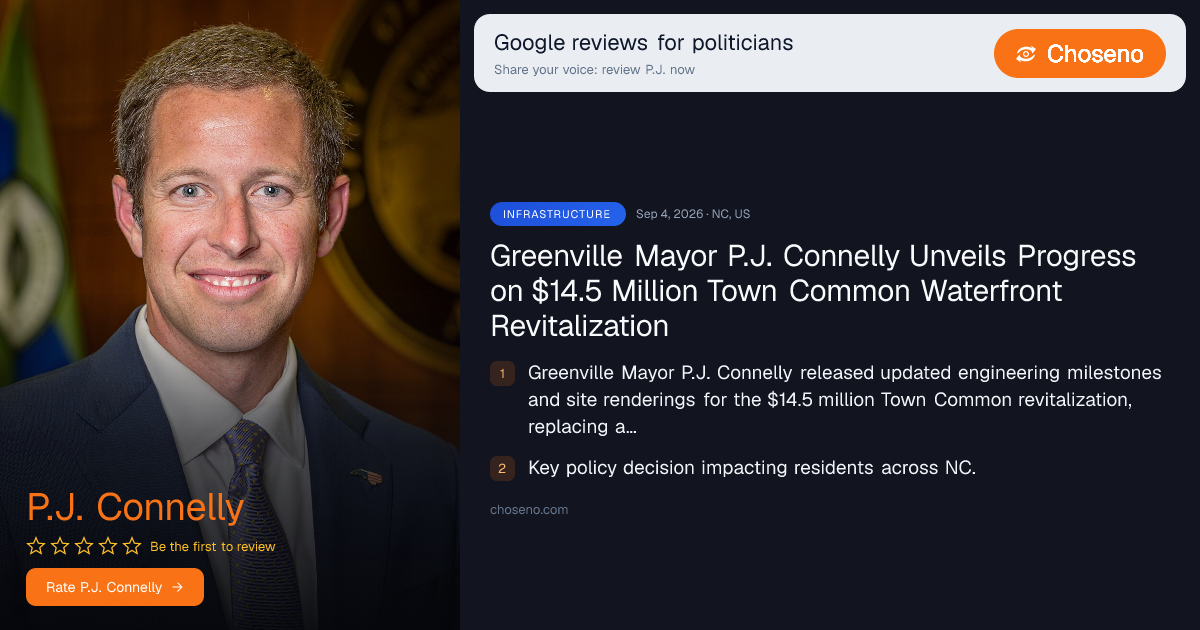
Greenville Mayor P.J. Connelly Unveils Progress on $14.5 Million Town Common Waterfront Revitalization
Greenville Mayor P.J. Connelly released updated engineering milestones and site renderings for the $14.5 million Town Common revitalization, replacing a 1960s-era timber bulkhead with reinforced flood mitigation infrastructure and expanded Tar River recreational paths.
Read full article
Infrastructure
US Aug 31, 2026
Governor Greg Abbott Launches Project Watershed 250 to Shield Municipal Water Systems from Cyber Threats
Texas Governor Greg Abbott and federal cybersecurity leadership launched Project Watershed 250, a statewide defensive initiative providing complimentary cyber monitoring and vulnerability assessments to 250 municipal water systems.
Read full article

Infrastructure
US Aug 28, 2026
Nashville International Airport Renaming Proposal Garners Support from Tennessee Governor
A public initiative to rename Nashville's primary commercial airport after country music icon Dolly Parton has gained endorsement from Tennessee's governor. The proposal reflects ongoing state and municipal deliberations regarding major civic infrastructure and cultural branding.
Read full article