Calgary City Council Advances $210M Bow River Water Infrastructure and Flood Defense Agreement
Calgary City Council votes to approve a $210 million joint infrastructure accord with the Alberta government, advancing engineering designs for upstream reservoir storage along the Bow River to protect against severe flooding and seasonal drought.
Choseno Western Urban Bureau August 18, 2026 1 min read AB, CA

★ Choseno Civic Briefing
CALGARY, AB — Calgary City Council voted decisively on Tuesday to endorse a landmark $210 million intergovernmental partnership with the Province of Alberta, advancing final geotechnical engineering and environmental impact assessments for an upstream flood and drought mitigation reservoir on the Bow River.
Upstream Reservoir Capacity and Dual Climate Defense
The approved project option, situated upstream of Cochrane at the Ghost Reservoir expansion zone, will provide over 150,000 acre-feet of managed water storage. City engineering models demonstrate that the reservoir will reduce flood risk for downtown Calgary by up to 60% during extreme 1-in-200-year mountain runoff events, similar to the devastating 2013 southern Alberta floods.
Critically, the reservoir is engineered with dual-use capacity, functioning during dry summer months to release regulated flows that maintain municipal drinking water intakes, support agricultural irrigation districts, and preserve aquatic habitats along the Bow River watershed.
Municipal Capital Allocation and Provincial Cost-Sharing
Under the funding formula approved by council, the City of Calgary will contribute $70 million from its municipal water utility infrastructure reserve, with the remaining $140 million funded through provincial capital grants under Alberta's Water for Life strategy.
Mayor Jyoti Gondek commended council's forward-looking vote, emphasizing that climate-resilient water infrastructure is vital to safeguard billions in downtown commercial real estate and maintain residential water security as regional population expands.
Environmental Review and Indigenous Engagement
Council directed the city administration to collaborate with Stoney Nakoda Nations and regional stakeholders throughout the provincial regulatory review, ensuring traditional land use and environmental mitigation standards are fully integrated prior to construction tendering in 2027.
Sources
Related Coverage in Infrastructure
See all Infrastructure news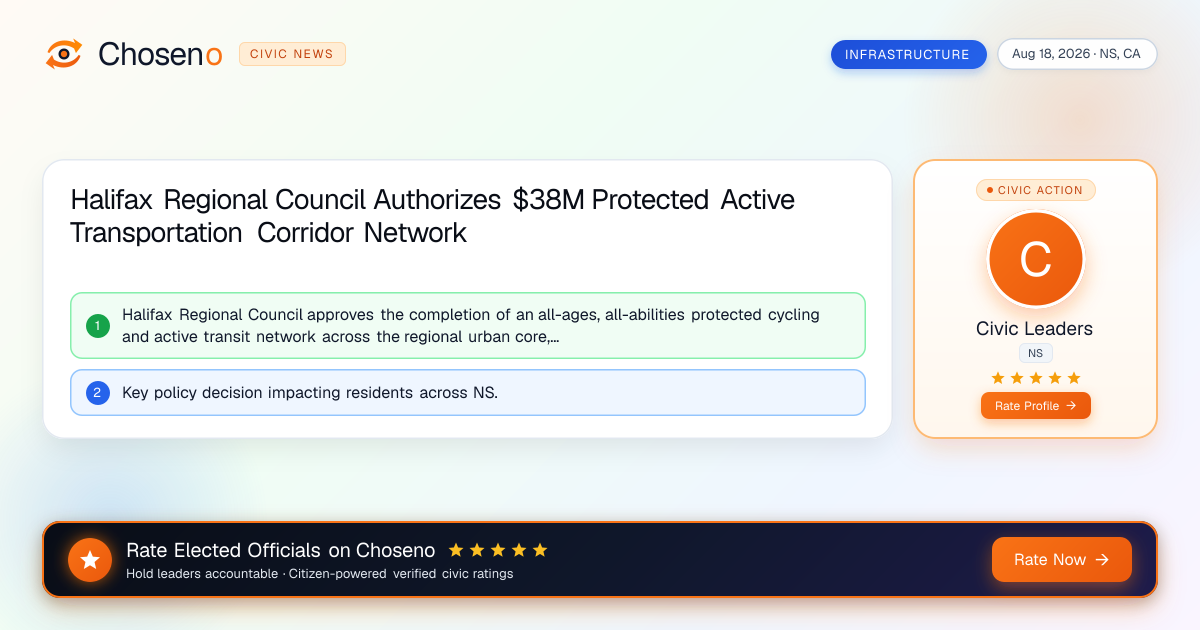
Infrastructure
CA Aug 18, 2026
Halifax Regional Council Authorizes $38M Protected Active Transportation Corridor Network
Halifax Regional Council approves the completion of an all-ages, all-abilities protected cycling and active transit network across the regional urban core, linking Dartmouth and downtown Halifax with multimodal connections.
Read full article

Infrastructure
CA Aug 18, 2026
Winnipeg City Council Allocates $50M Emergency Road and Bridge Rehabilitation Fund
Winnipeg City Council passes an accelerated $50 million infrastructure allocation to repair freeze-thaw asphalt deterioration, rehabilitate regional bridge decks, and modernize concrete arterial corridors.
Read full article

Infrastructure
CA Aug 18, 2026
Ottawa Transit Commission Approves $75M Fleet Safety Upgrades for O-Train LRT System
The Ottawa Transit Commission authorizes a $75 million technical retrofit package for the Confederation Line light rail transit fleet, implementing permanent axle-bearing redesigns and cold-weather track switch heaters.
Read full article