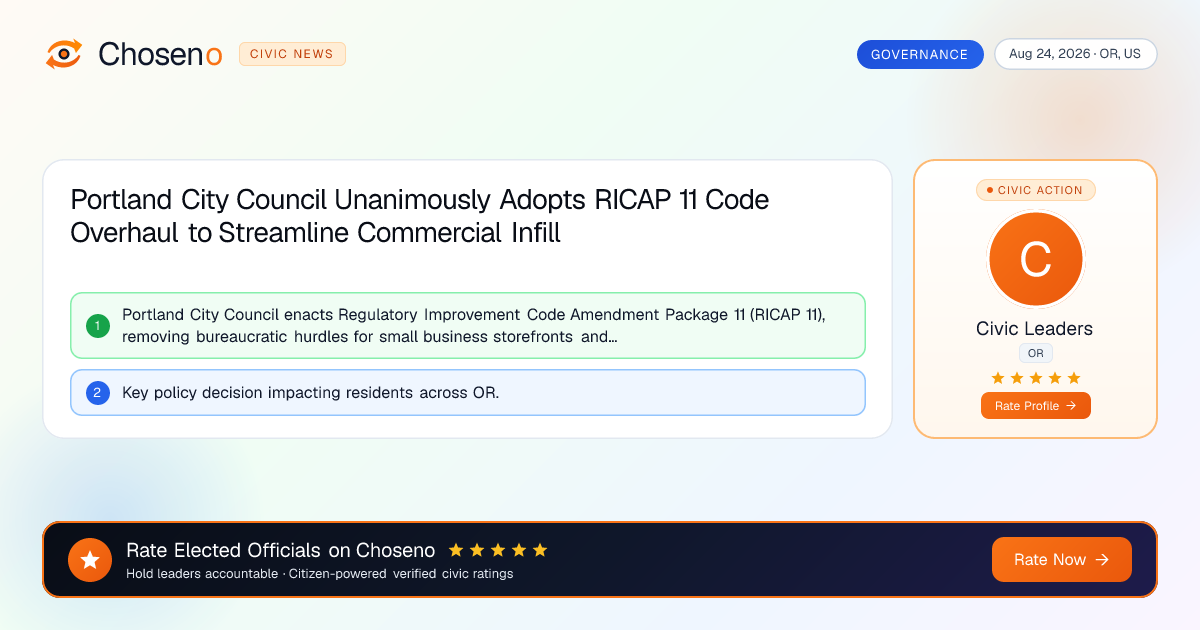
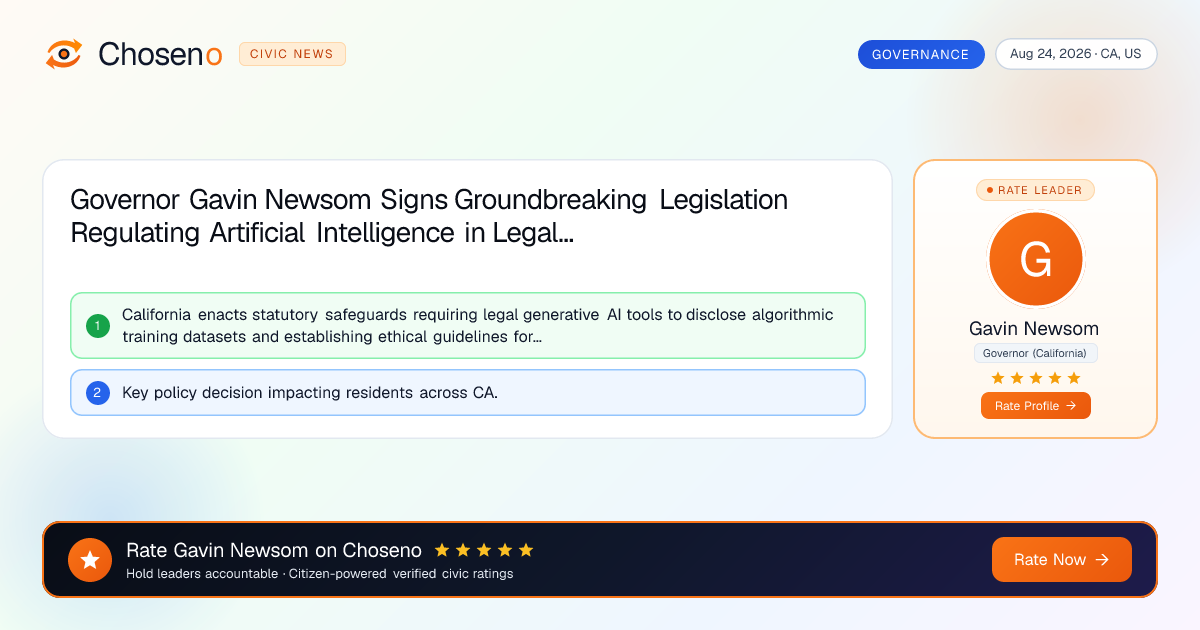
Governor Gavin Newsom Signs Groundbreaking Legislation Regulating Artificial Intelligence in Legal Practice
California enacts statutory safeguards requiring legal generative AI tools to disclose algorithmic training datasets and establishing ethical guidelines for California State Bar attorneys.
Choseno Technology & Legal Policy Bureau August 24, 2026 1 min read CA, US
★ Choseno Civic Briefing
Key Leaders
SACRAMENTO, CA — Governor Gavin Newsom signed into law first-in-the-nation legislation establishing strict statutory guidelines governing the use of generative artificial intelligence and autonomous legal drafting software across the California legal profession.
Protecting Client Confidentiality and Preventing Algorithmic Bias
The enacted statute mandates that attorneys practicing in California state courts verify all AI-generated citations and legal briefs through human professional review, codifying disciplinary sanctions under the State Bar Act for hallucinated case precedents. The law also requires legal tech developers to certify that client data uploaded to generative models is not used for unauthorized LLM foundation model training.
Governor Newsom highlighted that California leads global artificial intelligence innovation and must establish sensible ethical guardrails that preserve civil rights, confidentiality, and professional integrity.
California State Bar and Legal Technology Reactions
The State Bar of California welcomed the statutory clarity, preparing mandatory continuing legal education (MCLE) ethics courses for licensed practitioners.
Legal tech software startups praised the clear human-in-the-loop compliance framework for encouraging responsible product adoption.
Implementation Timelines
The statutory AI legal guidelines take effect on January 1, 2027.
Rate the people mentioned in this article
Related Coverage in Governance
See all Governance newsGovernance
CA Aug 24, 2026
Whitehorse City Council Debates Bylaw 2026-25 Restricting Mineral Exploration in Urban Growth Boundaries
Whitehorse City Council reviews proposed amendments to the Official Community Plan under Bylaw 2026-25, establishing 1,000-meter buffer setbacks between residential areas and mineral claim staking.
Read full article
Governance
US Aug 24, 2026
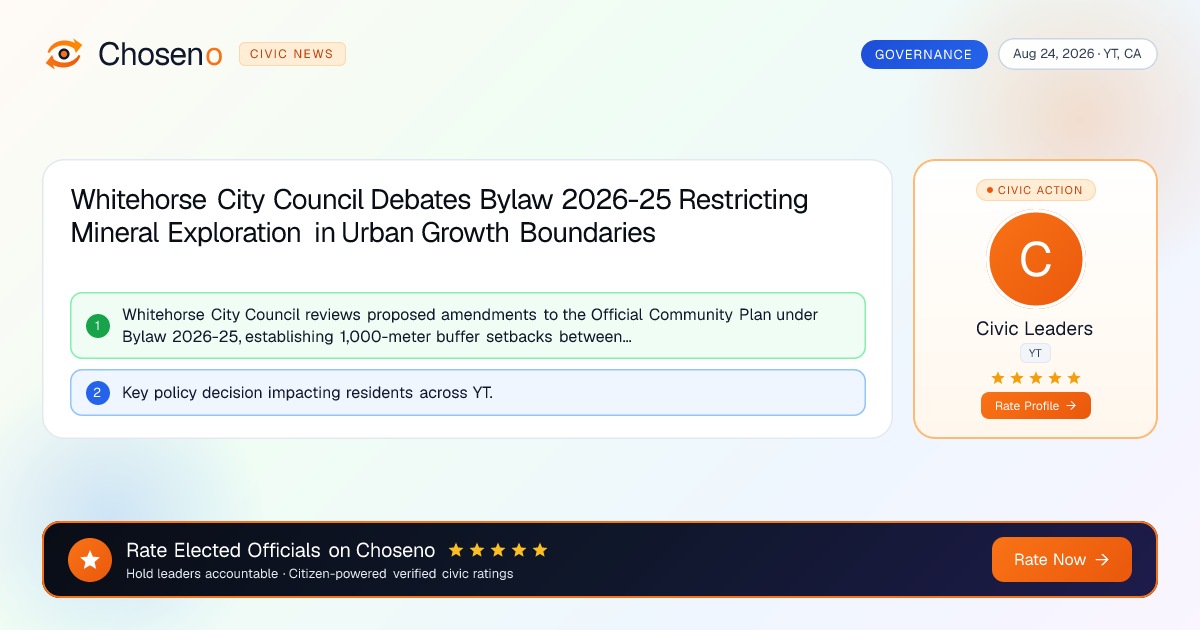
Columbus City Council Unveils 'Zone In Phase Two' Modernizing Commercial Transit Corridors
Columbus City Council releases Phase Two of its historic Zone In code overhaul, eliminating parking minimums and allowing 6-story mixed-use infill along 150 miles of arterial bus transit corridors.
Read full article
Governance
US Aug 24, 2026
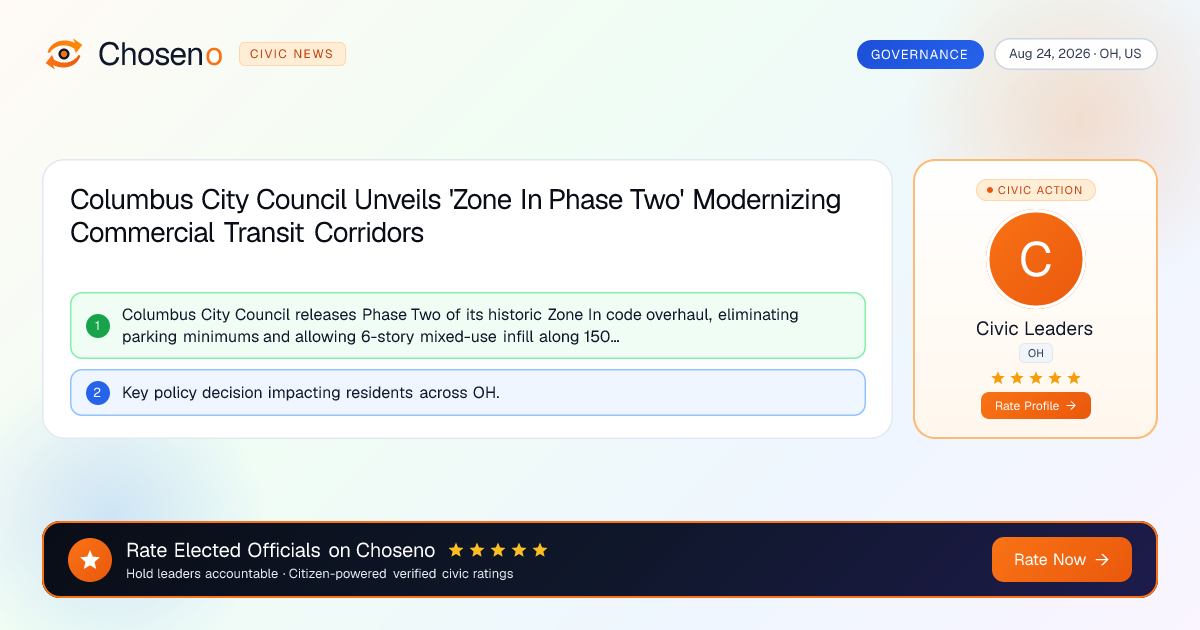
Portland City Council Unanimously Adopts RICAP 11 Code Overhaul to Streamline Commercial Infill
Portland City Council enacts Regulatory Improvement Code Amendment Package 11 (RICAP 11), removing bureaucratic hurdles for small business storefronts and adaptive reuse projects.
Read full article