BREAKING
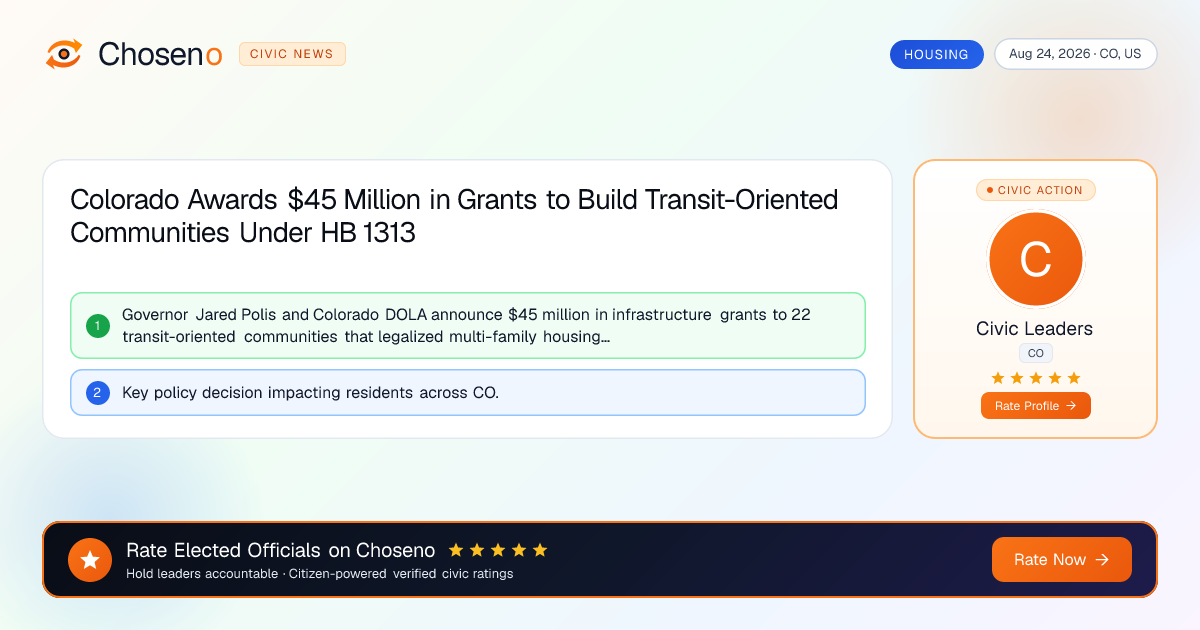
Colorado Awards $45 Million in Grants to Build Transit-Oriented Communities Under HB 1313
Governor Jared Polis and Colorado DOLA announce $45 million in infrastructure grants to 22 transit-oriented communities that legalized multi-family housing near rail and bus rapid transit lines.
Choseno Urban Land Use & Transit Housing Bureau August 24, 2026 1 min read CO, US
★ Choseno Civic Briefing
Key Leaders
DENVER, CO — Colorado Governor Jared Polis and the Department of Local Affairs (DOLA) Division of Local Government announced the distribution of $45 million in Transit-Oriented Communities Infrastructure Grants, rewarding 22 municipalities that complied early with landmark housing density statute House Bill 1313.
Funding Water, Sidewalks, and Parks Near Transit Corridors
The state grants provide capital funding up to $3 million per municipality to upgrade water mains, widen pedestrian sidewalks, and build public plaza parks in transit-oriented centers in Denver, Aurora, Lakewood, and Boulder. Participating cities adopted zoning reforms permitting multi-family housing densities of at least 40 units per acre by right within one-half mile of RTD light rail and bus rapid transit (BRT) stations.
Governor Polis stated that building homes near transit reduces traffic, lowers the cost of living, and cuts air pollution, proving that proactive state infrastructure grants empower cities to solve the housing crisis.
Municipal Mayors and Urban Planning Perspectives
Mayors across the Front Range praised the infrastructure grants for offsetting the capital costs of connecting new multi-family developments to municipal water systems.
Colorado Housing and Finance Authority (CHFA) noted that transit zoning unlocks federal low-income housing tax credits (LIHTC).
Grant Disbursement Schedule
Municipal infrastructure grant funds will transfer to recipient city treasuries in October 2026.
Related Coverage in Housing
See all Housing newsHousing
CA Aug 24, 2026
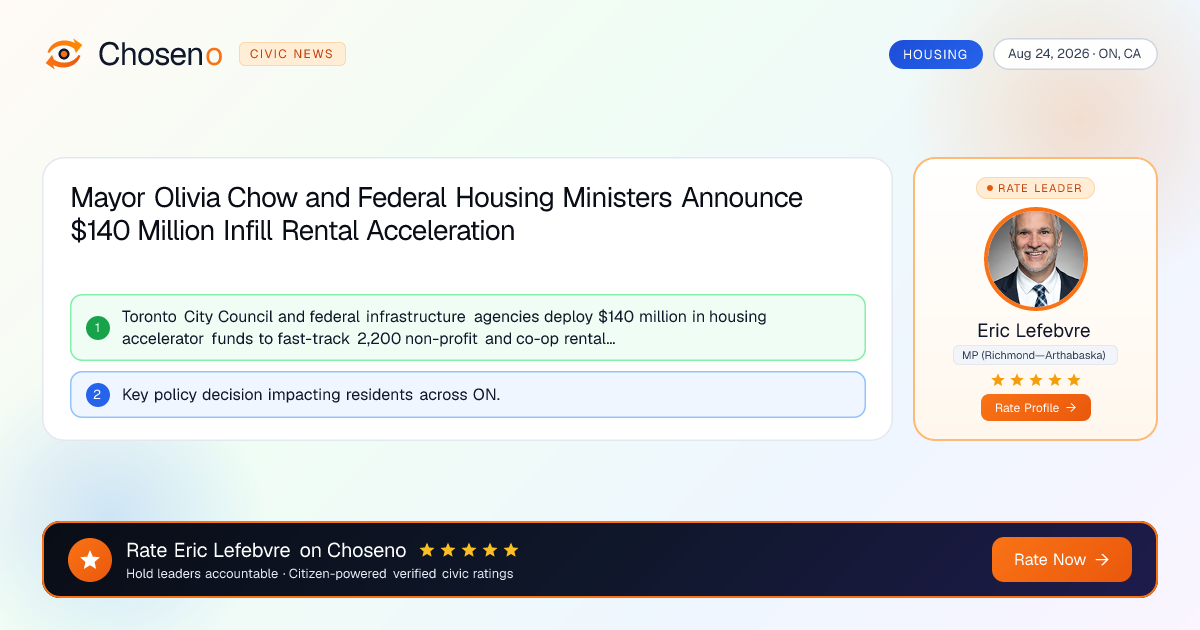
Mayor Olivia Chow and Federal Housing Ministers Announce $140 Million Infill Rental Acceleration
Toronto City Council and federal infrastructure agencies deploy $140 million in housing accelerator funds to fast-track 2,200 non-profit and co-op rental apartments on municipal lands.
Read full article
Housing
US Aug 24, 2026
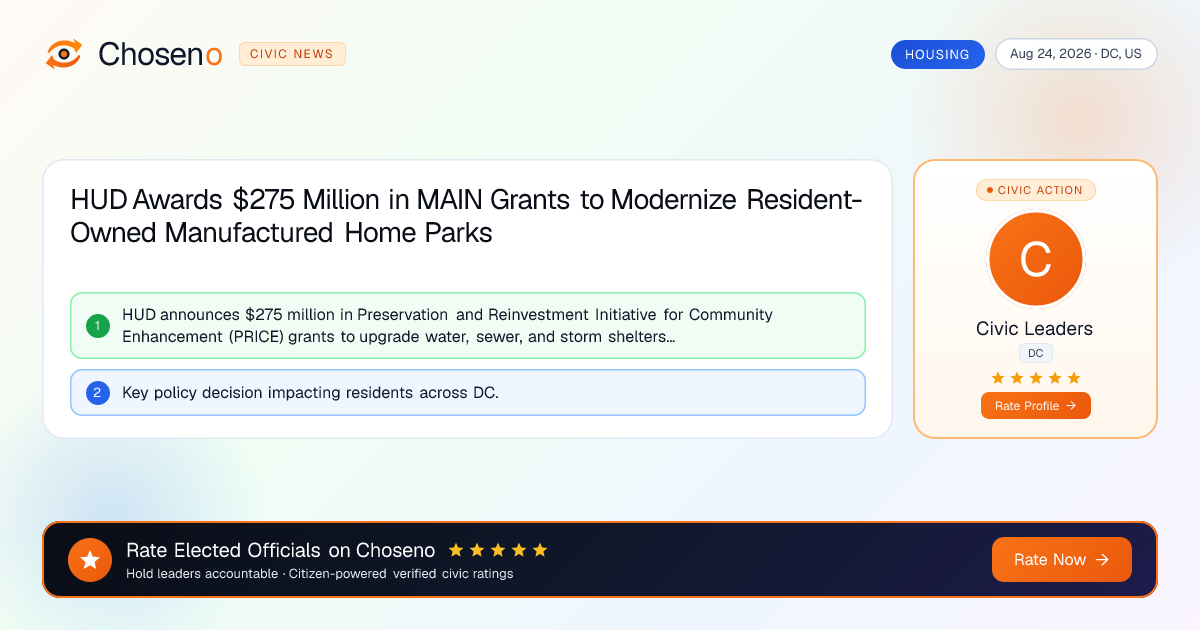
HUD Awards $275 Million in MAIN Grants to Modernize Resident-Owned Manufactured Home Parks
HUD announces $275 million in Preservation and Reinvestment Initiative for Community Enhancement (PRICE) grants to upgrade water, sewer, and storm shelters across 85 manufactured home communities.
Read full article
Housing
US Aug 24, 2026
HUD Awards $400 Million Through Housing Trust Fund to Build Deeply Affordable Rental Units
HUD allocates $400 million through the national Housing Trust Fund to state housing finance agencies to construct and preserve 4,500 rental homes for extremely low-income families.
Read full article