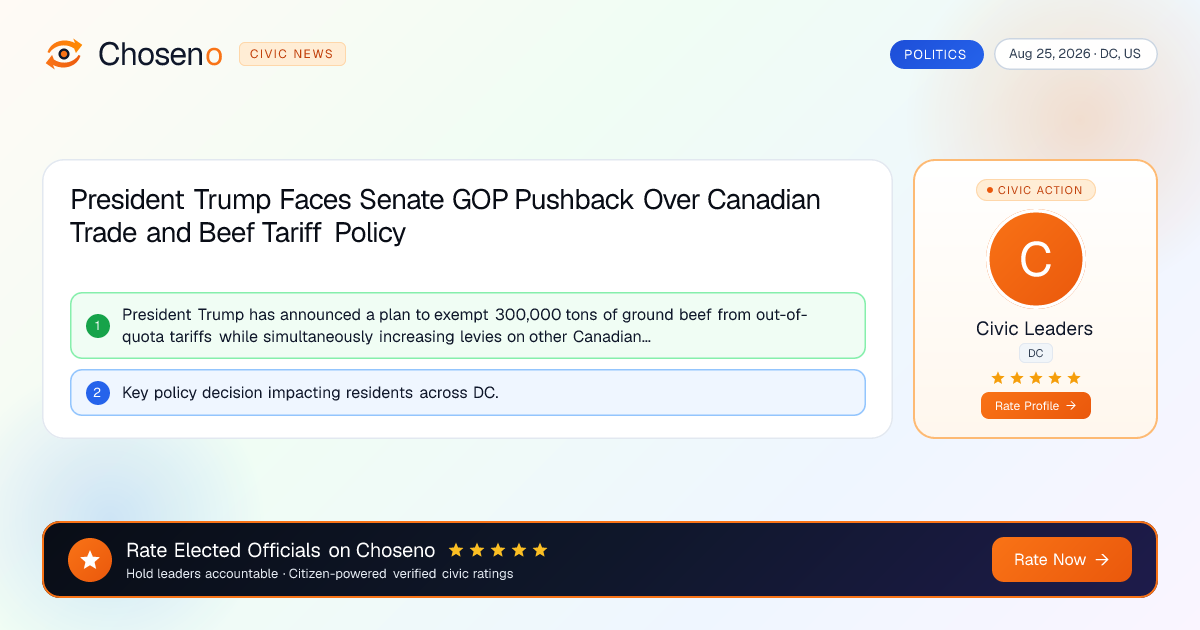
Concerns Raised Over Potential National Guard Deployment at Georgia Polling Sites
Allegations have surfaced suggesting Governor Brian Kemp may utilize the National Guard to monitor polling locations during upcoming elections. This potential deployment raises significant questions regarding the intersection of state security resources and the administration of democratic voting processes.
Choseno Civic News Desk August 25, 2026 2 min read GA, US
★ Choseno Civic Briefing
Key Leaders
Dateline: Atlanta, GA - August 25, 2026
Recent reports indicate that concerns have been raised regarding the potential involvement of the Georgia National Guard in monitoring polling places. The suggestion, brought forward by Jackson, posits that Governor Brian Kemp may leverage state military assets to oversee the electoral process.
Policy & Taxpayer Impact
The deployment of National Guard units involves the utilization of state-funded resources, including personnel, equipment, and logistical support. Taxpayers bear the financial burden of these deployments, which are typically reserved for emergency response or civil unrest. The potential shift toward using these assets for election monitoring represents a significant change in the operational scope of the state's military force.
Political & Legal Stakes
The intersection of state security forces and election administration is a sensitive area of governance. Legal experts and civil rights advocates are closely monitoring the situation to determine if such a deployment would comply with state and federal statutes governing the presence of armed personnel at polling sites. The move carries substantial political weight, as it directly impacts the perception of election integrity and voter access.
The Debate
Proponents of increased security measures often argue that the presence of state personnel is necessary to ensure the safety of election workers and the security of ballots against potential interference. Conversely, critics express deep concern that the presence of the National Guard could intimidate voters and suppress turnout. Opponents argue that the militarization of polling places is an unprecedented step that could undermine public trust in the democratic process.
Public Accountability Context
As the situation develops, citizens are encouraged to monitor official communications from the Governor's office and the Georgia Secretary of State. Transparency regarding the specific mandate and rules of engagement for any deployed personnel remains a critical factor for public accountability. Voters seeking to understand their rights and the security protocols in place for the upcoming election cycle should look for formal guidance from local election boards.
Rate the people mentioned in this article
Related Coverage in Politics
See all Politics newsPolitics
US Aug 25, 2026
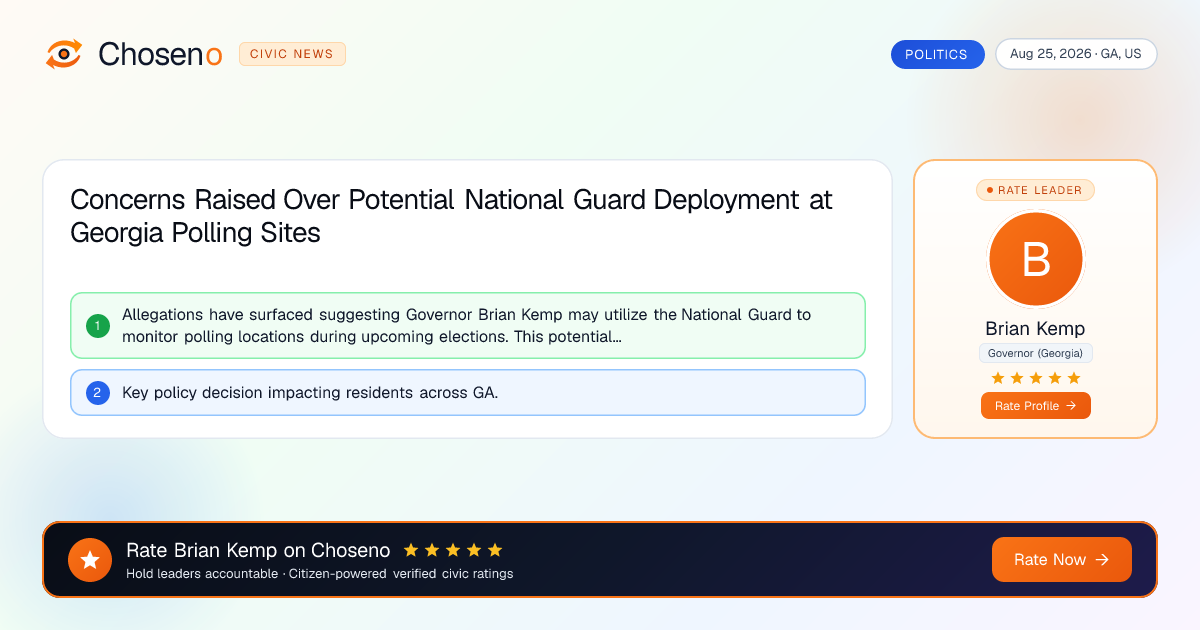
Hungary Files Criminal Complaint Over $965M COVID-19 Ventilator Procurement
Hungarian authorities have initiated a criminal complaint regarding a $965 million ventilator procurement deal conducted during the COVID-19 pandemic. The legal action centers on allegations of potential fraud involving the massive expenditure of public funds.
Read full article
Politics
US Aug 25, 2026
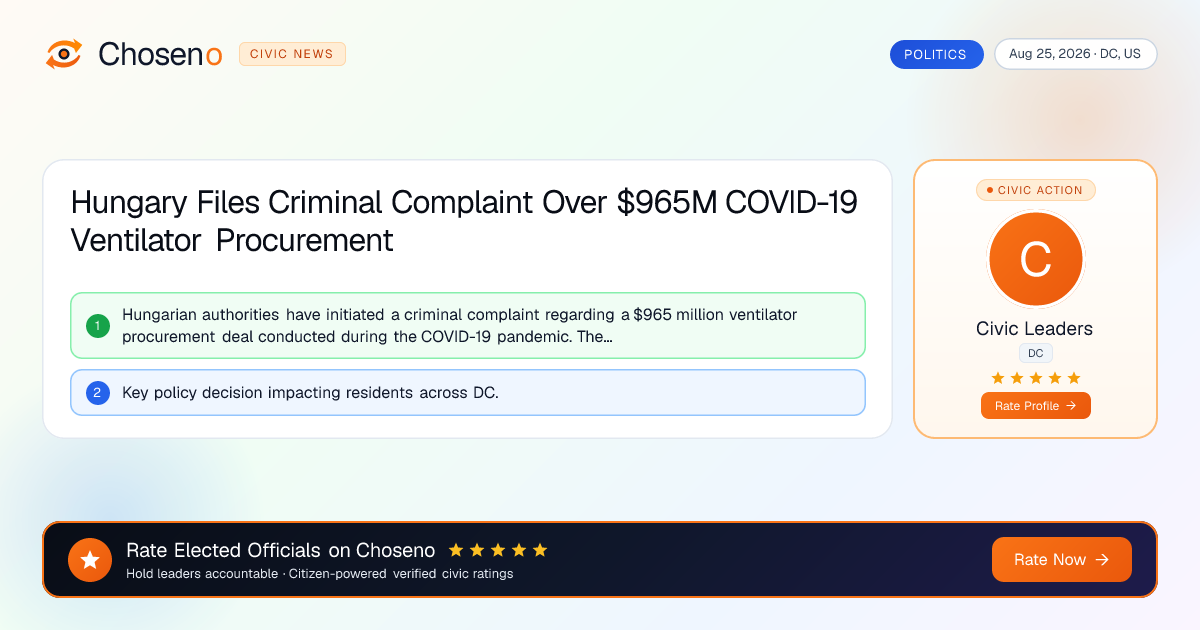
Treasury Bond Buyback Proposal Sparks Debate Over Market Intervention
The U.S. Treasury is considering utilizing nearly $1 trillion from the Treasury General Account to initiate bond buybacks aimed at lowering interest rates. This strategy has drawn sharp criticism from market experts who warn that such interventions may be ineffective.
Read full article
Politics
US Aug 25, 2026
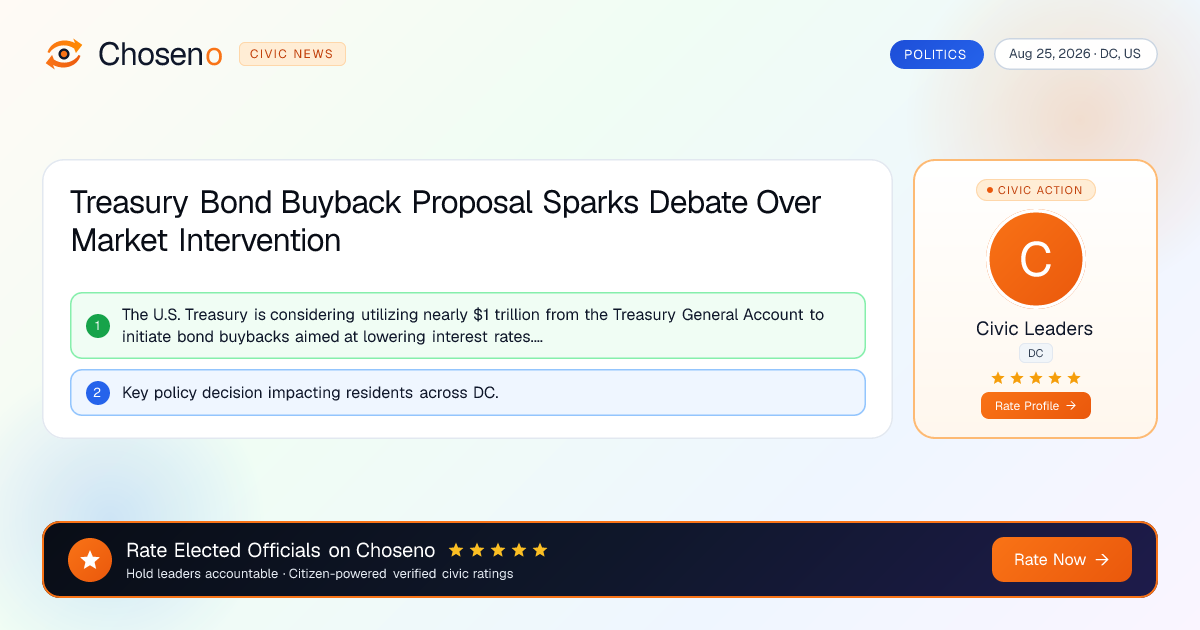
President Trump Faces Senate GOP Pushback Over Canadian Trade and Beef Tariff Policy
President Trump has announced a plan to exempt 300,000 tons of ground beef from out-of-quota tariffs while simultaneously increasing levies on other Canadian goods. This shift in trade policy aims to lower domestic food prices but has triggered significant friction with Republican senators.
Read full article