Data Center Energy Demand and Tax Breaks Emerge as Central Flashpoint in Oregon Gubernatorial Race
Democratic Governor Tina Kotek and Republican nominee Christine Drazan clashed over state energy policy and commercial data center expansion as statewide polling revealed strong voter opposition to generous tax abatements and escalating electrical grid demands across Washington and Umatilla counties.
Choseno Civic News Desk September 4, 2026 2 min read OR, US
What do you think of the people in this story? Rate them anonymously — tap a face below.
Salem, OR — Escalating into a major economic and environmental flashpoint in the 2026 Oregon gubernatorial campaign, incumbent Democratic Governor Tina Kotek and Republican nominee Christine Drazan are presenting sharply contrasting visions over the regulation, electrical grid consumption, and tax incentive structures governing large-scale hyperscale data centers, according to statewide reporting by Oregon Public Broadcasting (OPB).
The political debate comes as public sentiment across the Pacific Northwest grows increasingly skeptical of large tech infrastructure projects. A statewide survey by DHM Research revealed that over 70% of Oregonians express concern regarding the massive power and municipal water requirements demanded by server facilities in Washington County’s Silicon Forest, Morrow County, and Umatilla County, fearing upward pressure on residential utility rates.
Governor Kotek, seeking a second four-year term in Mahonia Hall, has campaigned on reining in unconstrained expansion and modernizing utility cost-sharing frameworks. Kotek highlighted her administration's establishment of the Data Center Advisory Committee, state support for municipal permitting pauses in Hillsboro, and enforcement of the 2025 POWER Act, which mandates that hyperscale commercial utility users pay dedicated surcharges to fund renewable generation rather than shifting transmission grid upgrade costs onto household ratepayers.
Republican nominee Christine Drazan challenged Kotek’s record, arguing that long-standing Democratic legislative majorities and executive policies spent years actively cultivating data center development through generous local Enterprise Zone property tax exemptions without preparing the state’s baseload energy supply. Drazan advocates for preserving local municipal authority over zoning agreements, removing regulatory barriers on regional natural gas and nuclear baseload generation, and reducing statewide regulatory compliance costs to foster broad-based industrial growth.
Environmental organizations and consumer utility watchdogs across the Willamette Valley emphasized that without rigorous statutory safeguards, the explosive growth of artificial intelligence compute facilities threatens Oregon's statutory clean energy benchmarks requiring 100% greenhouse-gas-free electricity by 2040.
With both campaigns mobilizing resources across suburban Portland and rural Eastern Oregon, energy infrastructure and industrial utility oversight are set to dominate candidate debates leading up to the November general election.
Rate the people mentioned in this article


Related Coverage in Energy & Environment
See all Energy & Environment newsEnergy & Environment
CA Sep 4, 2026
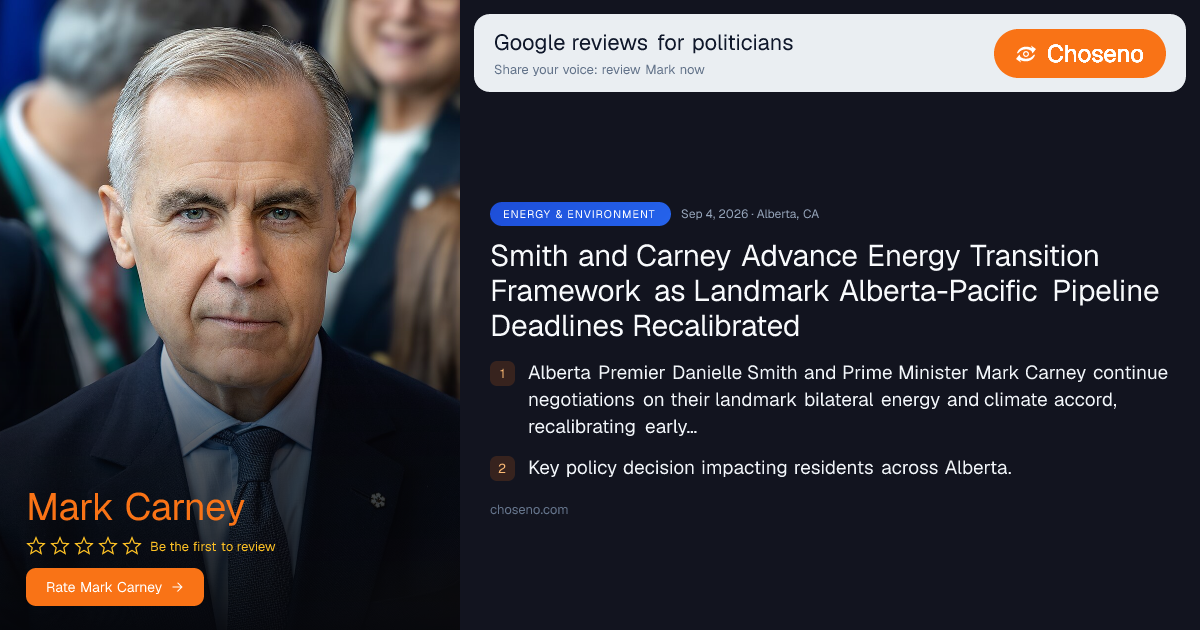
Smith and Carney Advance Energy Transition Framework as Landmark Alberta-Pacific Pipeline Deadlines Recalibrated
Alberta Premier Danielle Smith and Prime Minister Mark Carney continue negotiations on their landmark bilateral energy and climate accord, recalibrating early regulatory milestones while keeping construction of a major Pacific export pipeline targeted for late 2027.
Read full article
Energy & Environment
CA Sep 4, 2026
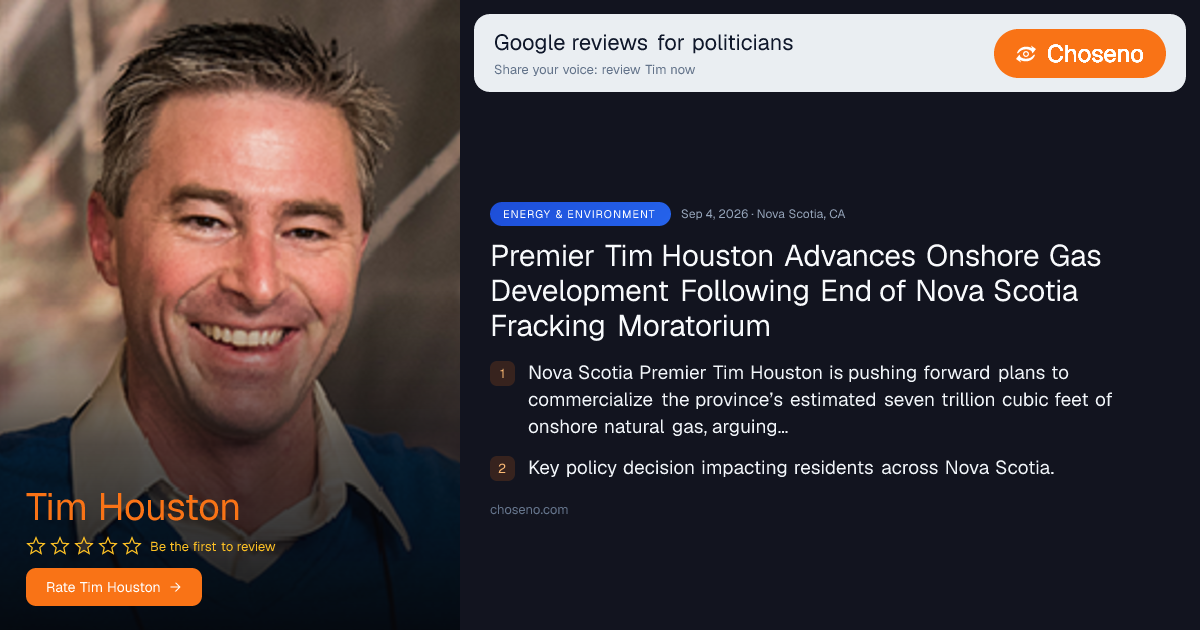
Premier Tim Houston Advances Onshore Gas Development Following End of Nova Scotia Fracking Moratorium
Nova Scotia Premier Tim Houston is pushing forward plans to commercialize the province’s estimated seven trillion cubic feet of onshore natural gas, arguing that ending the decade-long hydraulic fracturing moratorium will fund healthcare and bolster regional energy autonomy.
Read full article
Energy & Environment
CA Sep 4, 2026
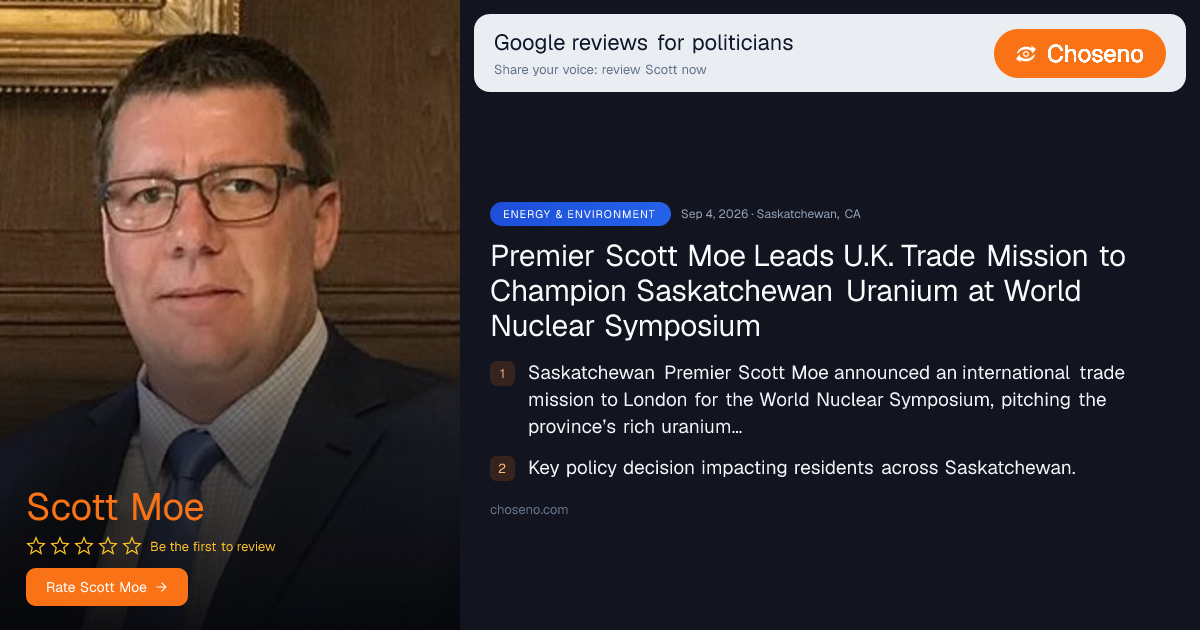
Premier Scott Moe Leads U.K. Trade Mission to Champion Saskatchewan Uranium at World Nuclear Symposium
Saskatchewan Premier Scott Moe announced an international trade mission to London for the World Nuclear Symposium, pitching the province’s rich uranium reserves and emerging small modular reactor supply chain as exports to the U.K. surge 178 percent.
Read full article