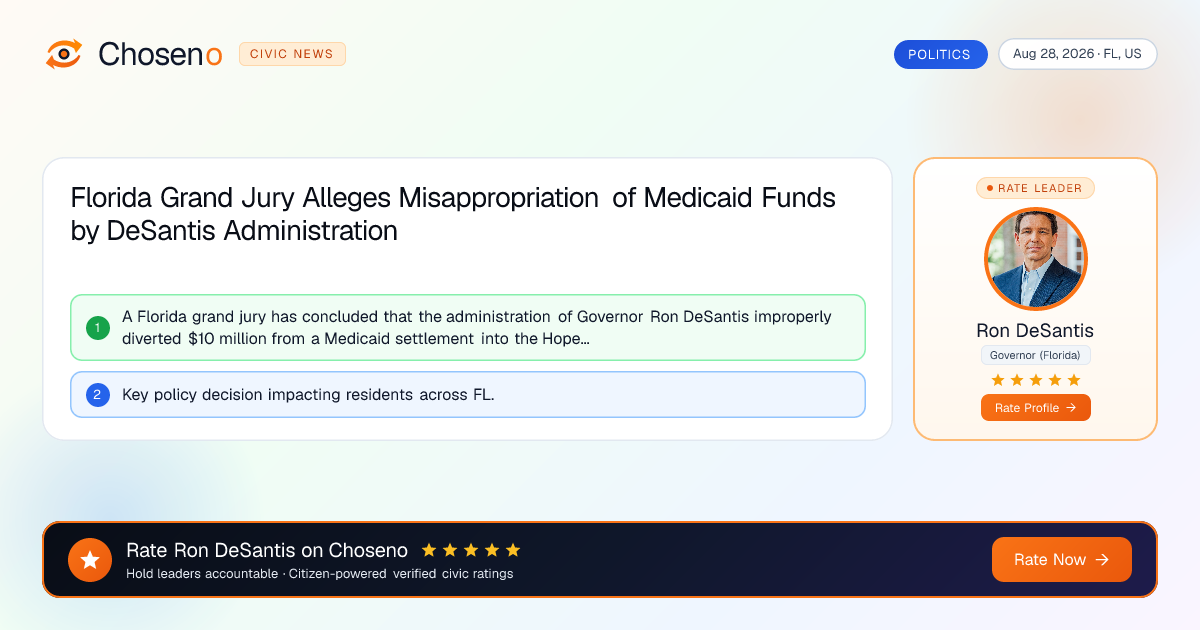
Florida Grand Jury Alleges Misappropriation of Medicaid Funds by DeSantis Administration
A Florida grand jury has concluded that the administration of Governor Ron DeSantis improperly diverted $10 million from a Medicaid settlement into the Hope Florida Foundation. This finding raises significant concerns regarding the oversight of state funds and the potential use of public resources for political purposes.
Choseno Civic News Desk August 28, 2026 2 min read FL, US
Dateline: Tallahassee, Florida
A Florida grand jury has released findings alleging that the administration of Governor Ron DeSantis misappropriated a payment derived from a Medicaid settlement. The funds in question were directed into the Hope Florida Foundation, a private organization associated with the state's first lady, Casey DeSantis.
Policy and Taxpayer Impact
The investigation centers on a $10 million transfer of state-controlled settlement funds. According to the grand jury, these taxpayer-linked resources were diverted away from their intended Medicaid-related purposes and moved into the foundation. The report suggests that this financial maneuver was part of a larger, sophisticated effort to finance political activities, potentially impacting the integrity of state budget allocations.
Political and Legal Stakes
The legal implications of these findings are significant, as they involve the movement of settlement money into an entity championed by the governor's office. The grand jury's characterization of the transfer as a scheme to fund political activities places the administration under intense scrutiny regarding the separation of public funds and political advocacy.
The Debate: Proponent vs. Critic
Proponents of the administration's initiatives often argue that the Hope Florida Foundation serves as a vital vehicle for charitable work and public-private partnerships aimed at improving social services. Conversely, critics and the grand jury panel contend that the redirection of Medicaid settlement funds represents a breach of fiduciary duty. Opponents argue that such funds should remain strictly within the public domain to support healthcare infrastructure rather than being funneled into organizations that may serve the administration's political interests.
Public Accountability Context
This report serves as a critical development in the ongoing oversight of the DeSantis administration's financial practices. As the findings move into the public record, citizens and state legislators are tasked with evaluating the transparency of these financial transfers and the adequacy of current safeguards designed to prevent the misuse of public settlement funds.
Rate the people mentioned in this article

Related Coverage in Politics
See all Politics newsPolitics
US Aug 28, 2026
Federal Judge Overturns Pentagon Blacklisting of AI Firm Anthropic
A federal judge has ruled that the Pentagon's decision to blacklist AI company Anthropic was unconstitutional, citing violations of the First Amendment and Due Process. The ruling forces a re-evaluation of how the Department of Defense manages supply chain risk designations regarding private technology firms.
Read full article
Politics
US Aug 28, 2026
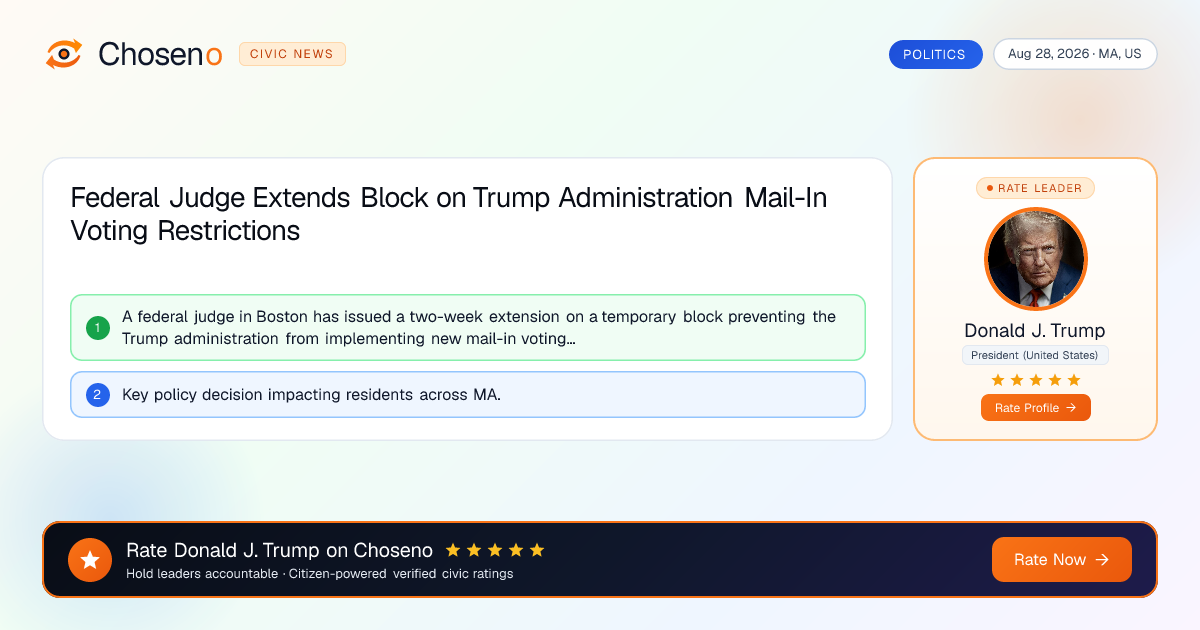
Federal Judge Extends Block on Trump Administration Mail-In Voting Restrictions
A federal judge in Boston has issued a two-week extension on a temporary block preventing the Trump administration from implementing new mail-in voting restrictions. This judicial intervention maintains current election procedures, impacting administrative costs and operational planning for state election officials ahead of the November midterms.
Read full article
Politics
US Aug 28, 2026
U.S. Central Command Confirms Removal of Iranian Sea Mines in Strait of Hormuz
The U.S. military has successfully cleared all Iranian sea mines from established international transit routes within the Strait of Hormuz. This operation aims to restore maritime security in a critical global trade corridor, though the specific financial costs of the deployment have not been disclosed.
Read full article