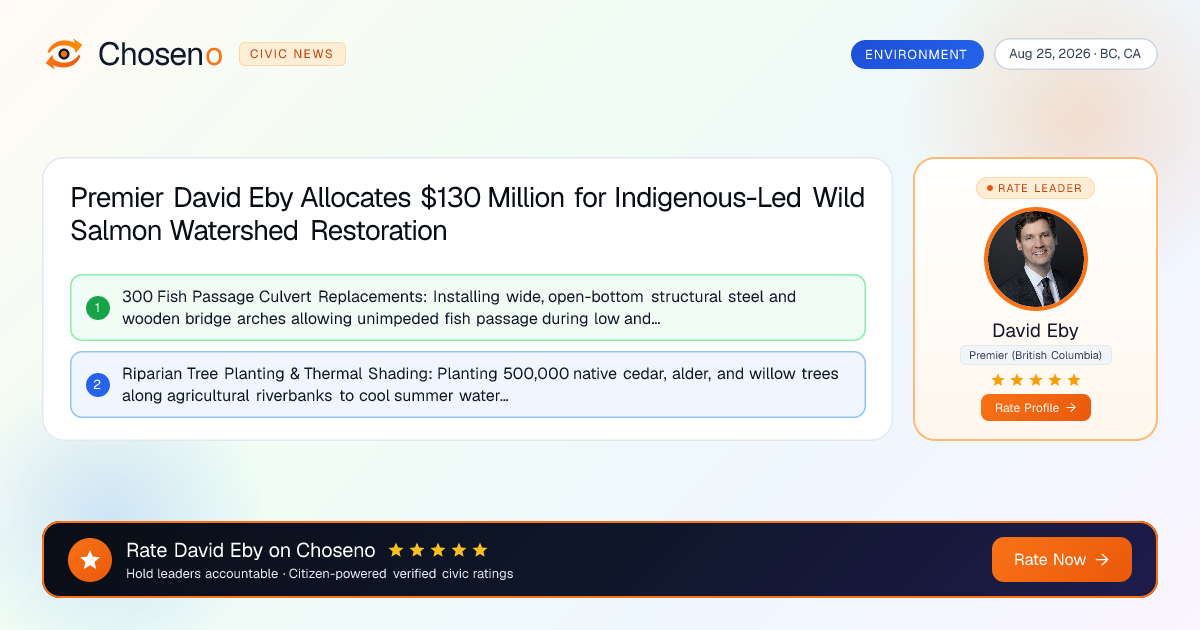
Governor Gretchen Whitmer Directs $110 Million for Great Lakes Shoreline Resiliency and Harbor Breakwaters
Michigan Governor Gretchen Whitmer announces $110 million in Resilient Great Lakes grants to reconstruct engineered rock breakwaters, stabilize eroding bluff shorelines, and dredge municipal commercial harbors across fifteen coastal counties.
Choseno Great Lakes Bureau August 25, 2026 2 min read MI, US
★ Choseno Civic Briefing
Key Leaders
MUSKEGON, Mich. — Governor Gretchen Whitmer announced on Monday the distribution of $110 million in state capital grants through the Resilient Great Lakes Infrastructure Program to reconstruct deteriorated municipal harbor breakwaters, fortify public coastal bluffs, and dredge navigation channels across fifteen coastal counties along Lakes Michigan, Huron, and Superior.
The investments, administered by the Michigan Department of Environment, Great Lakes, and Energy (EGLE), provide critical matching capital for municipal port authorities and coastal township governments facing severe shoreline erosion caused by record Great Lakes water level fluctuations and severe winter wave battering.
Protecting Coastal Harbors and Multibillion-Dollar Maritime Tourism Michigan features 3,288 miles of freshwater coastline—the longest of any state in the continental United States—supporting a multi-billion-dollar maritime shipping, commercial fishing, and tourism economy. However, coastal storms have severely undermined public beach walks, sewage outfalls, and harbor navigation channels.
"The Great Lakes are Michigan's crowning jewel and the bedrock of our state's identity, tourism, and economy," Governor Whitmer said in Muskegon. "Record wave action and severe storms have caused severe erosion, threatening waterfront businesses, roads, and municipal harbors. This $110 million investment builds engineered stone breakwaters, stabilizes coastal bluffs, and protects our public beaches, ensuring our Great Lakes communities remain resilient and prosperous for generations to come."
Coastal Harbor Allocations Key infrastructure projects funded include:
- Muskegon & Grand Haven Harbors (Lake Michigan): $28 million for outer harbor rock breakwater reconstruction and commercial channel deepening.
- Sault Ste. Marie & Saint Ignace (Straits of Mackinac): $22 million for municipal ferry dock fortification and ice-resistant steel sheet piling.
- South Haven & St. Joseph: $20 million for coastal bluff stabilization and dune restoration.
- Alpena & Presque Isle (Lake Huron): $18 million for commercial limestone shipping harbor dredging.
- Seven additional coastal communities receiving between $4 million and $8 million.
Municipal mayors, commercial shipping captains, and coastal tourism associations praised the decisive funding, pointing out that maintained harbor breakwaters protect billions in shoreline real estate and maritime commerce.
Rate the people mentioned in this article
Related Coverage in Environment
See all Environment newsEnvironment
CA Aug 25, 2026
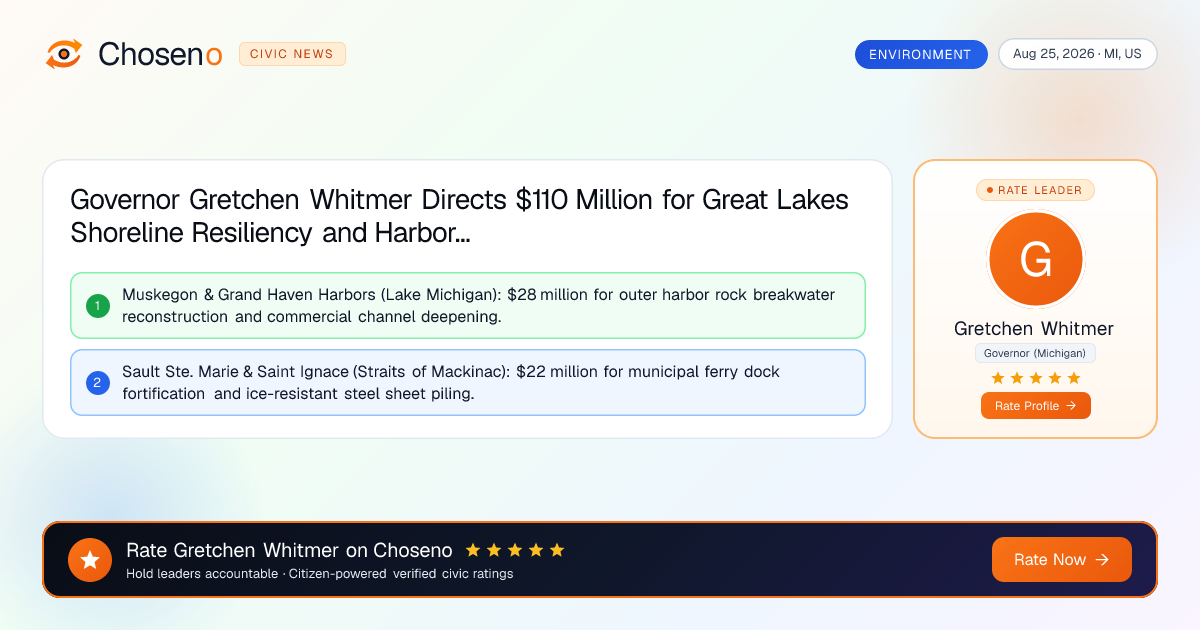
Environment Minister Steven Guilbeault Protects 15,000 Square Kilometers of St. Lawrence Estuary
Environment Minister Steven Guilbeault and Parks Canada designate three new Marine Protected Areas in the St. Lawrence Estuary and Saguenay Fjord, establishing strict commercial shipping speed caps to safeguard endangered beluga whales.
Read full article
Environment
US Aug 25, 2026
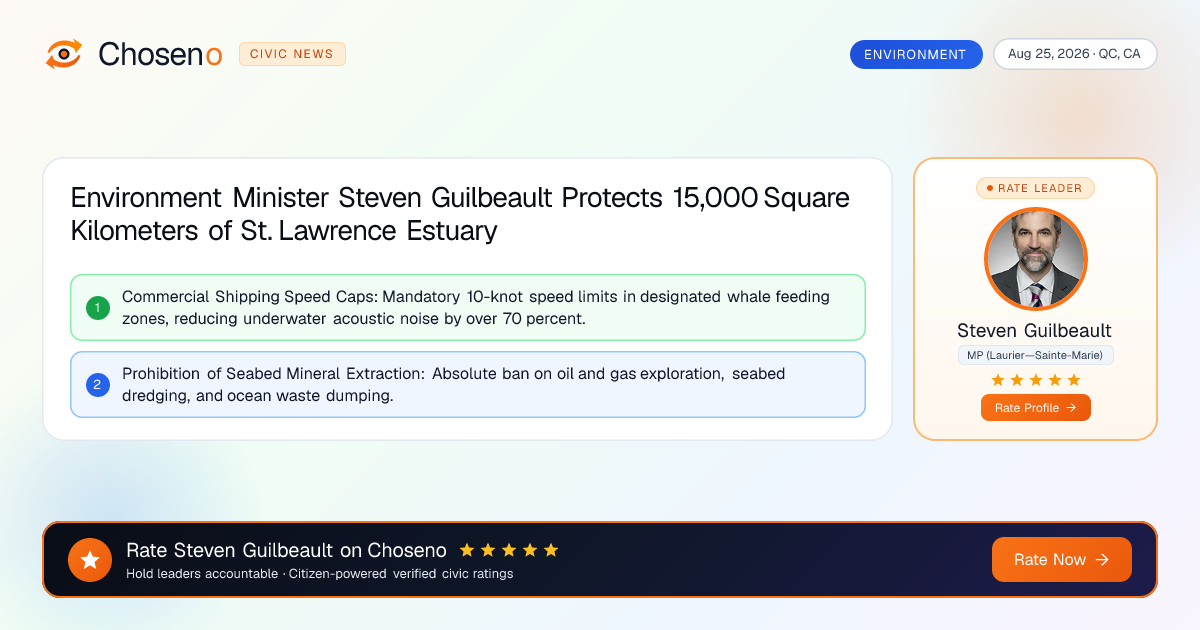
Department of the Interior Awards $310 Million for Colorado River Tribal Water Conservation
Interior Secretary Deb Haaland directs $310 million in Inflation Reduction Act funds to construct closed-pipe irrigation systems and groundwater storage facilities across five Colorado River Indian tribes in Arizona and California.
Read full article
Environment
CA Aug 25, 2026
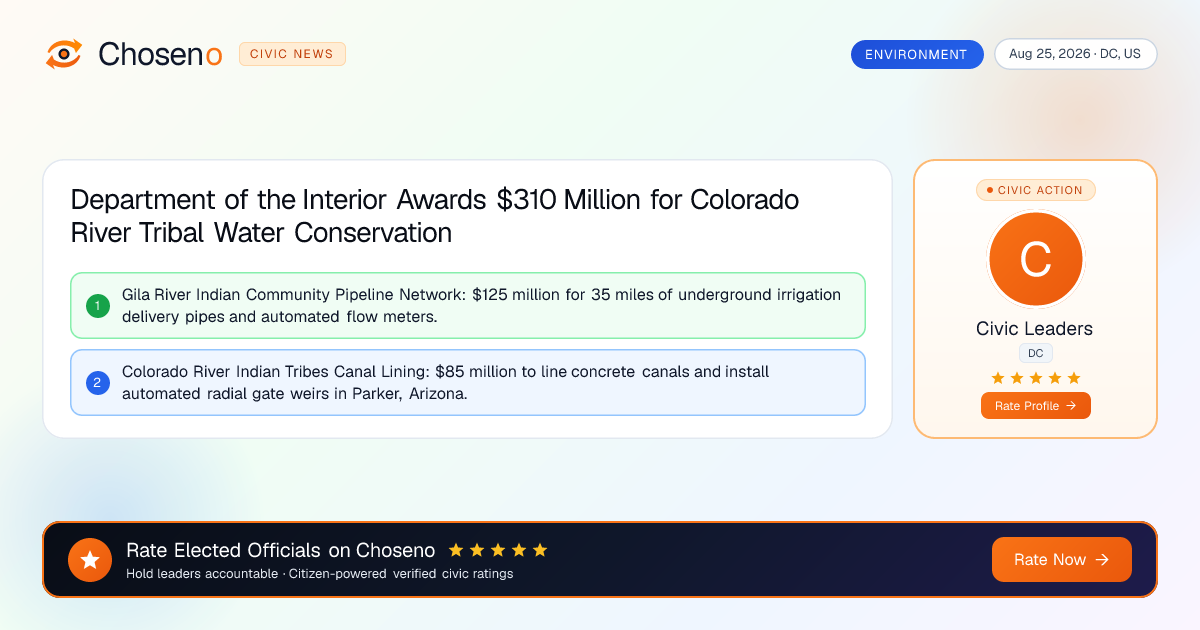
Premier David Eby Allocates $130 Million for Indigenous-Led Wild Salmon Watershed Restoration
British Columbia Premier David Eby and Water Minister Nathan Cullen announce $130 million from the BC Salmon Restoration and Innovation Fund to remove 300 fish passage barrier culverts and restore vital spawning rivers.
Read full article