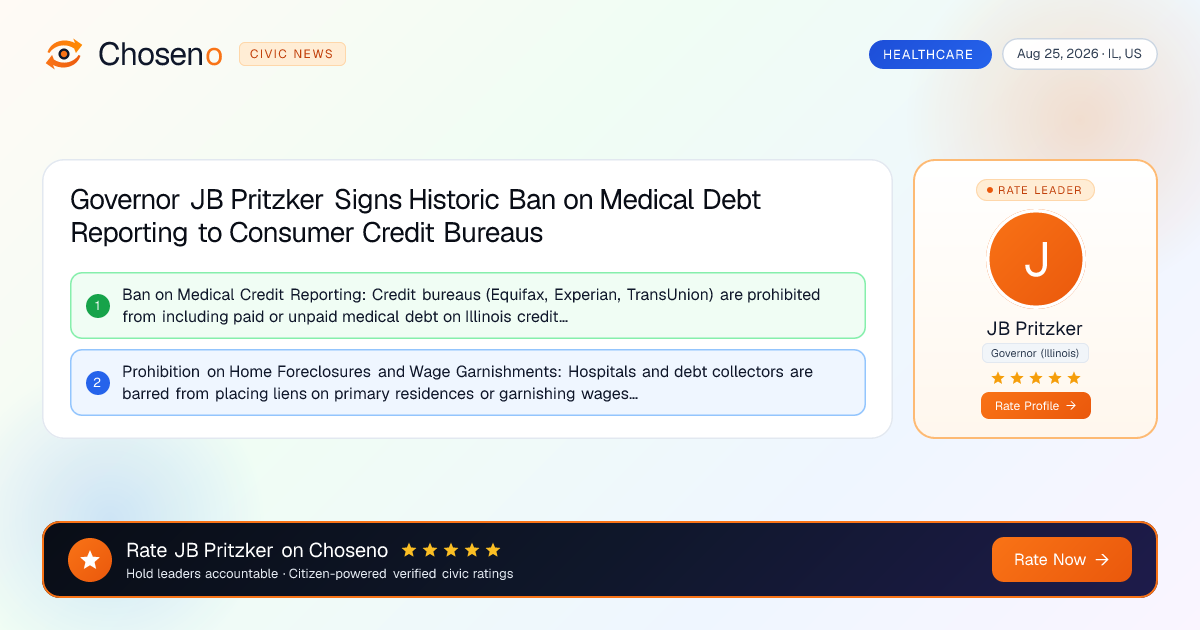
Governor JB Pritzker Signs Historic Ban on Medical Debt Reporting to Consumer Credit Bureaus
Illinois Governor JB Pritzker signs Senate Bill 1450, establishing an absolute statutory ban prohibiting consumer reporting agencies from including medical debt on Illinois credit reports and barring hospitals from aggressive debt collection.
Choseno Midwest Consumer Bureau August 25, 2026 2 min read IL, US
★ Choseno Civic Briefing
Key Leaders
CHICAGO — Governor JB Pritzker signed Senate Bill 1450 into law on Monday, establishing an absolute prohibition under Illinois law that bars credit reporting agencies from including medical debt on consumer credit reports and restricts aggressive debt collection practices by hospitals and debt collectors against Illinois patients.
The landmark statute, signed at a community health center on Chicago's West Side, ensures that getting sick or injured does not destroy an individual's credit score, lock families out of mortgages, or prevent them from securing auto loans and employment.
Protecting Over 1.5 Million Illinoisans Burdened by Healthcare Debt Consumer financial data revealed that medical debt is the single most common collection item on consumer credit reports, affecting more than 1.5 million Illinois residents. Medical bills often stem from unexpected emergency room visits or complex surgeries where patients had no ability to price-shop or avoid charges.
"No Illinoisan should ever have their financial future destroyed simply because they got sick or had an emergency hospital visit," Governor Pritzker said in Chicago. "Medical debt is not a reflection of someone's creditworthiness—it is a reflection of an unexpected healthcare emergency. Senate Bill 1450 ensures that medical debt cannot be reported to credit bureaus, protecting working families from predatory debt collectors and giving millions of our residents a fresh financial start."
Key Patient Protections Under SB 1450 Under the enacted law:
- Ban on Medical Credit Reporting: Credit bureaus (Equifax, Experian, TransUnion) are prohibited from including paid or unpaid medical debt on Illinois credit files.
- Prohibition on Home Foreclosures and Wage Garnishments: Hospitals and debt collectors are barred from placing liens on primary residences or garnishing wages for medical bills.
- Mandatory Income-Based Financial Assistance: Requiring hospitals to offer free or discounted care to uninsured and underinsured patients earning up to 400 percent of the federal poverty level.
Patient advocacy organizations, civil rights federations, and healthcare consumer coalitions praised the legislation as one of the most comprehensive patient financial protection laws in the nation.
Rate the people mentioned in this article
Related Coverage in Healthcare
See all Healthcare newsHealthcare
US Aug 25, 2026
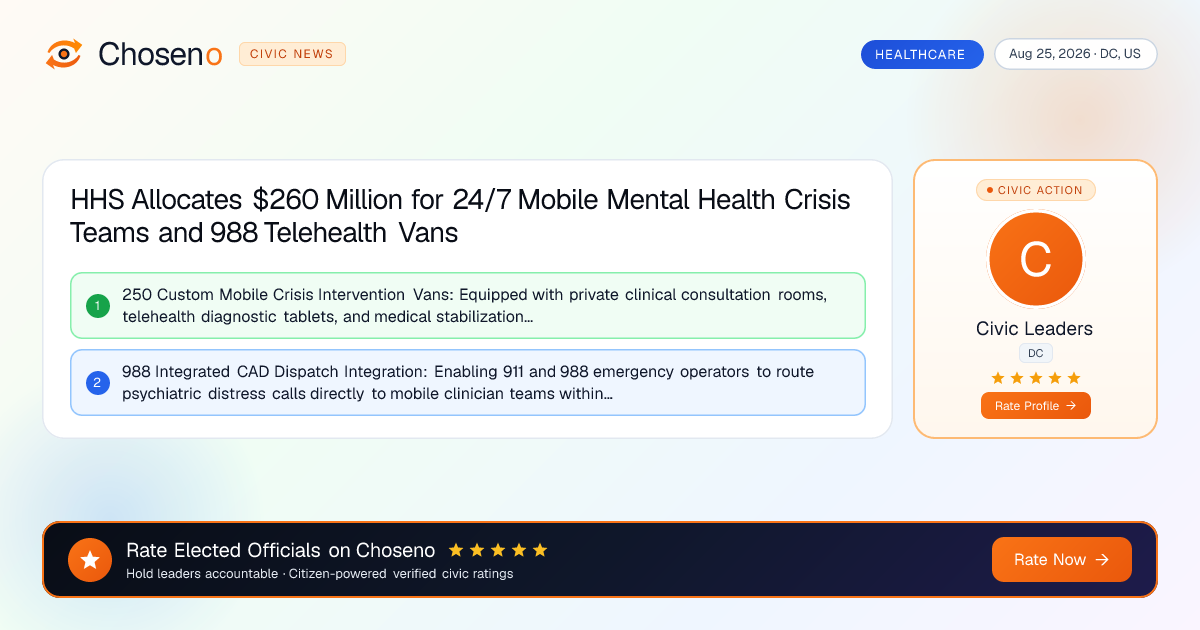
HHS Allocates $260 Million for 24/7 Mobile Mental Health Crisis Teams and 988 Telehealth Vans
Health and Human Services Secretary Xavier Becerra and SAMHSA announce $260 million in federal behavioral health grants to deploy 250 mobile crisis response vans staffed with mental health clinicians and peer specialists nationwide.
Read full article
Healthcare
US Aug 25, 2026
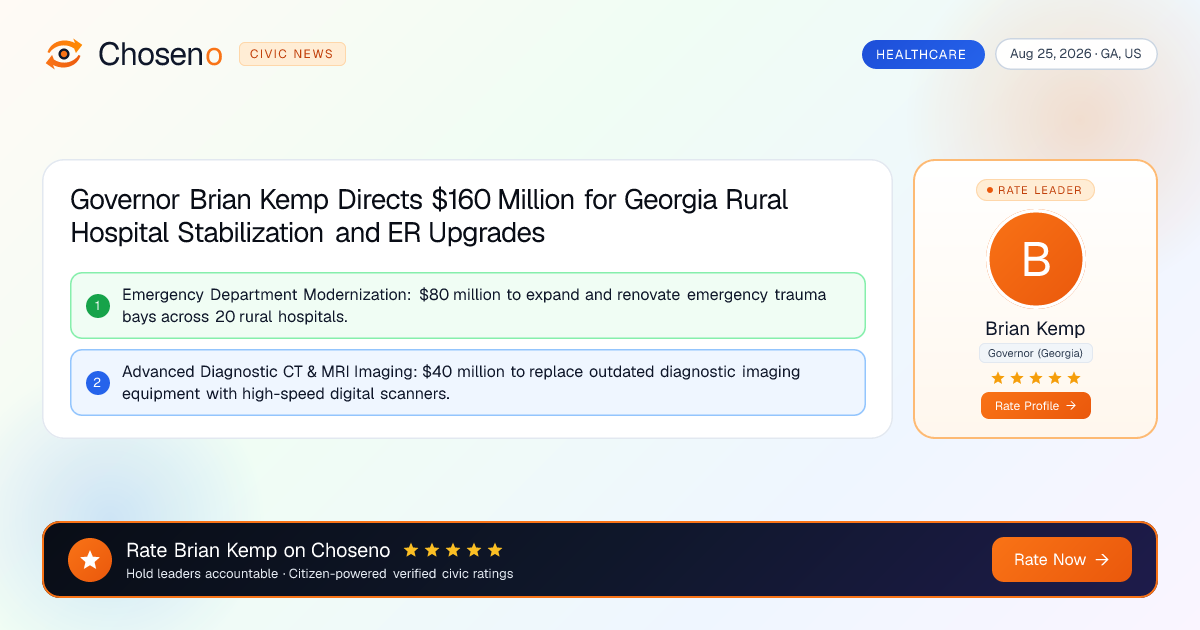
Governor Brian Kemp Directs $160 Million for Georgia Rural Hospital Stabilization and ER Upgrades
Georgia Governor Brian Kemp and the Georgia Department of Community Health award $160 million in Rural Hospital Stabilization grants to modernize emergency departments and recruit diagnostic specialists in twenty rural Georgia counties.
Read full article
Healthcare
US Aug 25, 2026
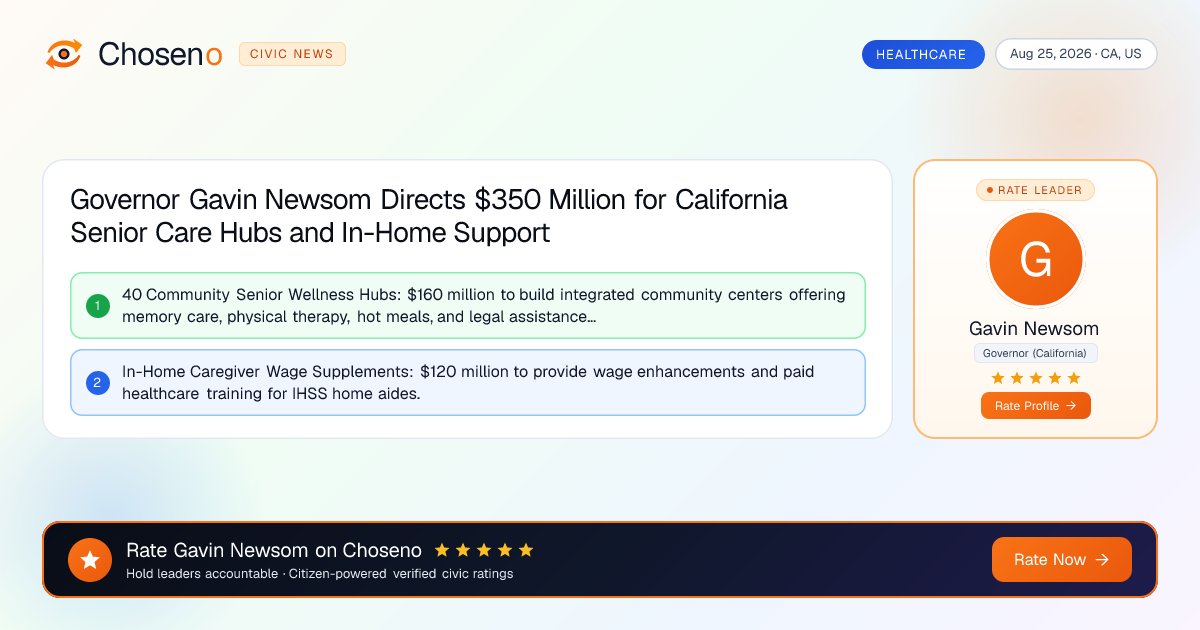
Governor Gavin Newsom Directs $350 Million for California Senior Care Hubs and In-Home Support
California Governor Gavin Newsom signs Assembly Bill 1820, appropriating $350 million from the Master Plan for Aging to construct forty community-based geriatric health hubs and increase wages for 100,000 in-home supportive care workers.
Read full article