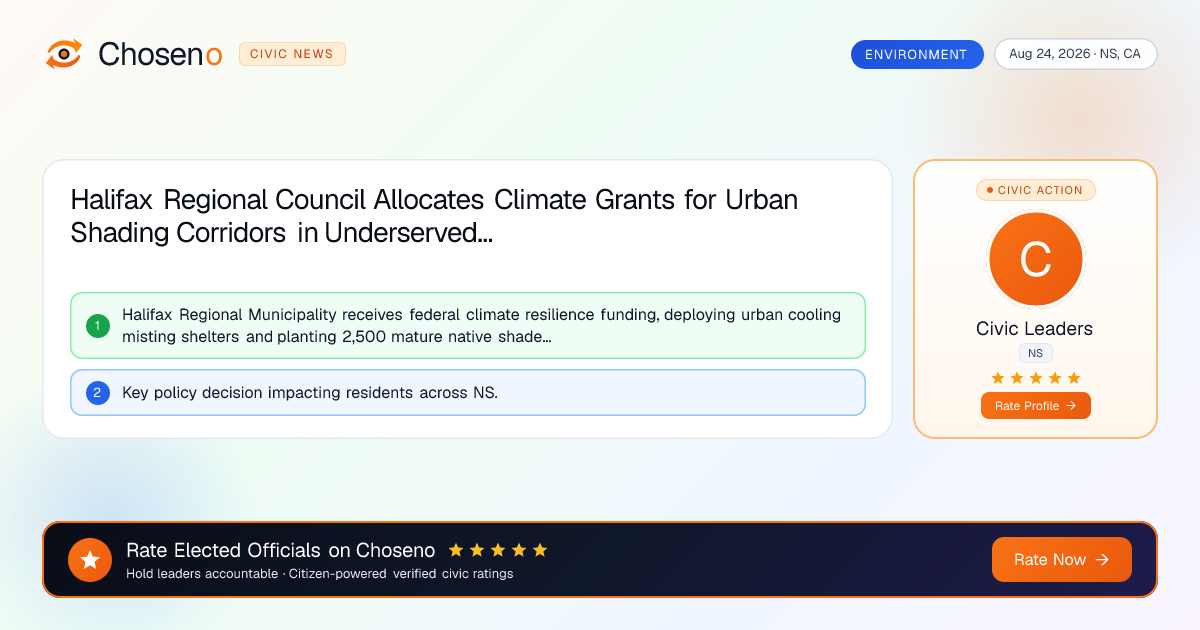
Halifax Regional Council Allocates Climate Grants for Urban Shading Corridors in Underserved Neighborhoods
Halifax Regional Municipality receives federal climate resilience funding, deploying urban cooling misting shelters and planting 2,500 mature native shade trees in Dartmouth and Spryfield.
Choseno Atlantic Climate Bureau August 24, 2026 1 min read NS, CA
★ Choseno Civic Briefing
Key Leaders
HALIFAX, NS — Halifax Regional Council voted to accept $3.8 million in federal climate adaptation funding to implement the Halifax Urban Heat Island Mitigation Plan, installing shaded public cooling transit plazas and planting 2,500 mature trees across dense urban neighborhoods.
Mitigating Summer Heat Alerts and Urban Heat Islands
The initiative focuses on Dartmouth North, Spryfield, and downtown Halifax, constructing solar-powered misting canopies at key transit terminals and replacing asphalt with permeable light-colored pavers. Municipal climate telemetry identified surface temperatures up to 8°C higher in industrial transit corridors compared to coastal parklands.
Mayor Mike Savage affirmed that municipal climate investments must prioritize public health and protect seniors and transit riders from extreme heatwaves.
Community Input and Tree Planting Schedule
Halifax urban forestry teams will partner with neighborhood volunteer associations during the Autumn Community Planting Blitz.
Public health officials praised the installation of hydration stations across municipal transit exchanges.
Project Milestones
Phase 1 transit misting canopies will complete installation by spring 2027 ahead of the summer season.
Related Coverage in Environment
See all Environment newsEnvironment Breaking
US Aug 24, 2026
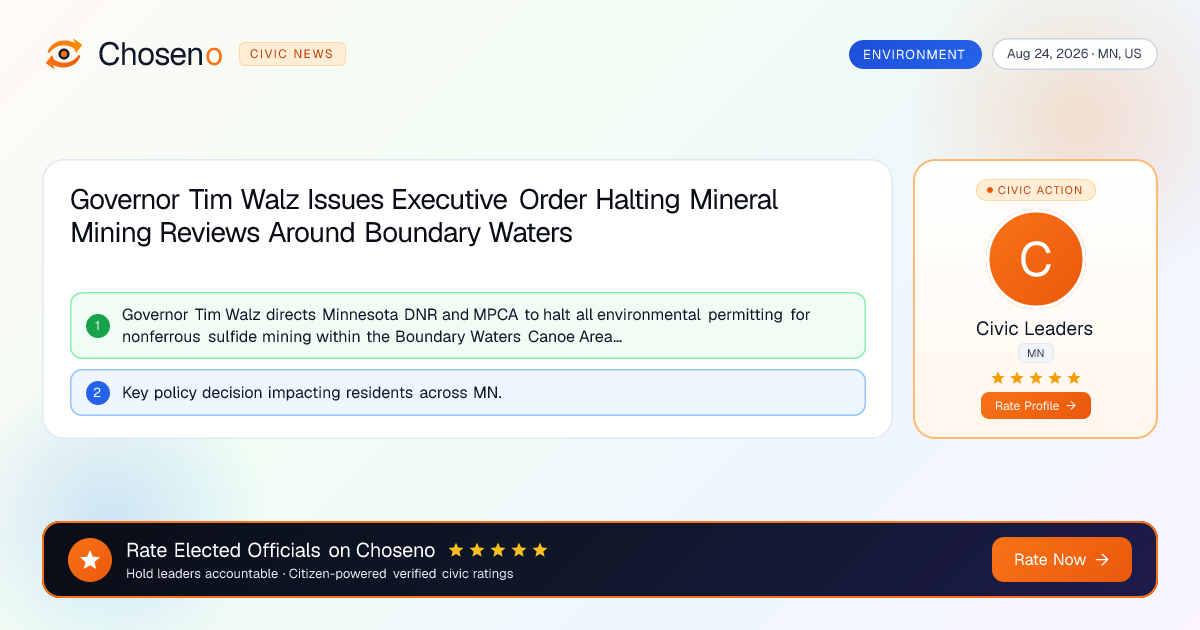
Governor Tim Walz Issues Executive Order Halting Mineral Mining Reviews Around Boundary Waters
Governor Tim Walz directs Minnesota DNR and MPCA to halt all environmental permitting for nonferrous sulfide mining within the Boundary Waters Canoe Area Wilderness watershed.
Read full article
Environment
US Aug 24, 2026
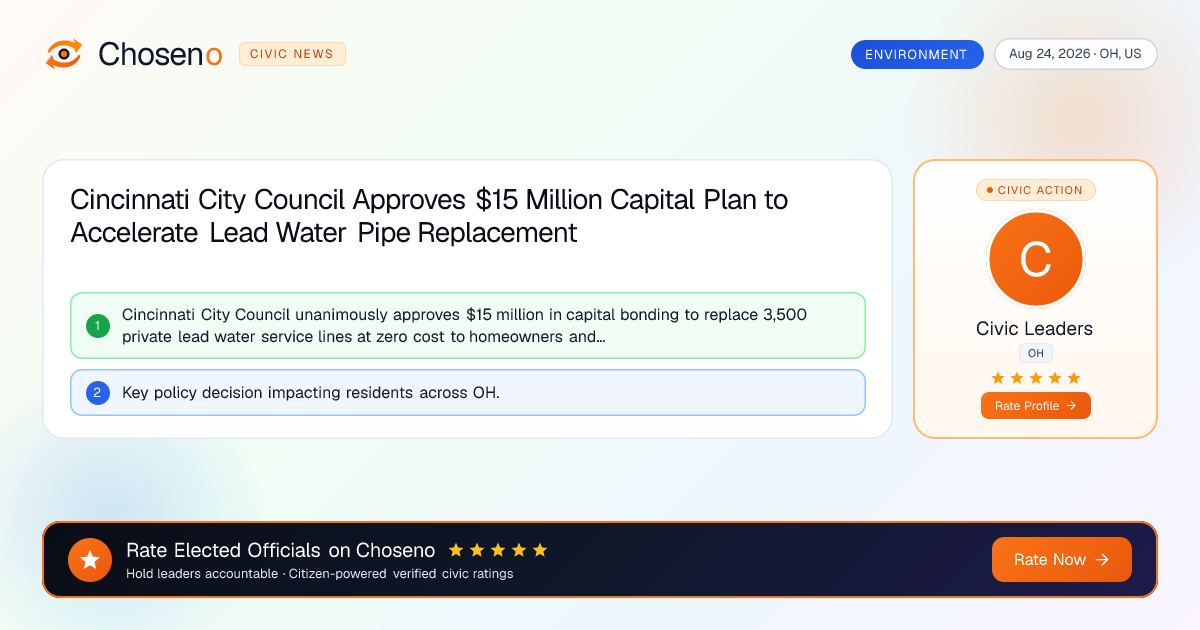
Cincinnati City Council Approves $15 Million Capital Plan to Accelerate Lead Water Pipe Replacement
Cincinnati City Council unanimously approves $15 million in capital bonding to replace 3,500 private lead water service lines at zero cost to homeowners and licensed child care facilities.
Read full article
Environment
CA Aug 24, 2026
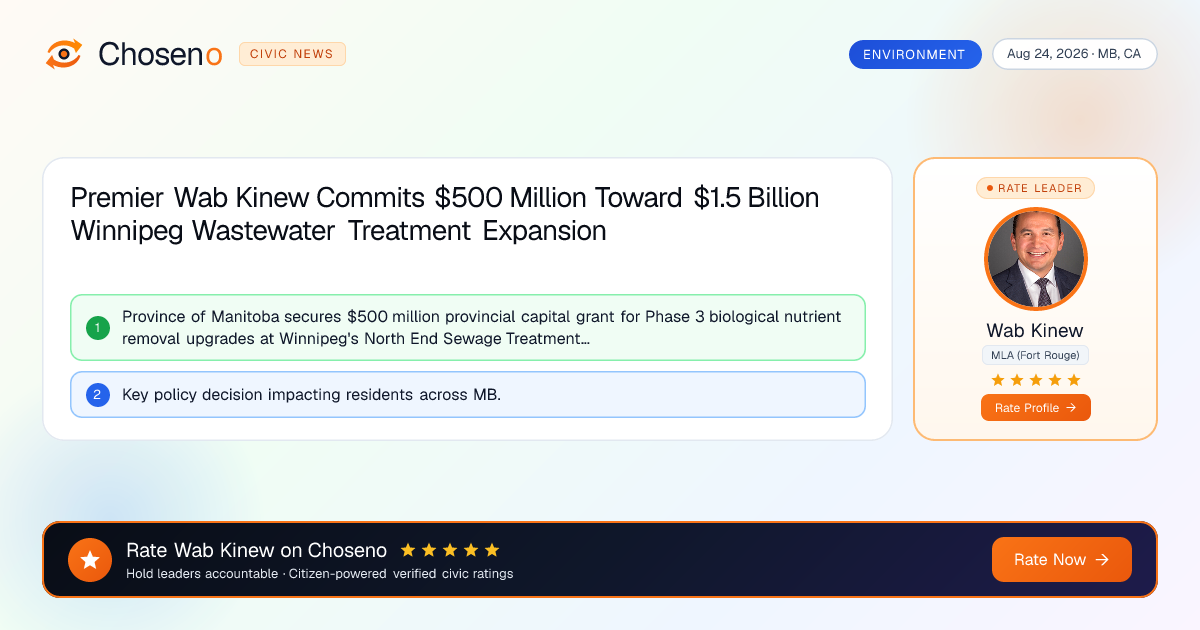
Premier Wab Kinew Commits $500 Million Toward $1.5 Billion Winnipeg Wastewater Treatment Expansion
Province of Manitoba secures $500 million provincial capital grant for Phase 3 biological nutrient removal upgrades at Winnipeg's North End Sewage Treatment Plant to protect Lake Winnipeg.
Read full article