Houston Misdemeanor Marijuana Arrests Surge by Nearly 1,200% Under Mayor Whitmire Ahead of November Decriminalization Vote
Public records reveal Houston police arrests for low-level cannabis possession increased to 440 annually under Mayor John Whitmire, intensifying debate over an upcoming municipal ballot referendum.
Choseno Civic News Desk September 4, 2026Updated September 6, 2026 3 min read Texas, US
Misdemeanor arrests for low-level marijuana possession have increased by approximately 1,200 percent under the administration of Houston Mayor John Whitmire, according to municipal law enforcement records obtained through public disclosure requests by Houston Public Media. The data reveals that the Houston Police Department (HPD) has arrested an average of approximately 440 individuals annually for misdemeanor cannabis possession during Whitmire’s tenure, representing a stark escalation compared to the annual average of approximately 35 arrests recorded between 2021 and 2023 under previous municipal leadership.\n\nThe revelation surfaces just two months before Houston voters are scheduled to decide a landmark municipal ballot referendum that would legally instruct the police department to make misdemeanor marijuana possession its lowest law enforcement priority. In public remarks delivered in August, Mayor Whitmire pushed back against the necessity of the citizen-led ballot measure, asserting that low-level cannabis possession hasn’t been a priority in, quite frankly, a long time. The newly documented arrest figures stand in sharp contrast to the administration’s public characterization, reigniting intense municipal debate between criminal justice reform advocates and city hall leadership over law enforcement resource allocation.\n\nThe upcoming November proposition was certified after progressive advocacy coalition Ground Game Texas submitted roughly 40,000 verified petition signatures to the city secretary, prompting formal City Council authorization for the ballot. Beyond formalizing the lowest-enforcement priority directive, the measure includes strict local prohibitions against the execution of unannounced no-knock search warrants. That’s just wild, remarked Catina Voellinger, executive director of Ground Game Texas, in response to the disclosed arrest statistics. That just makes the case even stronger of why we need these policies.\n\nRepresentatives from local law enforcement organizations offered differing interpretations of the statistical surge. Douglas Griffith, president of the Houston Police Officers’ Union, questioned the underlying metrics, suggesting that reporting adjustments or data classification nuances within HPD records could explain the sudden numerical divergence. Griffith maintained that patrol officers are focused on combating violent crime rather than pursuing low-level cannabis infractions, while cautioning that municipal ballot directives cannot supersede underlying Texas state statutes. Under Texas state law, possession of up to four ounces of marijuana remains classified as a Class B or Class A misdemeanor, punishable by up to a year in county jail and fines reaching $4,000.\n\nThe public records analysis also documented persistent racial disparities in municipal drug enforcement, showing that Black residents accounted for approximately 74 percent of all misdemeanor marijuana arrests made by Houston police over the past five calendar years, despite comprising less than 23 percent of the city’s total population according to Census Bureau demographics. The Harris County District Attorney’s Office continues to manage an alternative pre-charge diversion program that allows qualifying first-time offenders to avoid formal jail booking by completing community supervision and educational coursework. However, because diversion entry relies heavily on individual officer discretion at the point of contact, reform advocates argue that clear statutory deprioritization is vital to ensure equitable enforcement across all policing divisions.\n\nAs Houston approaches the November election, the clash over marijuana arrest data highlights competing philosophies governing urban public safety in Texas. While Mayor Whitmire’s broader administration has emphasized intensified street-level policing visibility and proactive patrol strategies to curb downtown property and violent crimes, the disclosed arrest metrics ensure that voters will face a direct choice between executive enforcement discretion and legally binding municipal deprioritization.
Rate the people mentioned in this article

Related Coverage in Public Safety & Law
See all Public Safety & Law newsPublic Safety & Law
US Sep 5, 2026
Justice Department Seeks Gag Order Against Former DC Councilmember Trayon White Over Jury Video
Federal prosecutors file an emergency motion accusing former D.C. councilmember Trayon White of attempting to taint the jury pool ahead of his upcoming federal bribery trial.
Read full article
Public Safety & Law
US Sep 4, 2026
California Legislature Sends Emergency Rent Price-Gouging Expansion to Governor Gavin Newsom
Senate Bill 1365 heads to the governor's desk, expanding California's 10% emergency rent-increase cap to long-term leases under Penal Code Section 396 amid landlord opposition.
Read full article

Public Safety & Law
US Sep 4, 2026
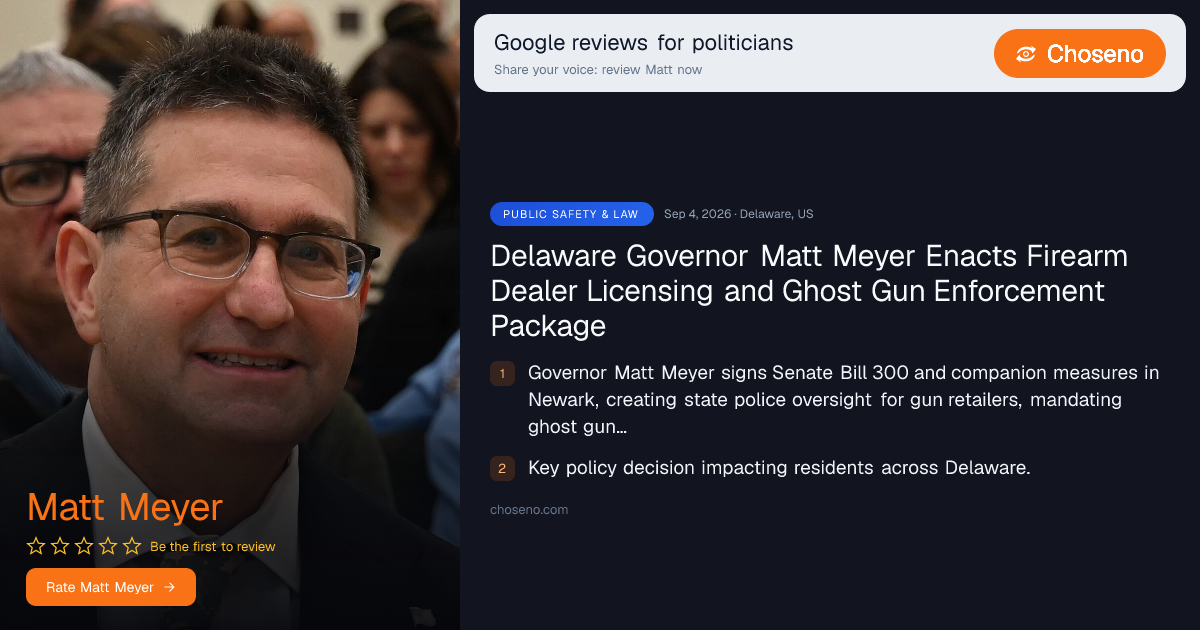
Delaware Governor Matt Meyer Enacts Firearm Dealer Licensing and Ghost Gun Enforcement Package
Governor Matt Meyer signs Senate Bill 300 and companion measures in Newark, creating state police oversight for gun retailers, mandating ghost gun serialization, and establishing a permanent violence prevention office.
Read full article