BREAKING
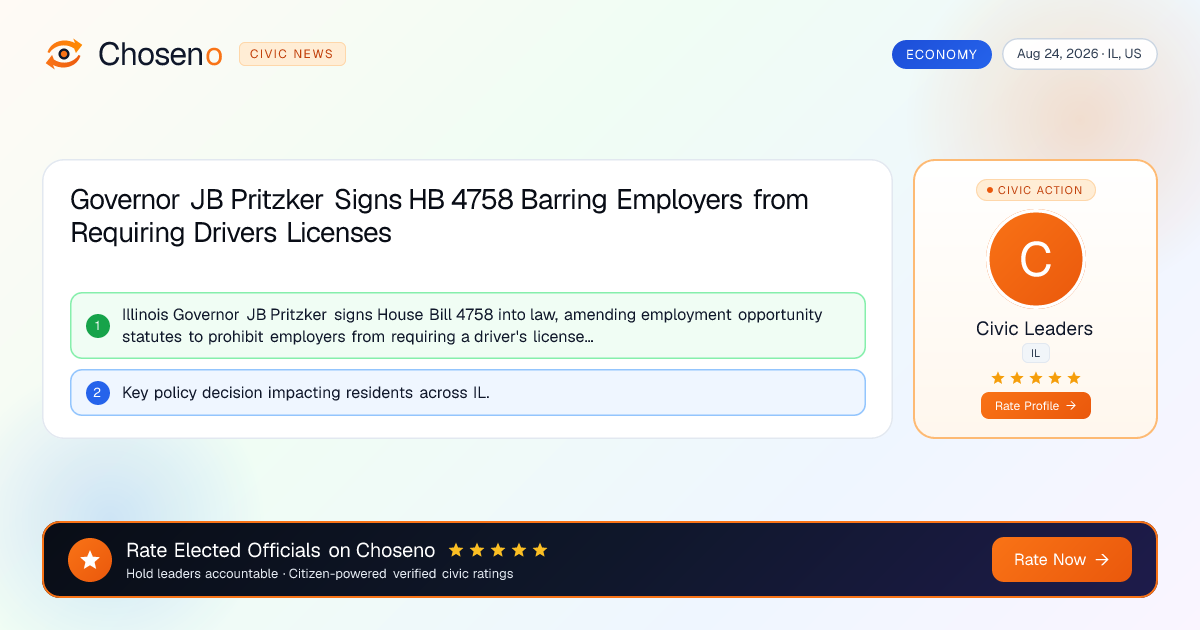
Governor JB Pritzker Signs HB 4758 Barring Employers from Requiring Drivers Licenses
Illinois Governor JB Pritzker signs House Bill 4758 into law, amending employment opportunity statutes to prohibit employers from requiring a driver's license for jobs that do not involve driving.
Choseno Labor Law & State Policy Desk August 24, 2026 1 min read IL, US
★ Choseno Civic Briefing
Key Leaders
SPRINGFIELD, IL — Illinois Governor JB Pritzker signed House Bill 4758 into law, enacting landmark amendments to the Job Opportunities for Qualified Applicants Act to prohibit employers and employment agencies from requiring job applicants to possess a valid driver’s license unless driving is a bona fide occupational qualification for the position.
Removing Artificial Employment Barriers for Transit Commuters
The enacted legislation prohibits commercial employers from screening out qualified job candidates in online applications or interview screenings based on driver's license status, requiring employers to accept state non-driver identification cards, passports, or transit passes for identity verification. Workforce analysts project the law will expand employment access for over 250,000 transit-reliant workers, disabled individuals, and urban commuters across Chicago, Peoria, and Rockford.
Governor Pritzker affirmed that an individual’s ability to do a great job in an office, retail store, or hospital should never be blocked simply because they ride public transit rather than drive a personal car.
Labor Coalitions and Employer Guidance
Chicago Federation of Labor and disability rights advocates celebrated the enactment as a common-sense barrier reduction.
Illinois Chamber of Commerce worked with lawmakers to ensure clear statutory carve-outs for delivery drivers and field technicians.
Effective Date
House Bill 4758 takes full legal effect across all Illinois employers on January 1, 2027.
Related Coverage in Economy
See all Economy newsEconomy Breaking
CA Aug 24, 2026
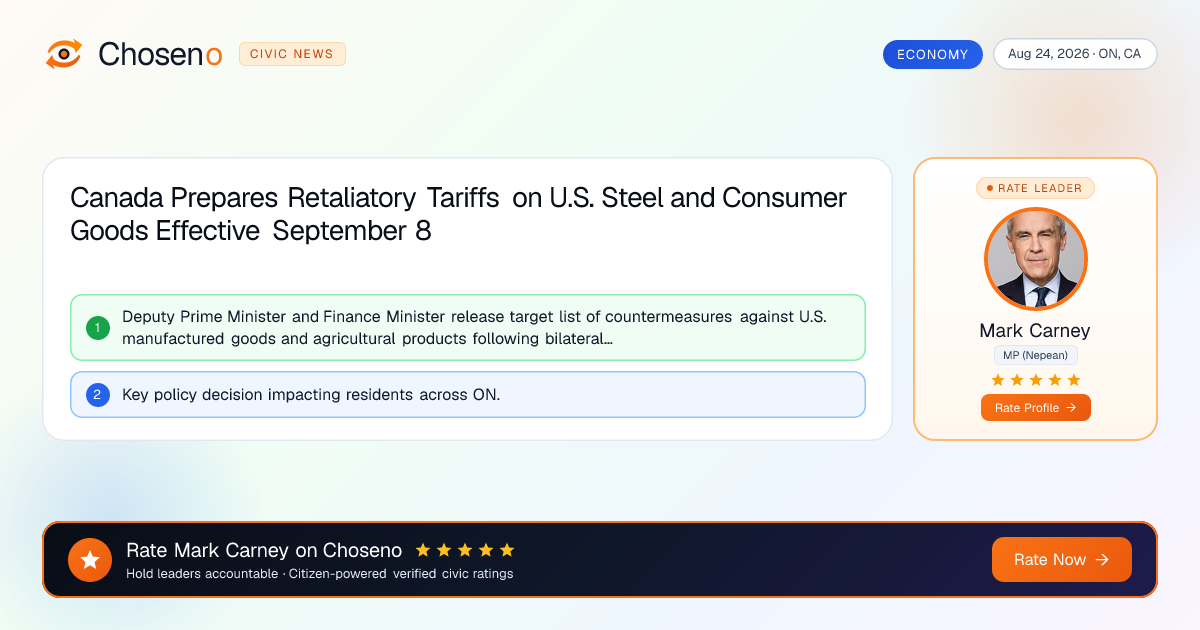
Canada Prepares Retaliatory Tariffs on U.S. Steel and Consumer Goods Effective September 8
Deputy Prime Minister and Finance Minister release target list of countermeasures against U.S. manufactured goods and agricultural products following bilateral tariff negotiations.
Read full article
Economy Breaking
CA Aug 24, 2026
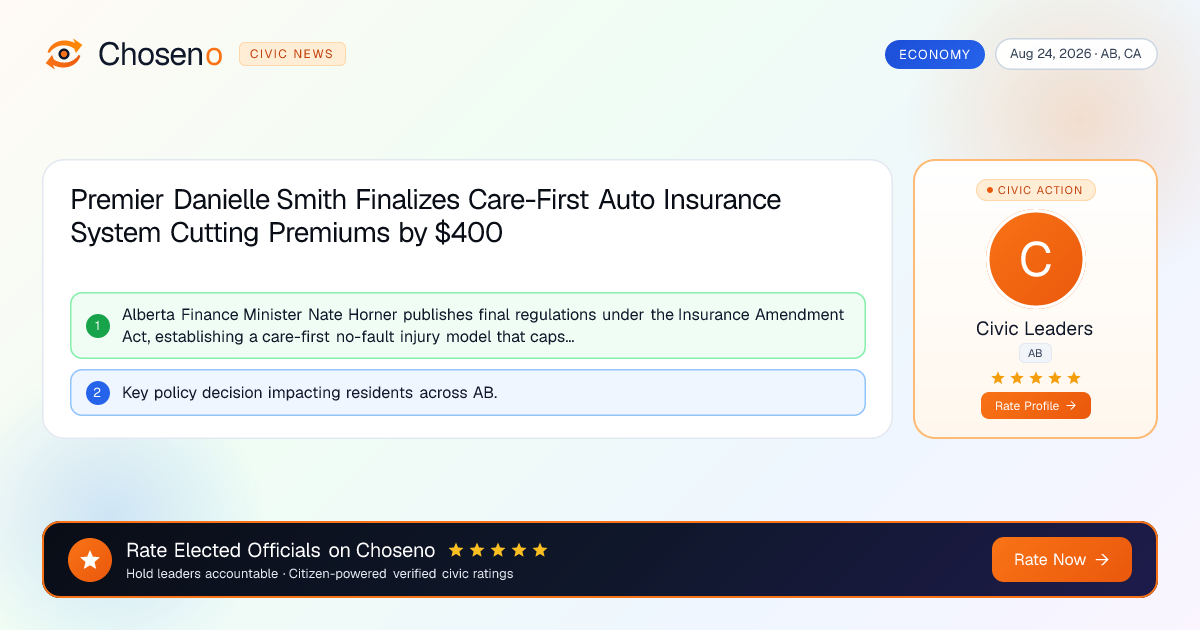
Premier Danielle Smith Finalizes Care-First Auto Insurance System Cutting Premiums by $400
Alberta Finance Minister Nate Horner publishes final regulations under the Insurance Amendment Act, establishing a care-first no-fault injury model that caps legal fees and lowers average annual premiums.
Read full article
Economy
US Aug 24, 2026
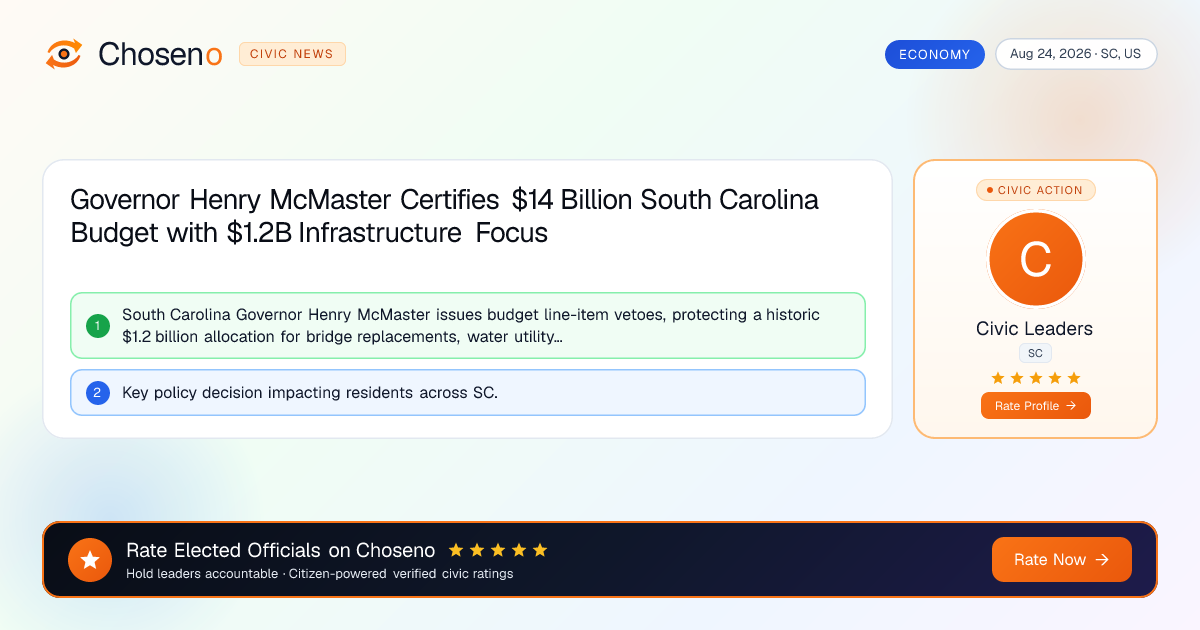
Governor Henry McMaster Certifies $14 Billion South Carolina Budget with $1.2B Infrastructure Focus
South Carolina Governor Henry McMaster issues budget line-item vetoes, protecting a historic $1.2 billion allocation for bridge replacements, water utility grants, and port expansions.
Read full article