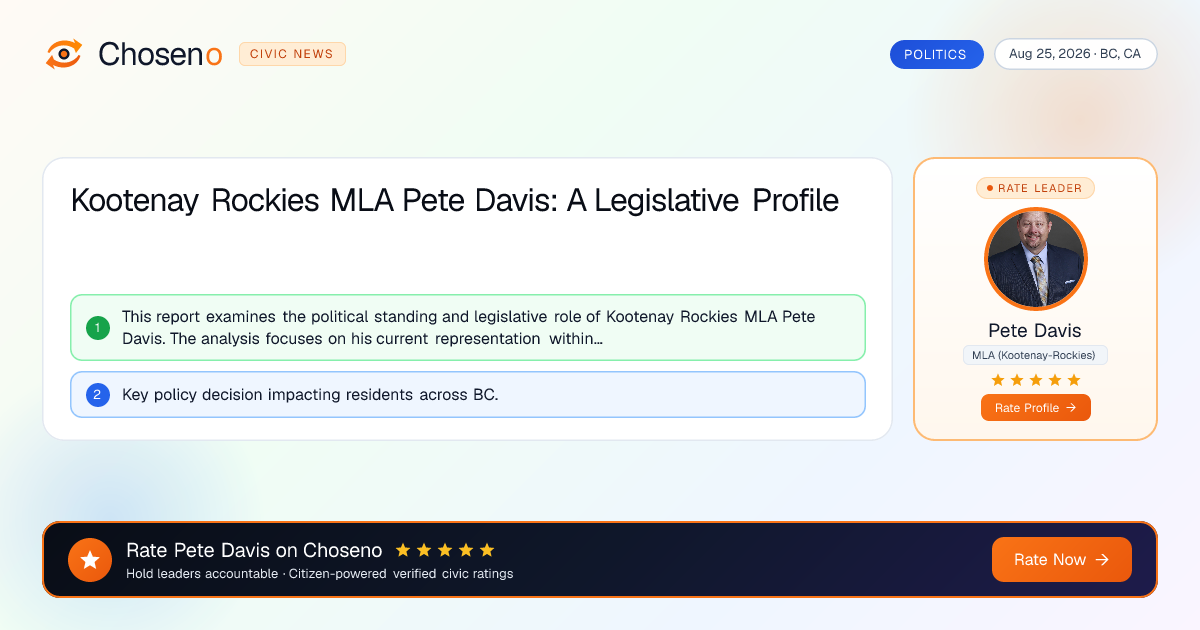
Kootenay Rockies MLA Pete Davis: A Legislative Profile
This report examines the political standing and legislative role of Kootenay Rockies MLA Pete Davis. The analysis focuses on his current representation within the provincial assembly and the implications for his constituency.
Choseno Civic News Desk August 25, 2026 1 min read BC, CA
★ Choseno Civic Briefing
Key Leaders
Dateline
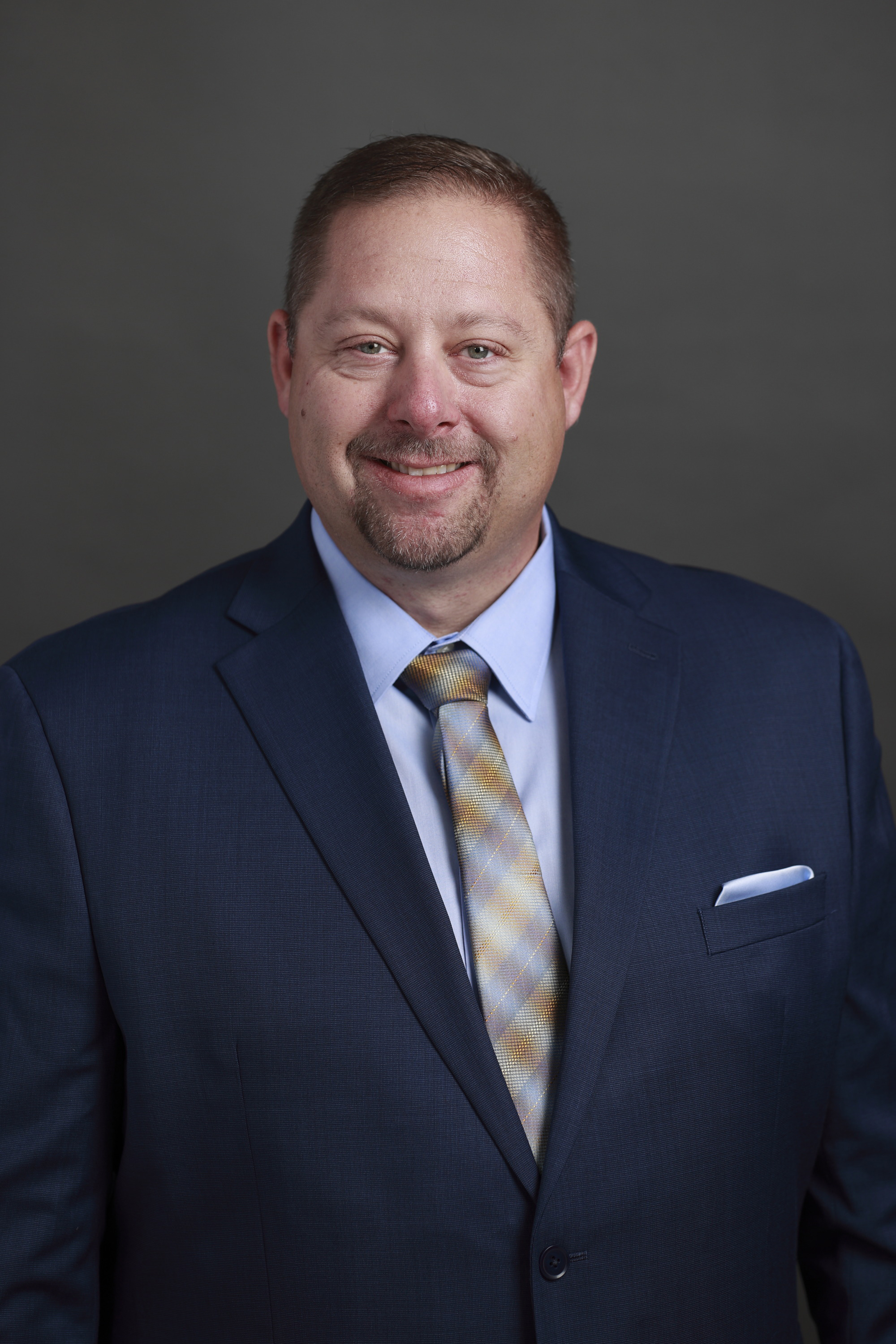
CRANBROOK, BC – August 25, 2026. This report examines the legislative profile of Pete Davis, the Member of the Legislative Assembly (MLA) for the Kootenay Rockies riding.
Policy & Taxpayer Impact
As an elected representative, MLA Davis is responsible for advocating for the interests of the Kootenay Rockies region within the provincial legislature. Taxpayers in this district rely on his office to navigate provincial policy, secure regional funding, and address local infrastructure and service delivery concerns that directly impact the provincial budget.
Political & Legal Stakes
The political stakes for the Kootenay Rockies riding involve the balance of power within the provincial assembly. MLA Davis serves as a primary conduit between local constituents and the provincial government, with his voting record and committee participation serving as key indicators of his legislative priorities and effectiveness.
The Debate
Proponents of MLA Davis’s tenure often highlight his accessibility and focus on regional economic development as essential for the growth of the Kootenay Rockies. Conversely, critics and opposition members may scrutinize his alignment with government policy, questioning whether his legislative actions sufficiently address the specific socio-economic challenges faced by rural constituents compared to urban centers.
Public Accountability Context
Public accountability for an MLA is measured through their transparency in legislative voting and their responsiveness to constituent inquiries. As the representative for the Kootenay Rockies, Davis remains subject to the ongoing evaluation of his performance by the electorate, particularly regarding his ability to translate local needs into actionable provincial policy.
Rate the people mentioned in this article
Related Coverage in Politics
See all Politics newsPolitics
US Aug 25, 2026
Hungary Files Criminal Complaint Over $965M COVID-19 Ventilator Procurement
Hungarian authorities have initiated a criminal complaint regarding a $965 million ventilator procurement deal conducted during the COVID-19 pandemic. The legal action centers on allegations of potential fraud involving the massive expenditure of public funds.
Read full article
Politics
US Aug 25, 2026
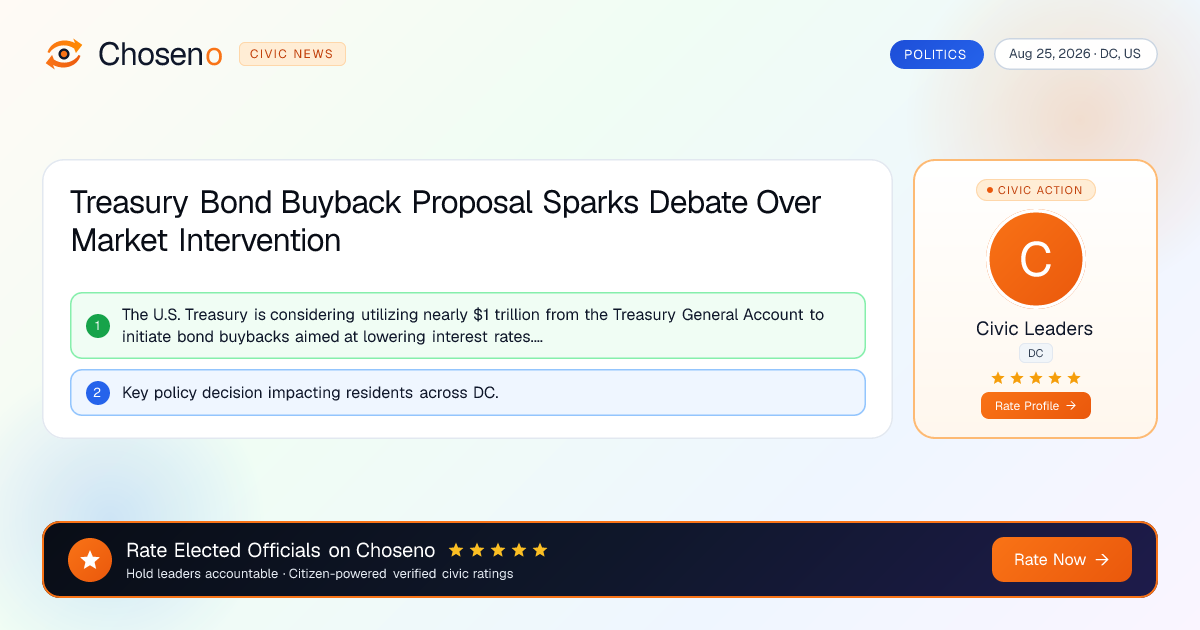
Treasury Bond Buyback Proposal Sparks Debate Over Market Intervention
The U.S. Treasury is considering utilizing nearly $1 trillion from the Treasury General Account to initiate bond buybacks aimed at lowering interest rates. This strategy has drawn sharp criticism from market experts who warn that such interventions may be ineffective.
Read full article
Politics
US Aug 25, 2026
President Trump Faces Senate GOP Pushback Over Canadian Trade and Beef Tariff Policy
President Trump has announced a plan to exempt 300,000 tons of ground beef from out-of-quota tariffs while simultaneously increasing levies on other Canadian goods. This shift in trade policy aims to lower domestic food prices but has triggered significant friction with Republican senators.
Read full article