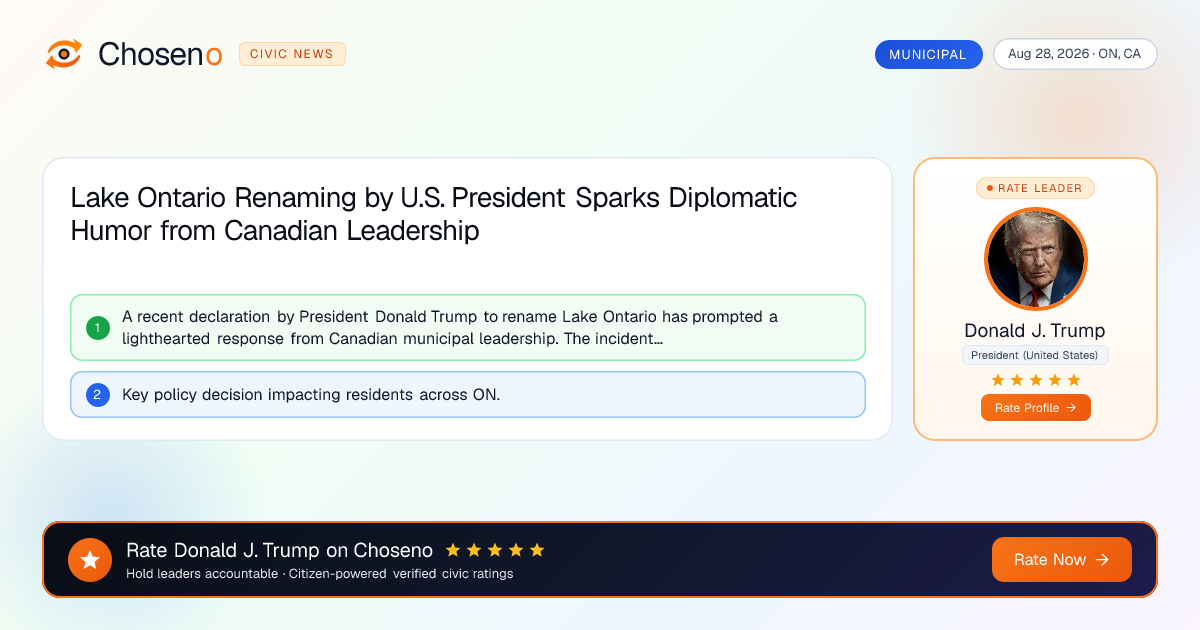
Lake Ontario Renaming by U.S. President Sparks Diplomatic Humor from Canadian Leadership
A recent declaration by President Donald Trump to rename Lake Ontario has prompted a lighthearted response from Canadian municipal leadership. The incident highlights the intersection of international geography and political rhetoric without direct fiscal impact on taxpayers.
Choseno Civic News Desk August 28, 2026 2 min read ON, CA
Dateline Lead
TORONTO, ON — A recent statement by U.S. President Donald Trump regarding the renaming of Lake Ontario has triggered a swift and humorous response from Canadian municipal leadership. The declaration, which suggests a unilateral change to a major international body of water, has been met with irony by local officials.
Policy & Taxpayer Impact
While the renaming announcement has generated significant public discourse, there is currently no evidence of a formal policy shift or legislative action that would impact Canadian taxpayers. The event remains a matter of political rhetoric rather than a binding administrative change to international borders or water rights.
Political & Legal Stakes
Legally, the naming of international bodies of water is governed by established treaties and international geographic naming boards. Unilateral renaming by a head of state does not carry the force of law in Canada, nor does it alter the sovereign status of the lake. The incident underscores the sensitivity of cross-border relations and the potential for political statements to complicate diplomatic norms.
The Debate
Proponents of the President’s rhetoric may view such statements as a bold assertion of national influence or a symbolic gesture intended for a domestic audience. Conversely, critics and Canadian officials emphasize the importance of maintaining established international protocols. The Canadian mayor involved in the exchange joked she is now the "Head of America," a remark that serves to highlight the absurdity of the President's claim while maintaining a diplomatic, albeit satirical, stance.
Public Accountability Context
Citizens are encouraged to monitor official government channels for any substantive changes to international agreements. As of this reporting, the incident is categorized as a diplomatic curiosity rather than a shift in official policy, serving as a reminder of the role that public figures play in shaping the discourse surrounding international geography.
Rate the people mentioned in this article

Related Coverage in Municipal
See all Municipal newsMunicipal
US Aug 28, 2026
South Carolina Attorney General Clarifies Municipal Authority Over Chapin Legal Appointments
The South Carolina Attorney General’s office has issued a formal opinion stating that the Chapin Town Council, rather than the mayor, holds the legal authority to hire the town attorney. This clarification resolves a governance dispute regarding the town's administrative appointment powers.
Read full article
Municipal
US Aug 28, 2026
Washoe County Fire Victims Receive Emergency Housing Fund Allocation from Governor
Governor Joe Lombardo has directed state housing resources to support residents displaced by recent fires in Washoe County. This reallocation aims to provide immediate relief for those impacted by the disaster.
Read full article
Municipal
US Aug 28, 2026
Boston City Hall Hosts Private Elopement for Tricia Robredo and Partner
Tricia Robredo, daughter of Naga Mayor Leni Robredo, finalized a marriage ceremony at Boston City Hall. The event represents a private civil union with no reported impact on municipal tax expenditures.
Read full article