Lexington Residents Challenge Expansion of Flock Surveillance Camera Network
Lexington community members voiced significant opposition to the proposed implementation of the Flock camera system during a recent city council open comment session. The debate centers on the balance between municipal public safety initiatives and the privacy rights of local residents.
Choseno Civic News Desk August 28, 2026 1 min read KY, US
Dateline Lead
LEXINGTON, KY — During a recent city council open comment session, Lexington residents gathered to voice opposition regarding the potential deployment of the Flock camera system. The public testimony highlighted growing community apprehension regarding the integration of automated surveillance technology within the city.
Policy & Taxpayer Impact
The proposed policy involves the integration of Flock camera technology, which utilizes automated license plate recognition and vehicle tracking capabilities. While the city council has not finalized the fiscal commitment, the discussion centers on the allocation of municipal funds toward high-tech surveillance infrastructure intended to assist law enforcement in tracking criminal activity.
Political & Legal Stakes
The introduction of this technology places the Lexington City Council at the center of a broader national debate regarding the use of private-sector surveillance tools by municipal governments. Legal experts often note that such systems raise questions regarding data retention policies, the potential for over-policing, and the constitutional implications of constant monitoring in public spaces.
The Debate
Proponents of the Flock system argue that the technology provides essential tools for law enforcement to solve crimes more efficiently and deter criminal behavior through real-time data. Conversely, critics at the council meeting expressed concerns that the system represents an invasive expansion of government surveillance. Opponents argue that the potential for privacy infringement outweighs the stated security benefits, urging the council to prioritize civil liberties over automated monitoring.
Public Accountability Context
As the city council continues to evaluate the implementation of the Flock system, the recent open comment session serves as a critical indicator of public sentiment. Residents are demanding greater transparency regarding how the data will be stored, who will have access to the information, and what specific safeguards will be established to prevent the misuse of surveillance technology.
Related Coverage in Municipal
See all Municipal newsMunicipal
US Aug 28, 2026
South Carolina Attorney General Clarifies Municipal Authority Over Chapin Legal Appointments
The South Carolina Attorney General’s office has issued a formal opinion stating that the Chapin Town Council, rather than the mayor, holds the legal authority to hire the town attorney. This clarification resolves a governance dispute regarding the town's administrative appointment powers.
Read full article
Municipal
US Aug 28, 2026
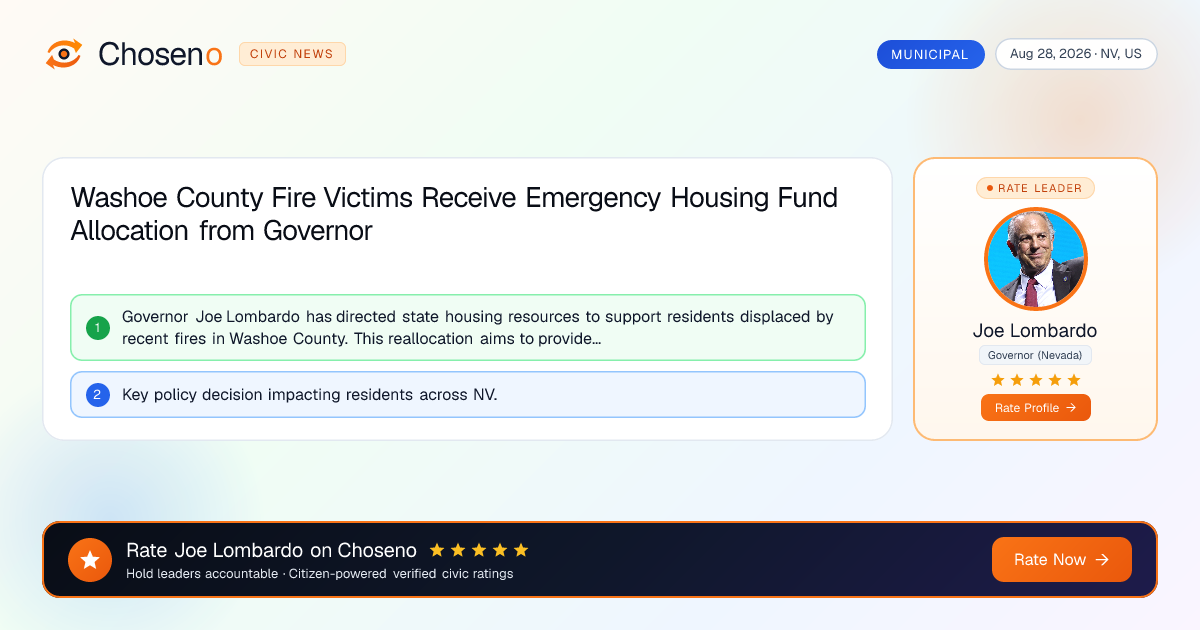
Washoe County Fire Victims Receive Emergency Housing Fund Allocation from Governor
Governor Joe Lombardo has directed state housing resources to support residents displaced by recent fires in Washoe County. This reallocation aims to provide immediate relief for those impacted by the disaster.
Read full article
Municipal
US Aug 28, 2026
Boston City Hall Hosts Private Elopement for Tricia Robredo and Partner
Tricia Robredo, daughter of Naga Mayor Leni Robredo, finalized a marriage ceremony at Boston City Hall. The event represents a private civil union with no reported impact on municipal tax expenditures.
Read full article