Lincoln Charter Amendment Proposals Excluded from November 3 Ballot Following Legal Review
Proposed changes to the Lincoln city charter will not appear on the upcoming November 3 ballot due to missed filing deadlines. This decision effectively delays potential municipal governance reforms until a future election cycle.
Choseno Civic News Desk August 28, 2026 2 min read NE, US
Dateline Lead
LINCOLN, NE — Proposed amendments to the Lincoln city charter have been officially excluded from the November 3 ballot. The determination was made by the city attorney, who concluded that the submission of these proposals occurred after the legally mandated deadline.
Policy & Taxpayer Impact
The exclusion of these charter amendments means that voters will not have the opportunity to weigh in on proposed structural or procedural changes to city government this November. While the delay does not carry an immediate direct tax levy, it impacts the timeline for potential administrative reforms that could have influenced future municipal operations and resource allocation.
Political & Legal Stakes
The legal determination rests on the strict adherence to election filing timelines. By missing the cutoff, the proponents of the amendments are unable to bypass the procedural hurdle, effectively freezing the current charter status quo until the next available election opportunity. The city attorney’s office maintains that the decision is a matter of procedural compliance rather than a judgment on the merits of the proposals themselves.
The Debate
Proponents of the amendments argue that the proposed changes are necessary to modernize city governance and improve responsiveness to constituent needs. Conversely, critics or those favoring the status quo emphasize the importance of strict adherence to election laws, arguing that filing deadlines exist to ensure orderly and transparent ballot preparation. The debate highlights a tension between the desire for rapid civic reform and the necessity of maintaining established legal frameworks for electoral processes.
Public Accountability Context
Citizens seeking to understand the status of these proposals are encouraged to review the official city attorney’s findings. The situation serves as a reminder of the critical role that administrative deadlines play in the democratic process, as even significant policy initiatives can be sidelined by procedural delays.
Related Coverage in Municipal
See all Municipal newsMunicipal
US Aug 28, 2026
South Carolina Attorney General Clarifies Municipal Authority Over Chapin Legal Appointments
The South Carolina Attorney General’s office has issued a formal opinion stating that the Chapin Town Council, rather than the mayor, holds the legal authority to hire the town attorney. This clarification resolves a governance dispute regarding the town's administrative appointment powers.
Read full article
Municipal
US Aug 28, 2026
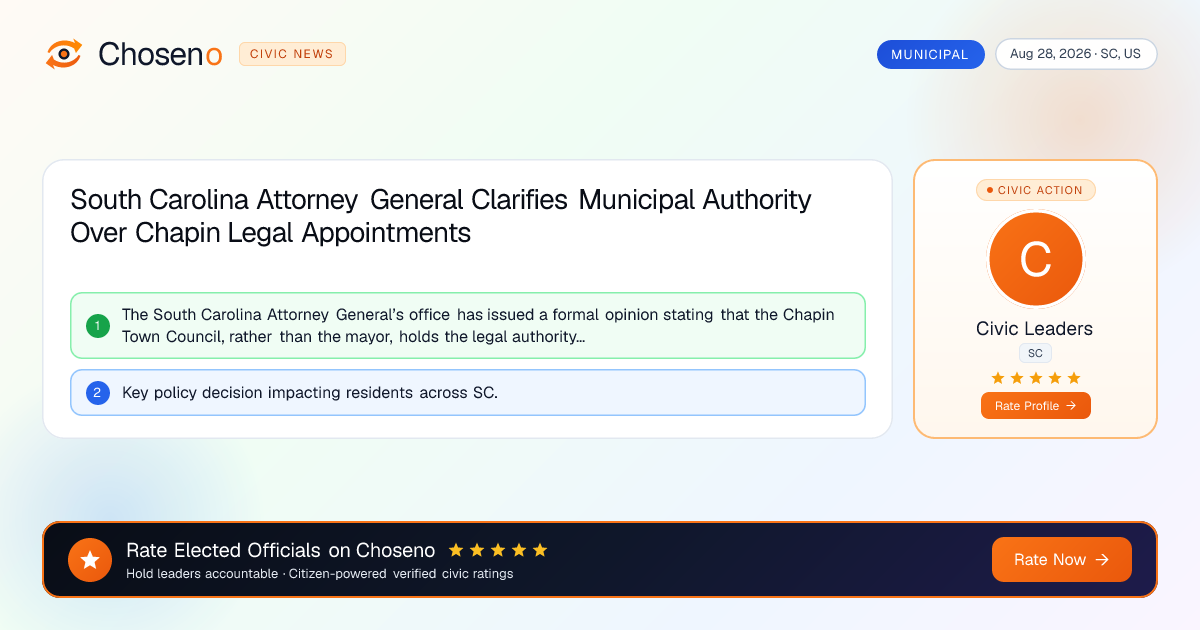
Washoe County Fire Victims Receive Emergency Housing Fund Allocation from Governor
Governor Joe Lombardo has directed state housing resources to support residents displaced by recent fires in Washoe County. This reallocation aims to provide immediate relief for those impacted by the disaster.
Read full article
Municipal
US Aug 28, 2026
Boston City Hall Hosts Private Elopement for Tricia Robredo and Partner
Tricia Robredo, daughter of Naga Mayor Leni Robredo, finalized a marriage ceremony at Boston City Hall. The event represents a private civil union with no reported impact on municipal tax expenditures.
Read full article