Los Angeles Adjusts Street Vending Enforcement Following Policy Debate
Mayor Karen Bass has moved to relax enforcement measures against street vendors in Los Angeles following significant public and political discourse. The shift aims to balance regulatory compliance with the economic realities of local small-scale entrepreneurs.
Choseno Civic News Desk August 28, 2026 1 min read CA, US
Dateline Lead
LOS ANGELES — Mayor Karen Bass has initiated a shift in the city's approach to street vending, easing enforcement measures that had previously drawn significant scrutiny. This policy adjustment follows a period of intense debate regarding the city's regulatory framework for sidewalk commerce.
Policy & Taxpayer Impact
The modification of the crackdown represents a pivot in how municipal resources are allocated toward code enforcement. Taxpayers are directly affected by the shift in administrative focus, as the city moves away from aggressive punitive measures toward a model that seeks to integrate vendors into the formal economy while managing public space usage.
Political & Legal Stakes
The decision reflects the political pressure on the Mayor’s office to reconcile competing interests within the city. Legal and administrative challenges regarding the rights of vendors versus the city's mandate to maintain public order have created a complex environment for local governance, forcing a re-evaluation of existing ordinances.
The Debate
Proponents of the easing argue that the previous crackdown disproportionately harmed low-income workers and immigrant communities who rely on vending for their livelihoods. Conversely, critics of the relaxed enforcement express concerns regarding public health, safety, and the potential for unfair competition with brick-and-mortar businesses that must adhere to stringent permitting and tax requirements.
Public Accountability Context
As the city transitions to this new enforcement posture, residents and business owners are monitoring the implementation of these changes. The Mayor’s office faces the ongoing task of ensuring that public spaces remain accessible and safe while providing a viable pathway for street vendors to operate legally within the city's regulatory structure.
Rate the people mentioned in this article

Related Coverage in Municipal
See all Municipal newsMunicipal
US Aug 28, 2026
South Carolina Attorney General Clarifies Municipal Authority Over Chapin Legal Appointments
The South Carolina Attorney General’s office has issued a formal opinion stating that the Chapin Town Council, rather than the mayor, holds the legal authority to hire the town attorney. This clarification resolves a governance dispute regarding the town's administrative appointment powers.
Read full article
Municipal
US Aug 28, 2026
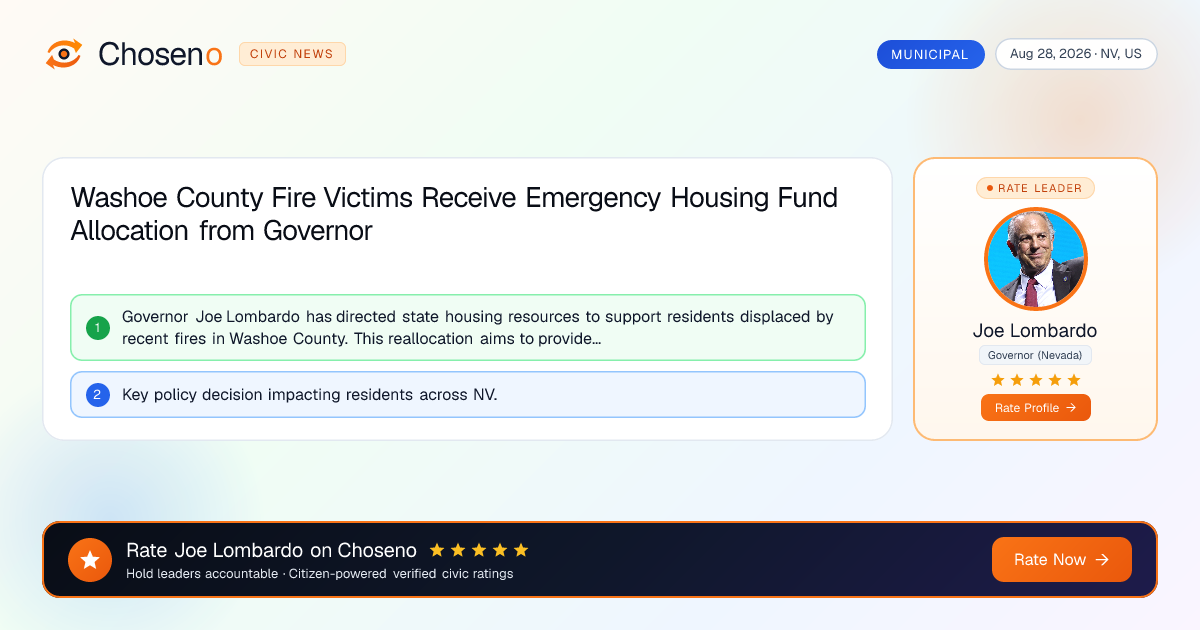
Washoe County Fire Victims Receive Emergency Housing Fund Allocation from Governor
Governor Joe Lombardo has directed state housing resources to support residents displaced by recent fires in Washoe County. This reallocation aims to provide immediate relief for those impacted by the disaster.
Read full article
Municipal
US Aug 28, 2026
Boston City Hall Hosts Private Elopement for Tricia Robredo and Partner
Tricia Robredo, daughter of Naga Mayor Leni Robredo, finalized a marriage ceremony at Boston City Hall. The event represents a private civil union with no reported impact on municipal tax expenditures.
Read full article