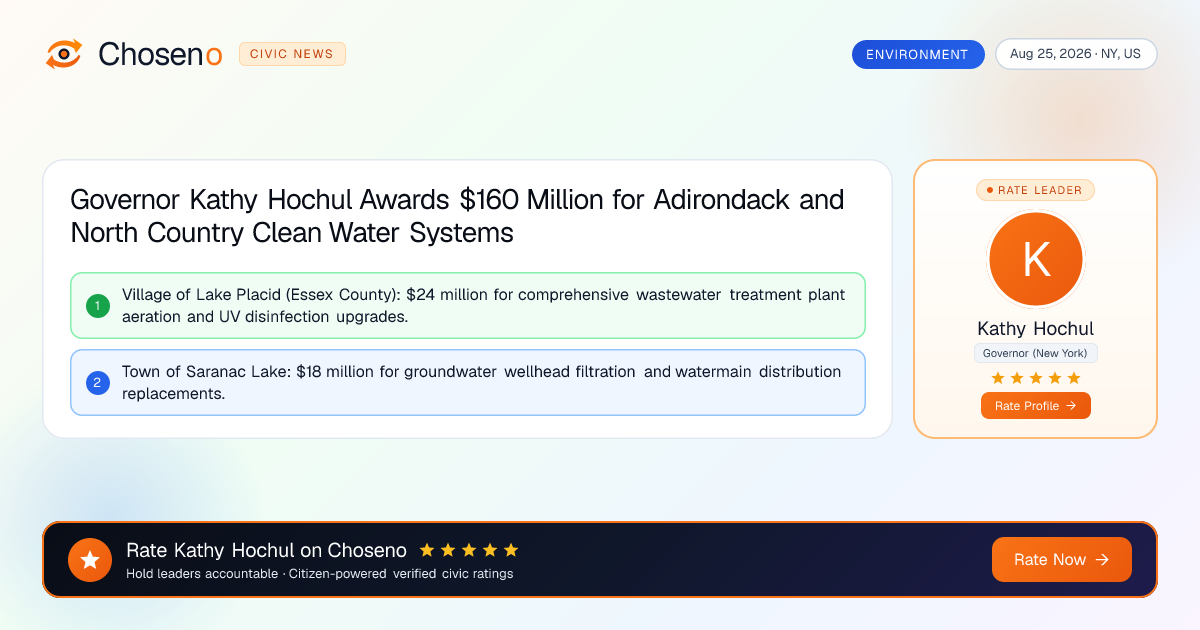
Mayor Kate Gallego Directs $75 Million for Phoenix Urban Cool Pavement and Heat-Resilience Corridors
Phoenix Mayor Kate Gallego and the Phoenix City Council authorize $75 million to coat 500 miles of residential asphalt with solar-reflective Cool Pavement and plant 30,000 desert-adapted shade trees across high-heat neighborhoods.
Choseno Southwest Bureau August 24, 2026 2 min read AZ, US
★ Choseno Civic Briefing
Key Leaders
PHOENIX — Mayor Kate Gallego and the Phoenix City Council voted unanimously on Monday to approve a $75 million municipal capital heat-resilience investment package to expand the city's nation-leading Cool Pavement Program to 500 miles of residential streets and plant 30,000 native desert shade trees along active pedestrian and transit corridors.
The municipal climate initiative, managed by the Phoenix Office of Heat Response and Mitigation and the Street Transportation Department, directly targets the urban heat island effect across West Phoenix, Maryvale, and South Mountain neighborhoods where nighttime temperatures remain dangerously elevated throughout summer months.
Lowering Surface Temperatures by 12 Degrees in Desert Neighborhoods Urban thermal imaging studies conducted by Arizona State University demonstrated that Phoenix's Cool Pavement seal—a light-colored water-based asphalt coating—reflects solar radiation and lowers surface roadway temperatures by 10.5 to 12 degrees Fahrenheit compared to standard dark asphalt, reducing nighttime heat retention.
"As the hottest large city in America, Phoenix is inventing the playbook for urban extreme heat resilience," Mayor Kate Gallego said at a Cool Pavement application site in Maryvale. "Extreme heat is a public health and quality-of-life issue for our working families. By expanding reflective cool pavement across 500 miles of neighborhood streets and building continuous shade canopies, we are lowering neighborhood temperatures, saving families money on air conditioning, and making our sidewalks safe and walkable year-round."
Engineered Infrastructure and Pedestrian Transit Corridors The $75 million package funds:
- 500 Miles of Reflective Cool Pavement: Coating residential neighborhood streets and school walking routes with high-durability polymer seal.
- 30,000 Desert Shade Trees: Planting mature, drought-tolerant palo verde, mesquite, and ironwood trees equipped with automated subsurface drip irrigation.
- 150 Solar-Powered Transit Shade Canopies: Installing engineered aerodynamic shade structures with integrated water misting at high-ridership bus stops.
Public health officials and neighborhood civic associations commended the municipal program, highlighting that urban shade and reflective pavement significantly reduce heat-related emergency calls.
Rate the people mentioned in this article
Related Coverage in Environment
See all Environment newsEnvironment
CA Aug 25, 2026
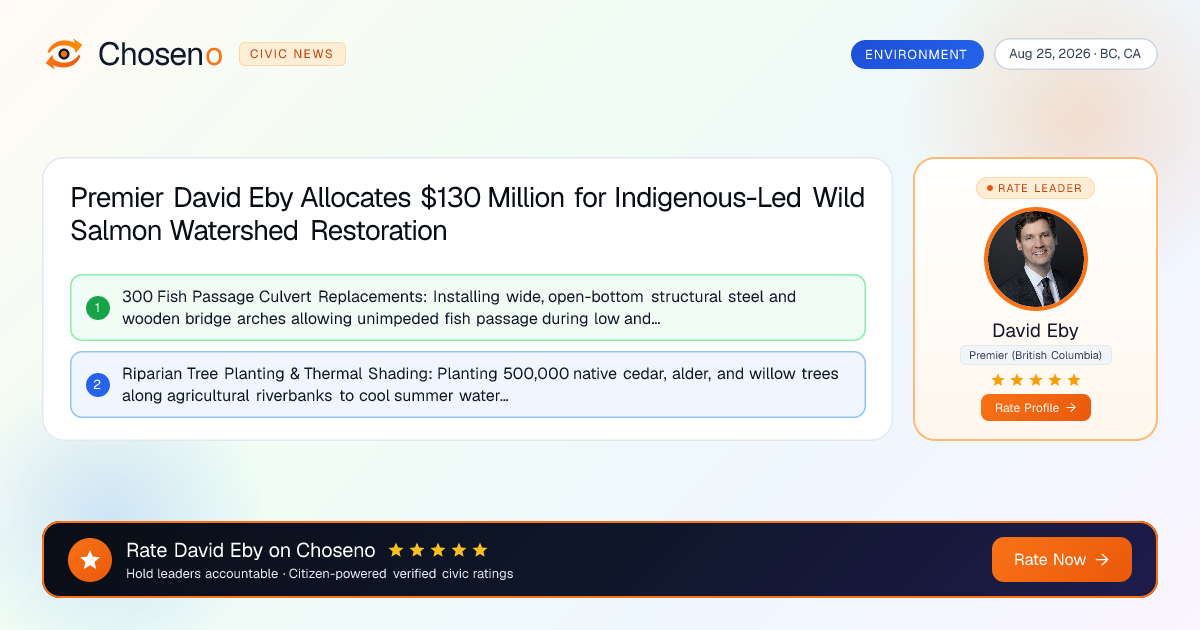
Premier David Eby Allocates $130 Million for Indigenous-Led Wild Salmon Watershed Restoration
British Columbia Premier David Eby and Water Minister Nathan Cullen announce $130 million from the BC Salmon Restoration and Innovation Fund to remove 300 fish passage barrier culverts and restore vital spawning rivers.
Read full article
Environment
US Aug 25, 2026
Department of the Interior Awards $310 Million for Colorado River Tribal Water Conservation
Interior Secretary Deb Haaland directs $310 million in Inflation Reduction Act funds to construct closed-pipe irrigation systems and groundwater storage facilities across five Colorado River Indian tribes in Arizona and California.
Read full article

Environment
US Aug 25, 2026
Governor Kathy Hochul Awards $160 Million for Adirondack and North Country Clean Water Systems
New York Governor Kathy Hochul directs $160 million in state clean water grants to construct advanced wastewater treatment plants and drinking water filtration facilities across twenty-two North Country and Adirondack communities.
Read full article