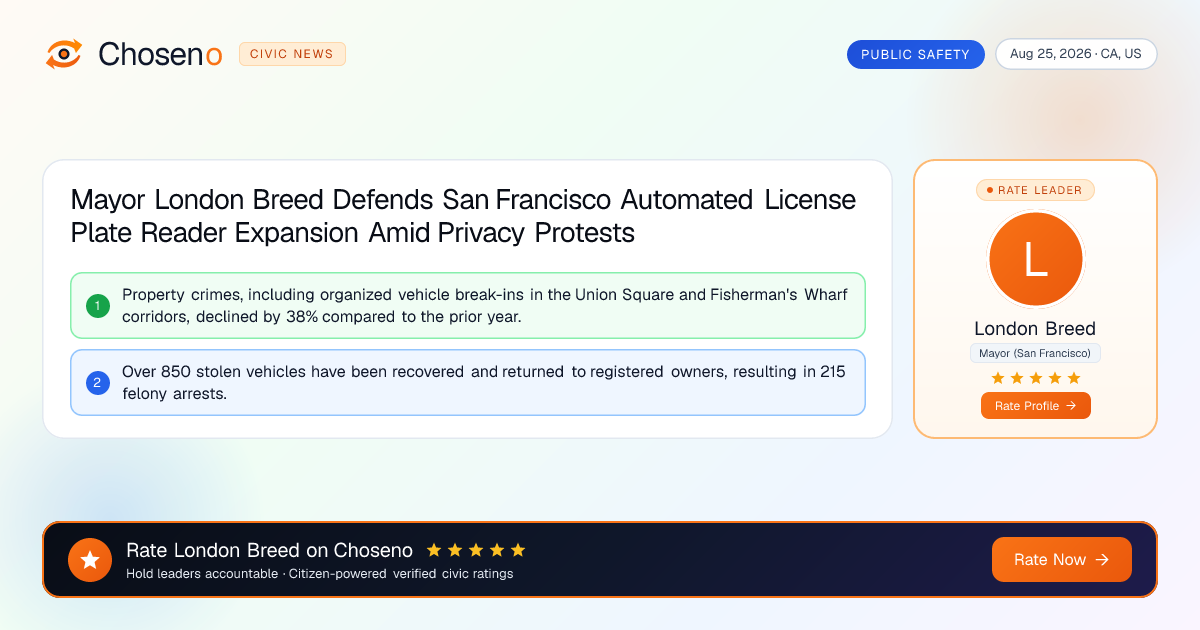
Mayor London Breed Defends San Francisco Automated License Plate Reader Expansion Amid Privacy Protests
San Francisco Mayor London Breed and the SFPD defend the deployment of 400 automated license plate readers across city intersections, clashing with privacy advocates over surveillance oversight.
Choseno Bay Area Civic & Tech Bureau August 25, 2026 1 min read CA, US
★ Choseno Civic Briefing
Key Leaders
SAN FRANCISCO — Mayor London Breed and Police Chief Bill Scott held a joint press conference at City Hall on Tuesday to defend San Francisco's expanding automated license plate reader (ALPR) camera program, citing double-digit drops in property crime while addressing privacy demonstrations organized across the city.
The controversy follows public demonstrations organized outside the private residences of civic donors and technology executives who provided initial seed funding for the camera infrastructure.
Public Safety Outcomes and Crime Reductions According to official SFPD operational statistics released on Tuesday:
- The network of 400 solar-powered Flock Safety ALPR cameras captured over 22 million vehicle scans over the past quarter, alerting officers to stolen vehicles, carjacking suspects, and felony warrants in real time.
- Property crimes, including organized vehicle break-ins in the Union Square and Fisherman's Wharf corridors, declined by 38% compared to the prior year.
- Over 850 stolen vehicles have been recovered and returned to registered owners, resulting in 215 felony arrests.
"Our residents and small business owners demanded action to stop organized retail theft crews and car break-ins that damaged our city's reputation," Mayor Breed stated. "These cameras are working. They give our officers precise, objective data to intercept criminals safely. We are not going to apologize for using effective technology to make San Francisco safer."
Privacy Safeguards and Municipal Oversight Civil liberties advocates, including the Electronic Frontier Foundation (EFF) and the ACLU of Northern California, expressed serious concerns regarding mass tracking capabilities, urging the Board of Supervisors to enforce strict limits on third-party access.
In response to civic feedback, the Mayor's office confirmed that all non-hit ALPR scan data is automatically purged after 30 days and that San Francisco data is prohibited from being shared with out-of-state agencies for non-criminal immigration inquiries.
Rate the people mentioned in this article
Related Coverage in Public Safety
See all Public Safety newsPublic Safety
US Aug 25, 2026
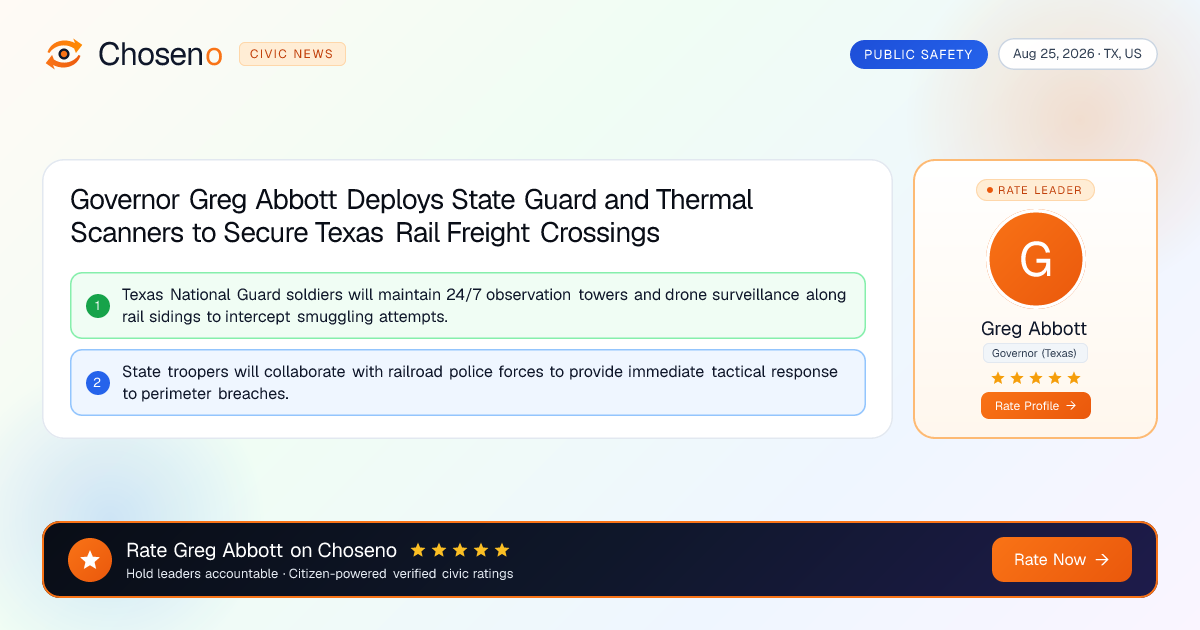
Governor Greg Abbott Deploys State Guard and Thermal Scanners to Secure Texas Rail Freight Crossings
Texas Governor Greg Abbott orders the deployment of Texas National Guard units and high-capacity optical thermal scanners along international railway bridges in Eagle Pass and El Paso.
Read full article
Public Safety
US Aug 25, 2026
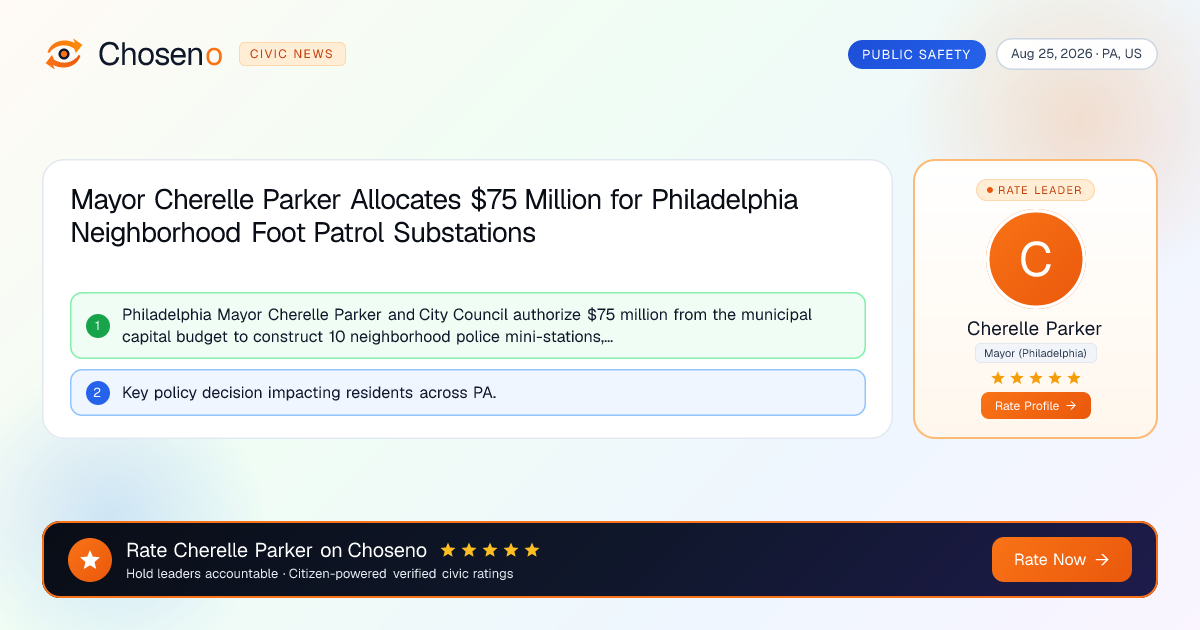
Mayor Cherelle Parker Allocates $75 Million for Philadelphia Neighborhood Foot Patrol Substations
Philadelphia Mayor Cherelle Parker and City Council authorize $75 million from the municipal capital budget to construct 10 neighborhood police mini-stations, deploy 200 walking beat officers, and install high-definition commercial corridor camera networks.
Read full article
Public Safety
US Aug 25, 2026
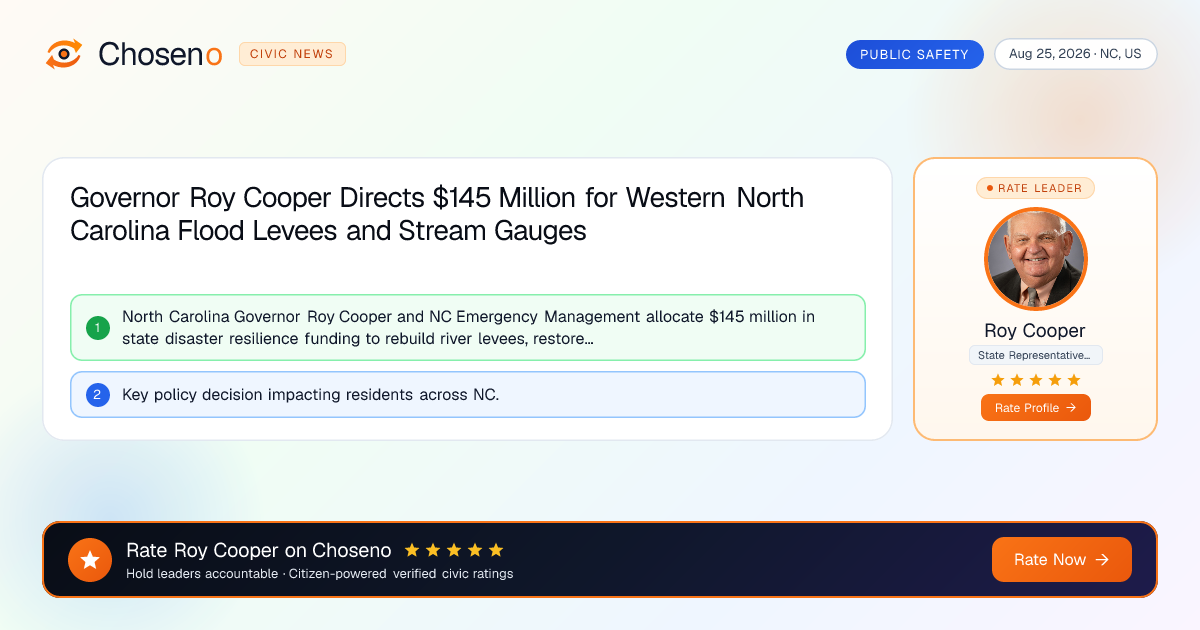
Governor Roy Cooper Directs $145 Million for Western North Carolina Flood Levees and Stream Gauges
North Carolina Governor Roy Cooper and NC Emergency Management allocate $145 million in state disaster resilience funding to rebuild river levees, restore mountain riparian floodplains, and deploy 180 automated acoustic stream gauges across 18 western counties.
Read full article