New Jersey Governor Mikie Sherrill Reaches Agreement With 17 Public Sector Unions Waiving Health Premium Hikes
New Jersey Governor Mikie Sherrill and 17 state employee labor unions have finalized an agreement waiving scheduled 2027 health benefit contribution rate increases and creating an advisory working group to overhaul the State Health Benefits Program.
Choseno Civic News Desk September 7, 2026 3 min read New Jersey, US
New Jersey Governor Mikie Sherrill and a coalition of 17 public-sector labor unions representing state workers have finalized a comprehensive agreement to freeze health benefit contribution rates for the 2027 plan year. The accord averts anticipated double-digit rate hikes for tens of thousands of active civil servants while initiating a structural review of the State Health Benefits Program, which currently provides medical and prescription drug coverage to roughly 690,000 active employees, retirees, and their dependents across state and local government entities throughout New Jersey.
Under the terms of the memorandum of understanding, the administration committed to absorbing projected cost growth within state fiscal frameworks rather than passing additional premium burdens onto public employees. State union leaders had voiced serious concerns throughout annual budget negotiations that unchecked increases in healthcare deductibles and premium sharing would effectively erase recent cost-of-living salary adjustments secured across collective bargaining agreements. Administration officials stated that the freeze reflects an intentional effort to safeguard municipal and state employee retention in critical public service roles, ranging from corrections officers and transportation specialists to state administrative personnel.
A centerpiece of the agreement requires the executive branch to formally establish a dedicated State Health Benefits Review Working Group by October 1, 2026. The advisory body will bring together state fiscal officers, union bargaining representatives, healthcare economists, hospital network administrators, and independent insurance actuaries to conduct an exhaustive diagnostic audit of program expenditures. The working group is mandated to deliver concrete policy recommendations to the governor concerning vendor contracting practices, pharmacy benefit management transparency, and modernized claims processing systems.
State budget analysts have repeatedly flagged long-term expenditure trajectories within the healthcare system as a persistent risk to New Jersey general fund stability. Escalating specialty prescription drug costs, outpatient facility fee expansions, and chronic disease prevalence have driven annual double-digit claim inflation across the fund. Working group members will explore establishing preferred Centers of Excellence for complex surgical procedures, standardizing preventative care incentive programs, auditing third-party pharmacy benefit administrators, and negotiating value-based purchasing agreements directly with regional hospital networks to rein in structural cost inflation without diminishing covered benefits.
Public employee union leaders across the Communications Workers of America, the American Federation of State, County and Municipal Employees, and state law enforcement associations praised the cooperative negotiating framework, characterizing the consensus as a model for collaborative public sector labor relations. Union representatives emphasized that addressing healthcare cost inflation requires structural systemic reforms targeting corporate healthcare intermediaries and pharmaceutical pricing practices rather than continuously shifting financial obligations onto frontline public workers.
The policy recommendations developed by the working group are expected to inform the executive budget proposal for the upcoming fiscal cycle, laying the groundwork for potential statutory updates and revised procurement contracts. Legislative leaders in Trenton signaled broad support for the initiative, noting that stabilizing public employee healthcare costs remains essential to preserving state fiscal discipline, protecting essential municipal services, and ensuring dependable healthcare access for New Jersey civil servants. Legislative committees plan to review preliminary findings as state budget hearings begin next spring. Both union leaders and executive officials affirmed their commitment to completing the comprehensive review ahead of next year contract renewals.
Related Coverage in Governance
See all Governance newsGovernance
US Sep 8, 2026
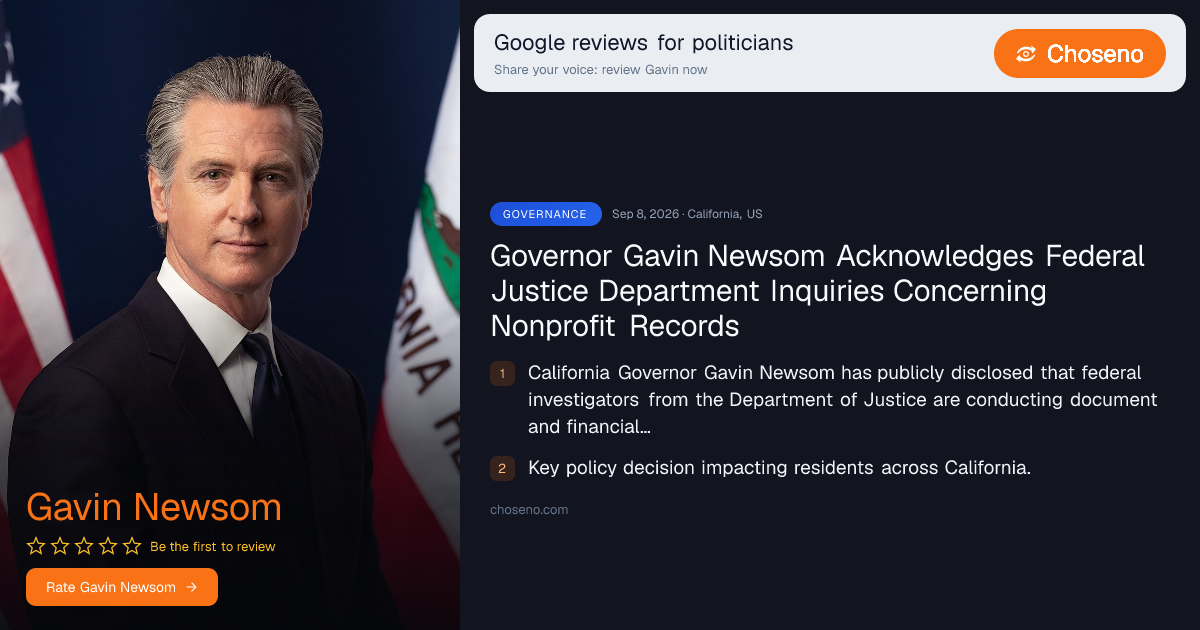
Governor Gavin Newsom Acknowledges Federal Justice Department Inquiries Concerning Nonprofit Records
California Governor Gavin Newsom has publicly disclosed that federal investigators from the Department of Justice are conducting document and financial inquiries involving him and First Partner Jennifer Siebel Newsom, prompting a fierce dispute over federal oversight impartiality and nonprofit compliance.
Read full article
Governance
US Sep 8, 2026
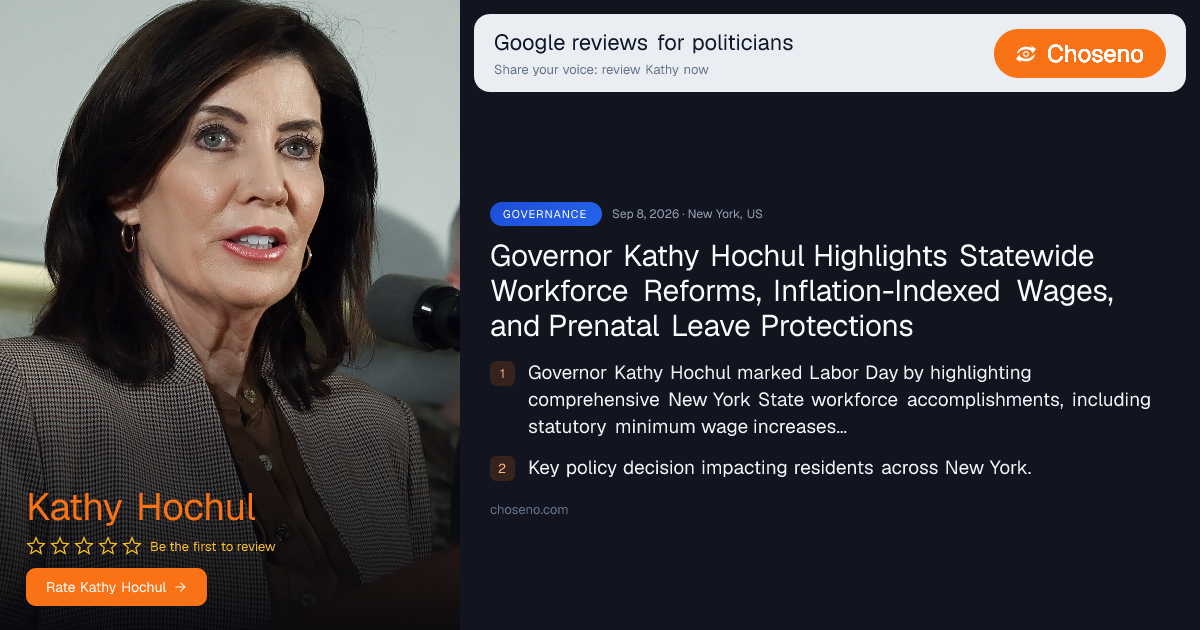
Governor Kathy Hochul Highlights Statewide Workforce Reforms, Inflation-Indexed Wages, and Prenatal Leave Protections
Governor Kathy Hochul marked Labor Day by highlighting comprehensive New York State workforce accomplishments, including statutory minimum wage increases indexed to inflation, implementation of the nation first mandatory paid prenatal leave law, and the full elimination of the state unemployment insurance debt.
Read full article
Governance
CA Sep 7, 2026
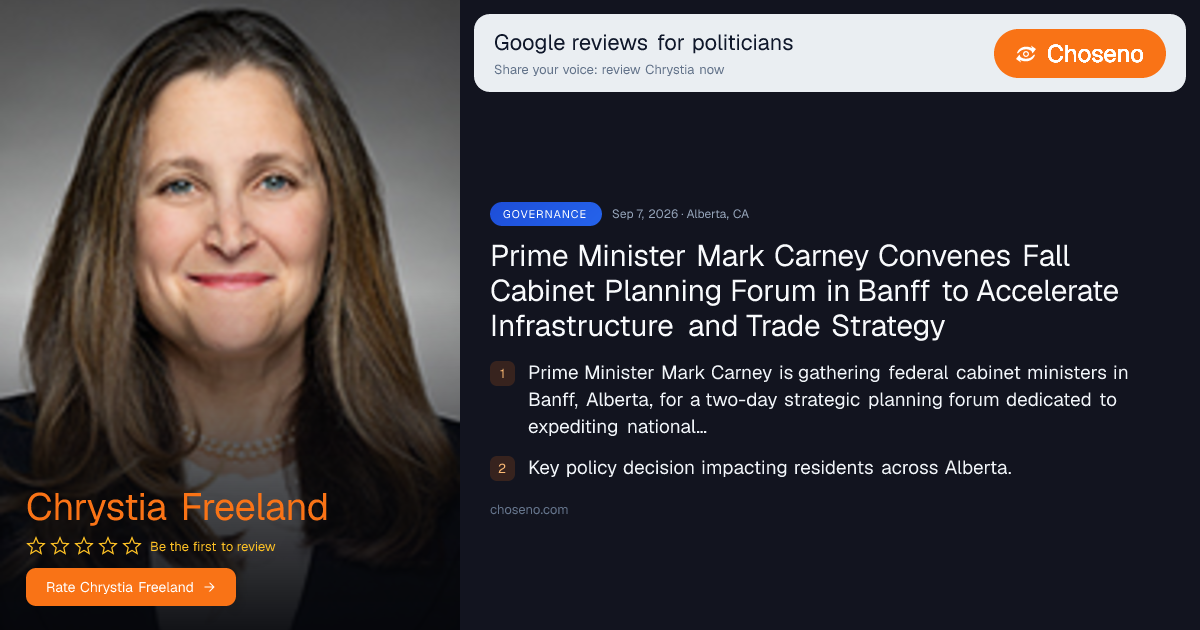
Prime Minister Mark Carney Convenes Fall Cabinet Planning Forum in Banff to Accelerate Infrastructure and Trade Strategy
Prime Minister Mark Carney is gathering federal cabinet ministers in Banff, Alberta, for a two-day strategic planning forum dedicated to expediting national infrastructure, addressing North American trade pressures, and advancing legislative priorities ahead of Parliament resuming.
Read full article