BREAKING
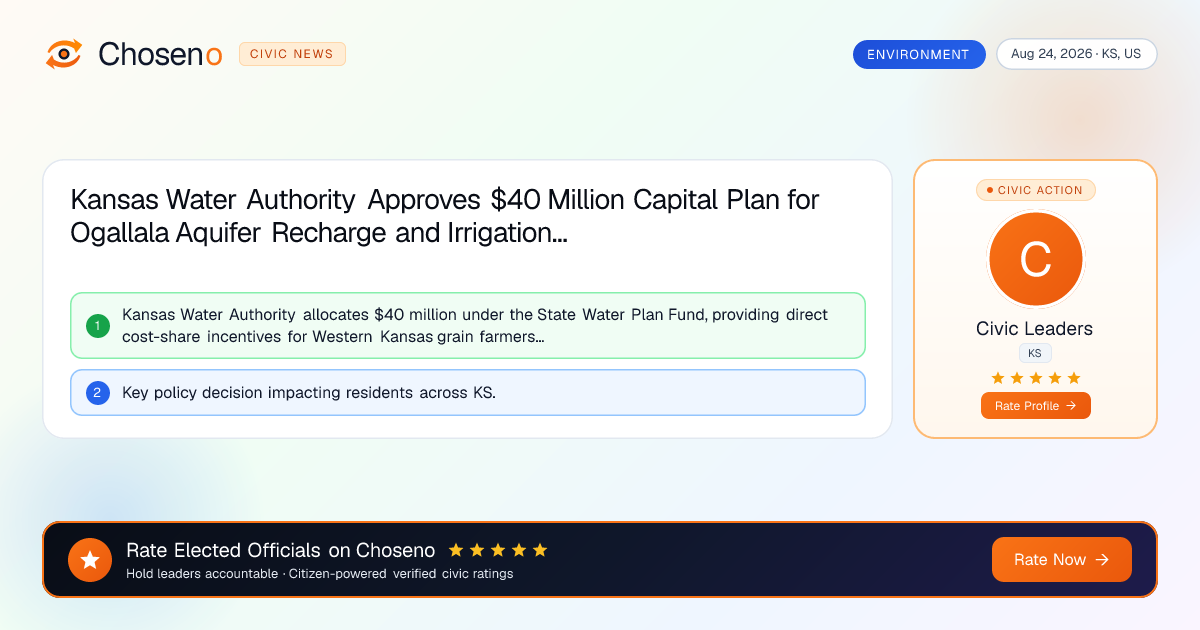
New Mexico Enacts Mandatory Produced Water Recycling Standards for Permian Basin Oil & Gas
New Mexico Environment Department adopts binding water conservation regulations requiring oil and gas operators in the Permian Basin to recycle 75% of industrial drilling wastewater by 2028.
Choseno Water Resources & Energy Bureau August 24, 2026 1 min read NM, US
★ Choseno Civic Briefing
Key Leaders
SANTA FE, NM — The New Mexico Water Quality Control Commission and the New Mexico Environment Department (NMED) formally voted to adopt comprehensive regulatory standards under the Produced Water Act, mandating aggressive closed-loop recycling of industrial oilfield wastewater across the Permian and San Juan basins.
Protecting Desert Aquifers from Industrial Water Depletion
The regulations prohibit energy producers from utilizing potable groundwater or fresh surface water for hydraulic fracturing operations after January 1, 2028, requiring 100% produced water or brackish aquifer recycling. The rules also establish rigorous state testing certifications for treated water before any reuse in non-food commercial agricultural irrigation or industrial concrete manufacturing.
Governor Michelle Lujan Grisham and NMED Secretary James Kenney stated that in an era of prolonged desert drought, New Mexico must protect precious freshwater aquifers for future generations.
Energy Industry and Environmental Coalition Feedback
Permian Basin Petroleum Association leaders supported the regulatory clarity, noting that major operators have already invested $400 million in centralized produced water recycling pipelines in Lea and Eddy counties.
Conservation federations praised the ban on freshwater consumption for drilling operations.
Regulatory Enforcement Date
The produced water recycling standards take statutory effect across all New Mexico oil and gas extraction permits on November 1, 2026.
Related Coverage in Environment
See all Environment newsEnvironment
US Aug 24, 2026
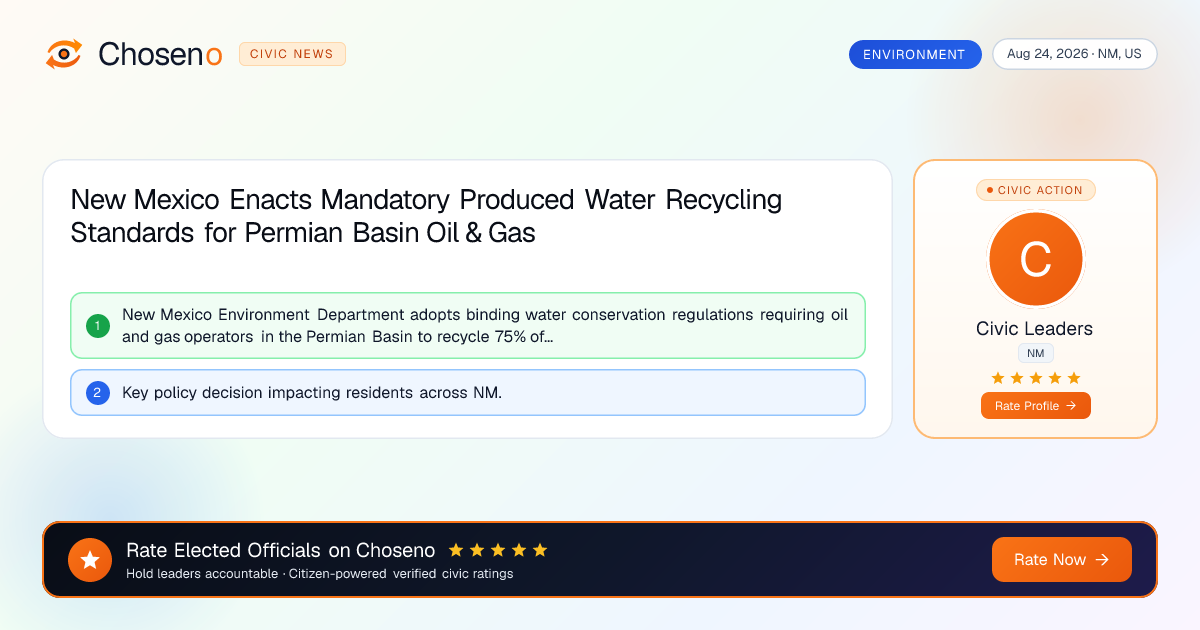
Missouri DNR Awards $25 Million in Drinking Water and Lead Service Line Grants Across 30 Towns
Missouri Department of Natural Resources allocates $25 million in drinking water state revolving funds, providing 100% principal forgiveness for rural communities replacing lead pipes.
Read full article
Environment
US Aug 24, 2026
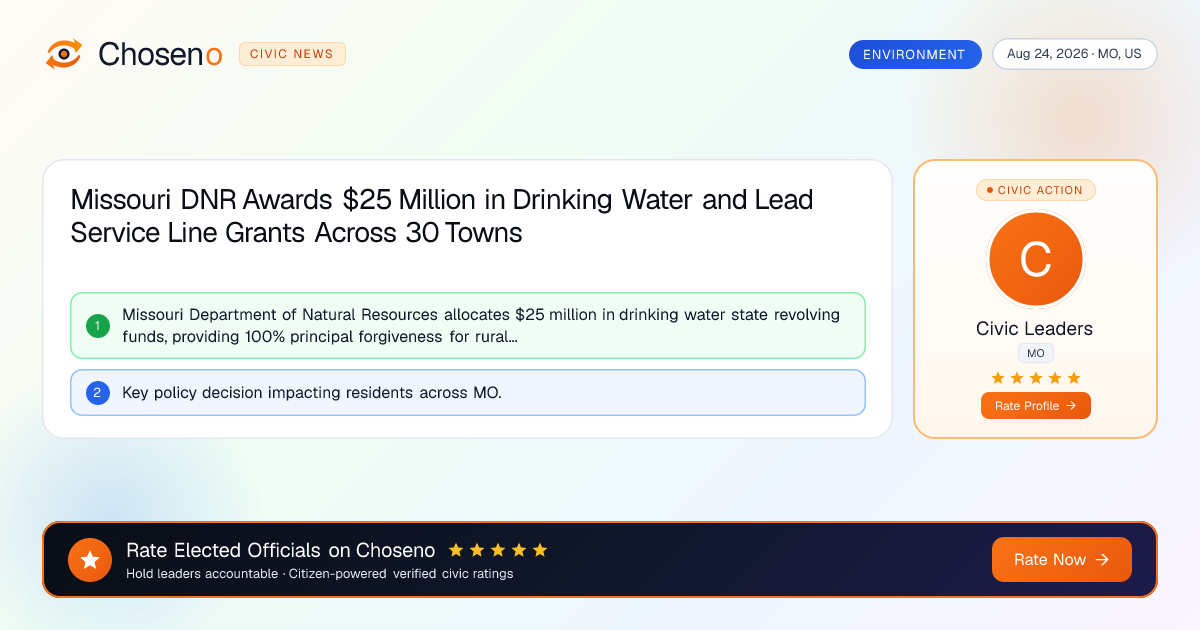
Governor Tim Walz Issues Executive Order Halting Mineral Mining Reviews Around Boundary Waters
Governor Tim Walz directs Minnesota DNR and MPCA to halt all environmental permitting for nonferrous sulfide mining within the Boundary Waters Canoe Area Wilderness watershed.
Read full article
Environment Breaking
US Aug 24, 2026
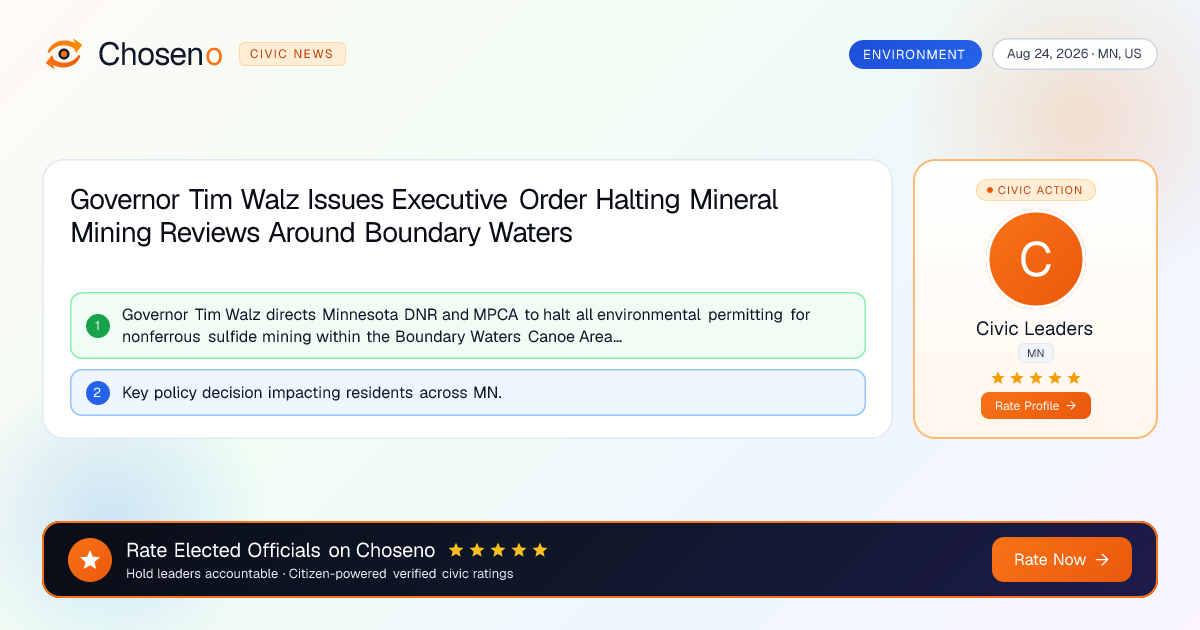
Kansas Water Authority Approves $40 Million Capital Plan for Ogallala Aquifer Recharge and Irrigation Tech
Kansas Water Authority allocates $40 million under the State Water Plan Fund, providing direct cost-share incentives for Western Kansas grain farmers installing precision subsurface drip irrigation.
Read full article