Ohio County EMS Integrates Pre-Hospital Blood Transfusions to Improve Trauma Survival Rates
Ohio County Emergency Medical Services has launched a new program to carry blood products on ambulances for immediate use in trauma cases. This initiative aims to reduce mortality rates for patients suffering from severe blood loss before they reach a hospital.
Choseno Civic News Desk August 28, 2026 2 min read WV, US
Dateline Lead
Ohio County, West Virginia — Emergency medical responders in Ohio County have officially begun carrying blood products on ambulances to provide immediate transfusions to patients experiencing severe hemorrhage. This operational shift marks a significant change in pre-hospital trauma care protocols for the region.
Policy & Taxpayer Impact
The implementation of this program allows EMS personnel to administer blood to patients in the field, a procedure previously reserved for hospital settings. By addressing hypovolemic shock at the scene of an accident or emergency, the county aims to stabilize patients who might otherwise succumb to blood loss during transport. Taxpayers are funding the logistics and maintenance of the cold-chain storage required to keep blood products viable in mobile units.
Political & Legal Stakes
The transition involves complex regulatory compliance regarding the handling and storage of blood products. EMS agencies must adhere to strict medical oversight and quality control standards to ensure the safety and efficacy of the transfusions. The program is designed to integrate seamlessly with existing hospital trauma networks, ensuring that the blood administered in the field is tracked and accounted for upon patient arrival.
The Debate
Proponents of the initiative argue that the golden hour of trauma care is critical, and providing blood early significantly improves survival outcomes for those with life-threatening injuries. Conversely, critics and some health administrators have raised concerns regarding the high costs of maintaining blood supplies, the risk of expiration if not used, and the intensive training requirements for EMS staff to manage potential transfusion reactions in an uncontrolled environment.
Public Accountability Context
As the program moves forward, local officials are expected to monitor patient outcomes and fiscal efficiency to determine the long-term viability of the service. The success of this initiative will likely be measured by the reduction in mortality rates for trauma patients and the ability of the EMS department to manage the logistical demands of a mobile blood supply.
Related Coverage in Municipal
See all Municipal newsMunicipal
US Aug 28, 2026
South Carolina Attorney General Clarifies Municipal Authority Over Chapin Legal Appointments
The South Carolina Attorney General’s office has issued a formal opinion stating that the Chapin Town Council, rather than the mayor, holds the legal authority to hire the town attorney. This clarification resolves a governance dispute regarding the town's administrative appointment powers.
Read full article
Municipal
US Aug 28, 2026
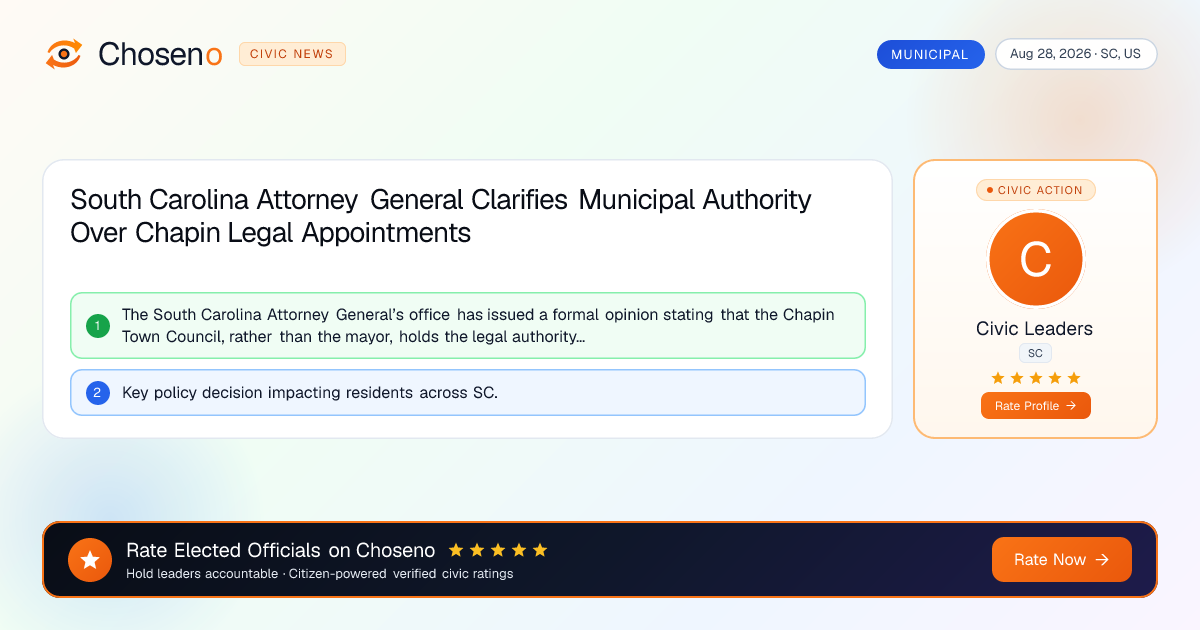
Washoe County Fire Victims Receive Emergency Housing Fund Allocation from Governor
Governor Joe Lombardo has directed state housing resources to support residents displaced by recent fires in Washoe County. This reallocation aims to provide immediate relief for those impacted by the disaster.
Read full article
Municipal
US Aug 28, 2026
Boston City Hall Hosts Private Elopement for Tricia Robredo and Partner
Tricia Robredo, daughter of Naga Mayor Leni Robredo, finalized a marriage ceremony at Boston City Hall. The event represents a private civil union with no reported impact on municipal tax expenditures.
Read full article