BREAKING
Ontario and Federal Government Deploy $1 Billion for Housing-Enabling Water and Road Infrastructure
Premier Doug Ford and federal housing ministers allocate $1 billion in joint funding to construct water mains, wastewater plants, and arterial roads in 40 municipalities building new subdivisions.
Choseno Provincial Infrastructure & Housing Supply Bureau August 24, 2026 1 min read ON, CA

★ Choseno Civic Briefing
Key Leaders
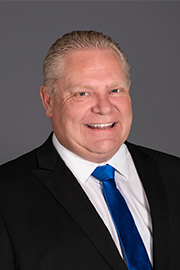
TORONTO, ON — Premier Doug Ford, Minister of Infrastructure Kinga Surma, and federal housing partners announced the joint allocation of $1 billion through the Housing-Enabling Water Systems Fund (HEWSF) and the Municipal Housing Infrastructure Program (MHIP), delivering capital to 40 high-growth Ontario municipalities.
Unlocking 200,000 New Homes by Modernizing Trunk Infrastructure
The funding packages provide non-repayable capital grants up to $35 million per municipality to expand municipal wastewater treatment plants, lay high-capacity regional water mains, and pave arterial access highways in Peel, York, Durham, Ottawa, and Kitchener-Waterloo. By funding foundational municipal civil infrastructure that municipalities could not otherwise finance without raising development charges, the joint government investment directly enables the construction of over 200,000 approved housing units across the province.
Premier Ford affirmed that homes cannot be built without pipes in the ground, stating that provincial and federal funding delivers the necessary infrastructure to get shovels in the ground faster.
Residential Construction Council and Municipal Mayors Endorse
Residential Construction Council of Ontario (RESCON) strongly commended the $1 billion infrastructure commitment for reducing housing development bottlenecks.
Regional municipal mayors praised the grants for preventing property tax increases on local homeowners.
Municipal Tender Release Schedule
Municipal water main and treatment facility construction tenders will be published by recipient regional governments in October 2026.
Rate the people mentioned in this article
Related Coverage in Infrastructure
See all Infrastructure newsInfrastructure Breaking
US Aug 24, 2026
USDOT Awards $320 Million to Rehabilitate 14 Major Interstate Bridges Across 8 States
Federal Highway Administration allocates $320 million in Bridge Investment Program (BIP) grants to replace corroded bridge decks, install seismic retrofits, and widen freight lanes.
Read full article

Infrastructure Breaking
US Aug 24, 2026
USDOT Awards $400 Million to Build Megawatt Charging Corridors for Electric Heavy Freight Trucks
Federal Highway Administration announces $400 million in CFI Program grants across 16 states, constructing 120 megawatt-scale heavy electric truck charging plazas along I-10, I-80, and I-95.
Read full article

Infrastructure
US Aug 24, 2026
New Orleans Approves $2.8 Million to Repair and Modernize 3,000 Municipal Streetlights
Mayor LaToya Cantrell and New Orleans City Council allocate $2.8 million to convert 3,000 streetlights to energy-efficient LED fixtures with real-time outage telemetry across 8 neighborhoods.
Read full article