Orem City Council Approves Property Tax Hike Following Legislative Vote
The Orem City Council has officially voted to implement a property tax increase for local residents. This decision marks a shift in the city's fiscal policy, directly impacting the tax burden on homeowners within the municipality.
Choseno Civic News Desk August 28, 2026 1 min read UT, US
Dateline Lead
OREM, UT — The Orem City Council has officially voted to approve a property tax increase, a move that will alter the financial obligations of local property owners. The decision follows a formal council vote, signaling a shift in the city's approach to revenue generation.
Policy & Taxpayer Impact
The primary consequence of this vote is an adjustment to the municipal property tax rate. Residents will see a change in their annual tax assessments, which serves as a primary funding mechanism for city services and infrastructure maintenance. The council's action directly impacts the bottom line for homeowners and commercial property holders within Orem.
Political & Legal Stakes
This decision places the Orem City Council at the center of local fiscal policy debates. By choosing to raise property taxes, the council has exercised its legislative authority to address budgetary requirements. The move is subject to standard municipal oversight and must align with state-level property tax regulations governing local jurisdictions in Utah.
The Debate
Proponents of the tax increase often point to the necessity of maintaining city services, infrastructure, and public safety programs in the face of rising operational costs. Conversely, critics and opposition voices typically emphasize the financial strain placed on households, arguing that tax hikes should be a last resort and that the city should prioritize internal spending cuts or efficiency improvements before seeking additional revenue from taxpayers.
Public Accountability Context
Citizens are encouraged to review the specific budgetary justifications provided by the council during the deliberation process. As this decision impacts the local tax base, residents can monitor future council meetings and public hearings to understand how these additional funds are allocated and to hold their representatives accountable for the city's fiscal management.
Related Coverage in Municipal
See all Municipal newsMunicipal
US Aug 28, 2026
South Carolina Attorney General Clarifies Municipal Authority Over Chapin Legal Appointments
The South Carolina Attorney General’s office has issued a formal opinion stating that the Chapin Town Council, rather than the mayor, holds the legal authority to hire the town attorney. This clarification resolves a governance dispute regarding the town's administrative appointment powers.
Read full article
Municipal
US Aug 28, 2026
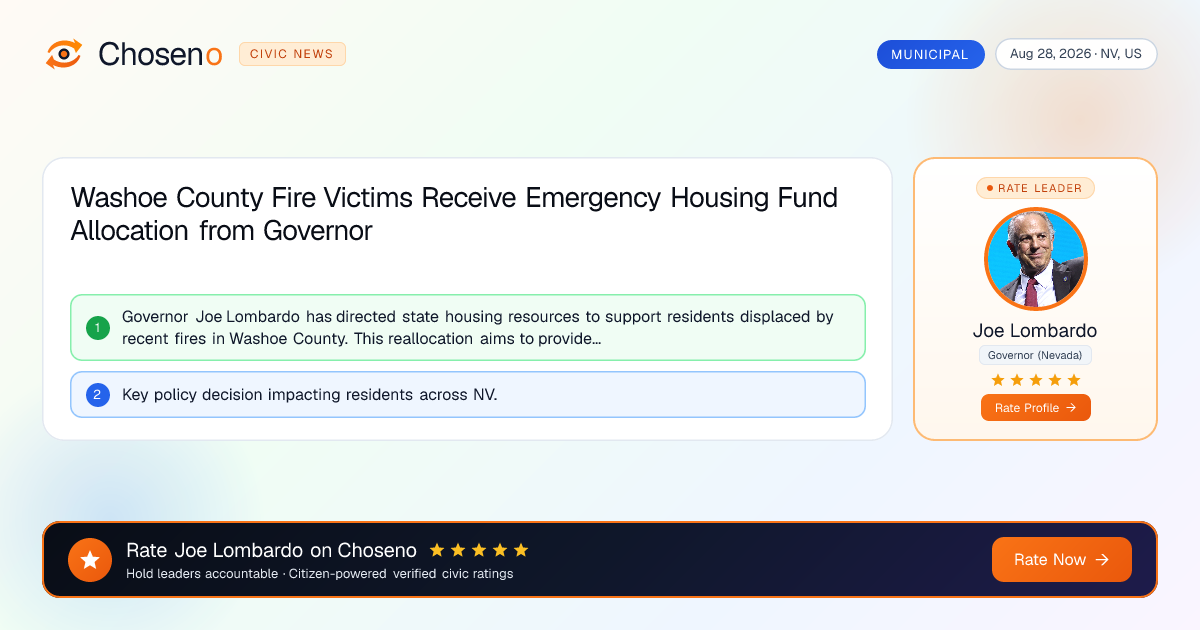
Washoe County Fire Victims Receive Emergency Housing Fund Allocation from Governor
Governor Joe Lombardo has directed state housing resources to support residents displaced by recent fires in Washoe County. This reallocation aims to provide immediate relief for those impacted by the disaster.
Read full article
Municipal
US Aug 28, 2026
Boston City Hall Hosts Private Elopement for Tricia Robredo and Partner
Tricia Robredo, daughter of Naga Mayor Leni Robredo, finalized a marriage ceremony at Boston City Hall. The event represents a private civil union with no reported impact on municipal tax expenditures.
Read full article