Seattle Recall Petition Against Mayor Concludes Without Ballot Access
A formal attempt to recall the Mayor of Seattle has officially ended after failing to secure the necessary requirements to proceed. The conclusion of this effort removes the immediate prospect of a special election, sparing the city the associated administrative costs.
Choseno Civic News Desk August 28, 2026 2 min read WA, US
Dateline Lead
SEATTLE, WA — The formal campaign to recall the Mayor of Seattle has reached its conclusion, with organizers failing to advance the petition to the ballot. The effort, which sought to remove the incumbent from office, has officially stalled, ending the immediate political uncertainty surrounding the city's executive branch.
Policy & Taxpayer Impact
While the recall process is a mechanism for direct democracy, it carries significant fiscal implications for municipal taxpayers. A special election would have required substantial funding for ballot printing, polling station staffing, and administrative oversight. With the effort now over, the city avoids these immediate expenditures, allowing the municipal budget to remain focused on existing operational priorities.
Political & Legal Stakes
Under Washington state law, recall efforts must meet specific legal thresholds, including the establishment of legal sufficiency for the charges brought against an official. The failure to move forward indicates that the petition did not satisfy the necessary requirements to trigger a public vote. This outcome reinforces the stability of the current mayoral term, as the legal pathway for removal has been effectively closed for this cycle.
The Debate
Proponents of the recall had argued that the mayor's performance necessitated a mid-term removal, citing specific policy grievances and administrative concerns. Conversely, critics of the recall effort characterized the movement as a disruptive and costly political maneuver that undermined the results of the previous general election. Supporters of the mayor maintained that the administration's focus remained on city governance rather than responding to the legal challenges posed by the petition.
Public Accountability Context
This development highlights the high bar set for removing elected officials in Seattle. The conclusion of this petition serves as a reminder of the rigorous legal standards required to challenge an incumbent's mandate. Residents now look toward the next scheduled municipal election cycle as the primary venue for evaluating the mayor's performance and determining the future direction of city leadership.
Related Coverage in Municipal
See all Municipal newsMunicipal
US Aug 28, 2026
South Carolina Attorney General Clarifies Municipal Authority Over Chapin Legal Appointments
The South Carolina Attorney General’s office has issued a formal opinion stating that the Chapin Town Council, rather than the mayor, holds the legal authority to hire the town attorney. This clarification resolves a governance dispute regarding the town's administrative appointment powers.
Read full article
Municipal
US Aug 28, 2026
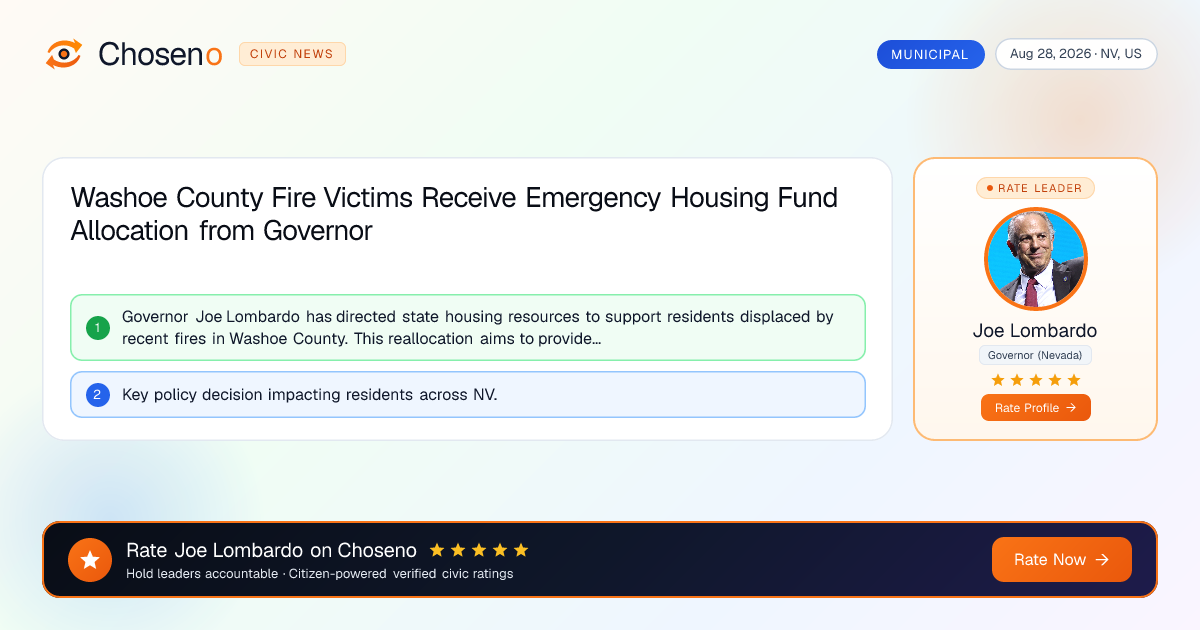
Washoe County Fire Victims Receive Emergency Housing Fund Allocation from Governor
Governor Joe Lombardo has directed state housing resources to support residents displaced by recent fires in Washoe County. This reallocation aims to provide immediate relief for those impacted by the disaster.
Read full article
Municipal
US Aug 28, 2026
Boston City Hall Hosts Private Elopement for Tricia Robredo and Partner
Tricia Robredo, daughter of Naga Mayor Leni Robredo, finalized a marriage ceremony at Boston City Hall. The event represents a private civil union with no reported impact on municipal tax expenditures.
Read full article