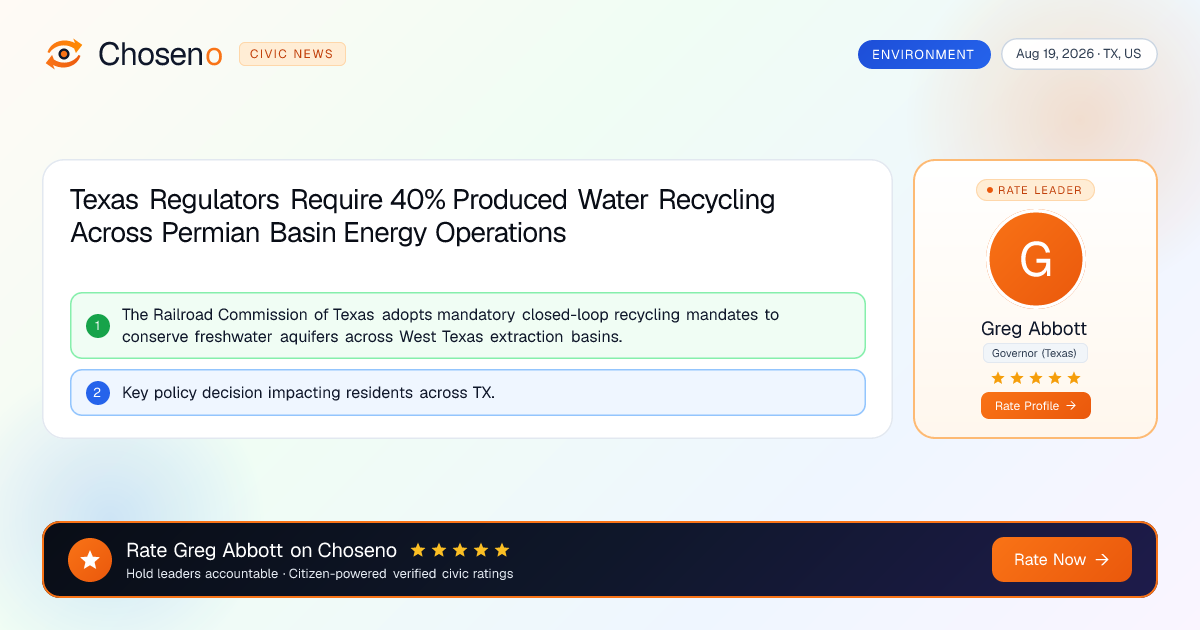
Texas Regulators Require 40% Produced Water Recycling Across Permian Basin Energy Operations
The Railroad Commission of Texas adopts mandatory closed-loop recycling mandates to conserve freshwater aquifers across West Texas extraction basins.
Choseno Energy & Resources Desk August 19, 2026 1 min read TX, US
★ Choseno Civic Briefing
AUSTIN, TX — The Railroad Commission of Texas formally adopted a comprehensive water stewardship rule Wednesday, mandating that oil and gas operators across the Permian Basin achieve at least 40 percent recycled produced water utilization in all hydraulic fracturing operations by late 2027.
Regulatory Framework and Aquifer Conservation
The revised administrative code, approved unanimously by the three-member commission in Austin, aims to drastically reduce the energy sector's reliance on fresh and brackish groundwater from the Ogallala and Pecos Valley aquifers. Permian Basin energy operations generate an estimated 14 million barrels of produced water daily alongside crude oil and natural gas production.
Under the new rule, commercial operators must construct centralized water treatment networks, implement desalinization filtration, and submit quarterly water balance accounting logs to state environmental inspectors.
Energy Industry Response and Seismic Mitigation
Energy industry associations in Midland and Houston expressed support for the codified standards, noting that several major producers have already invested over $800 million in regional water recycling infrastructure. Expanding water recycling also helps reduce deep subsurface wastewater disposal injection, which state geologists have linked to localized seismic tremors in West Texas.
Environmental researchers noted that the rules establish a vital balance between sustaining high-yield domestic energy production and safeguarding critical agricultural water tables across semi-arid West Texas counties.
Compliance Verification Timeline
Operators have until January 1, 2027, to submit initial baseline water recycling engineering plans, with mandatory compliance auditing beginning in mid-2027.
Rate the people mentioned in this article
Related Coverage in Environment
See all Environment news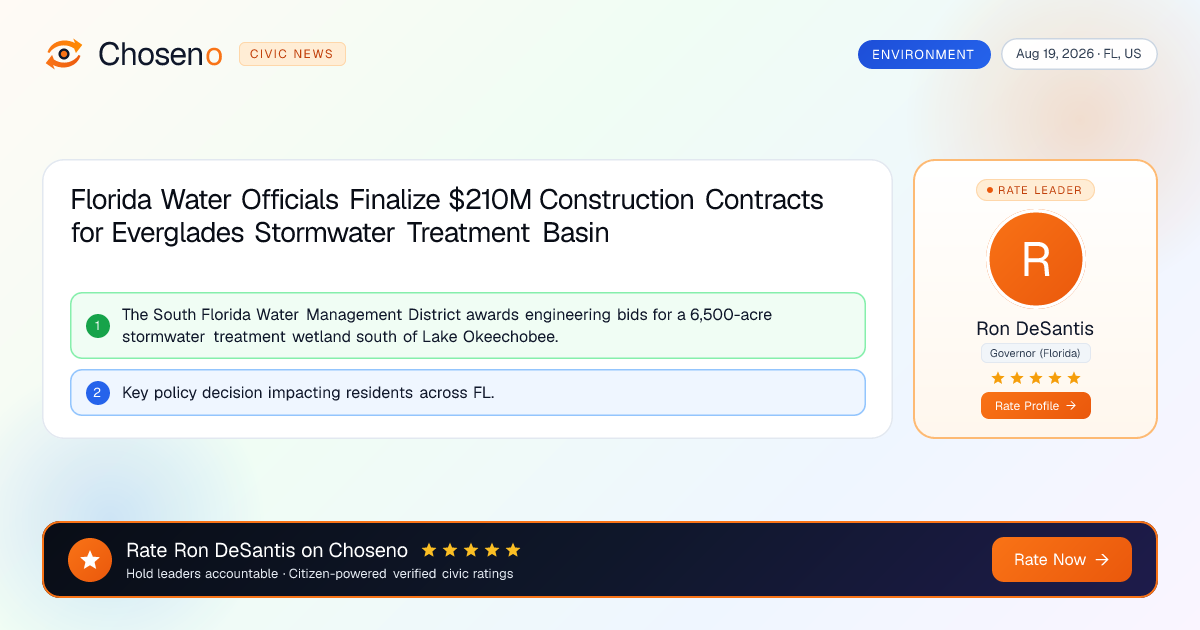
Environment
US Aug 19, 2026
Florida Water Officials Finalize $210M Construction Contracts for Everglades Stormwater Treatment Basin
The South Florida Water Management District awards engineering bids for a 6,500-acre stormwater treatment wetland south of Lake Okeechobee.
Read full article
Environment
US Aug 19, 2026
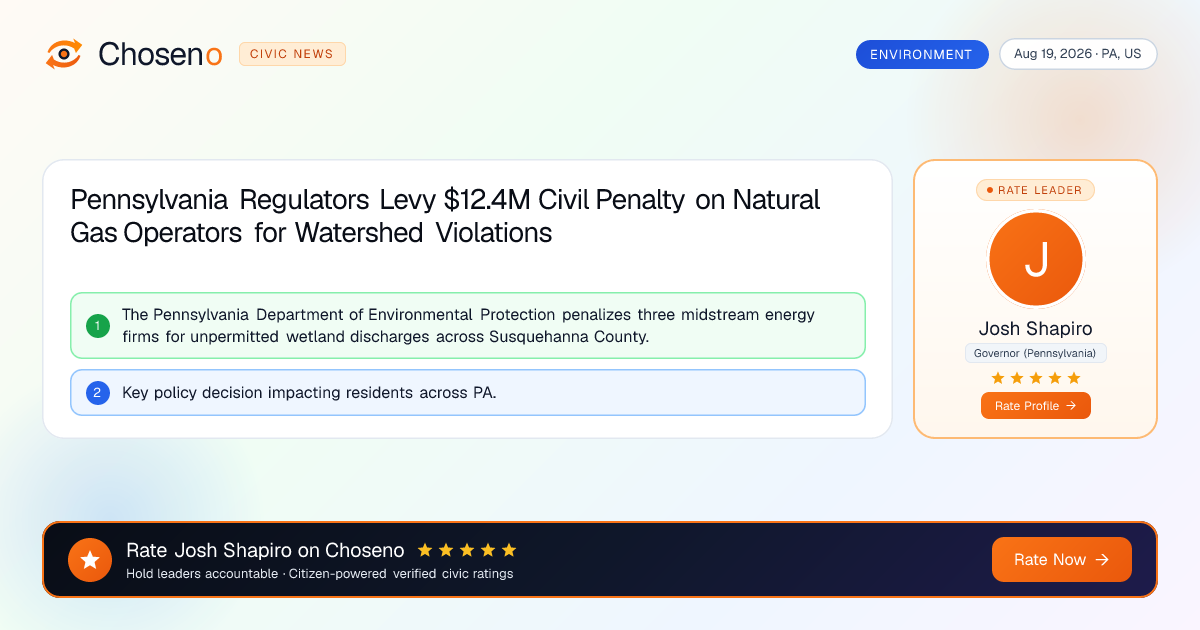
Pennsylvania Regulators Levy $12.4M Civil Penalty on Natural Gas Operators for Watershed Violations
The Pennsylvania Department of Environmental Protection penalizes three midstream energy firms for unpermitted wetland discharges across Susquehanna County.
Read full article
Environment
CA Aug 19, 2026
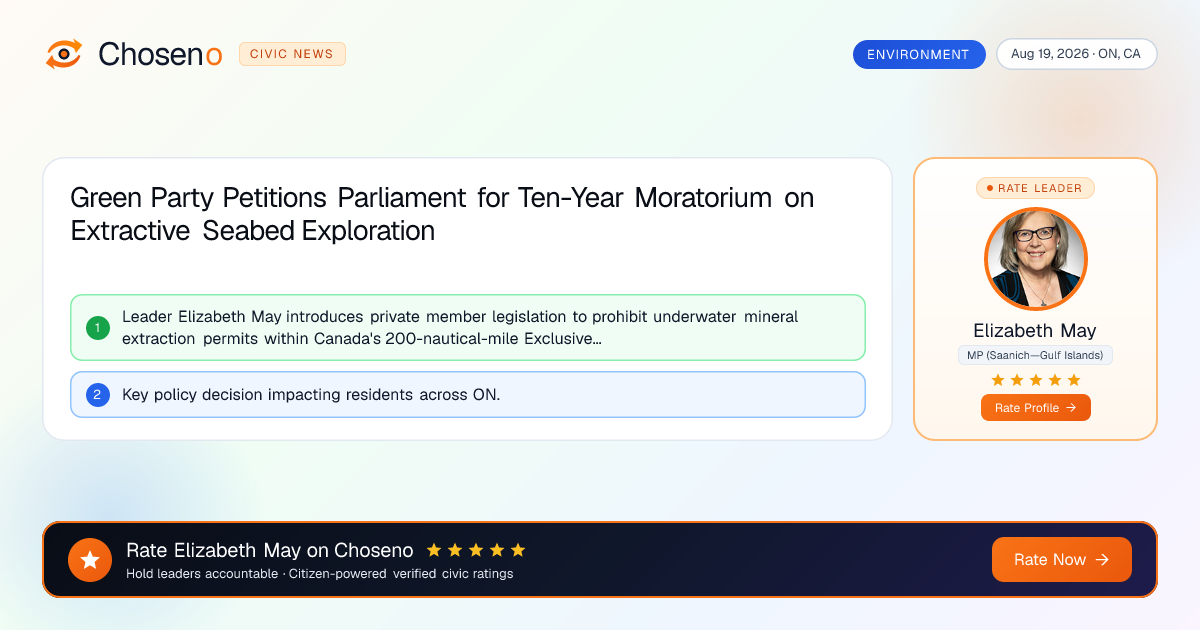
Green Party Petitions Parliament for Ten-Year Moratorium on Extractive Seabed Exploration
Leader Elizabeth May introduces private member legislation to prohibit underwater mineral extraction permits within Canada's 200-nautical-mile Exclusive Economic Zone.
Read full article