Voltage Instability Identified as Primary Cause of New Orleans Street Flooding During Storm Arthur
Sewerage and Water Board of New Orleans officials confirmed that power fluctuations triggered pump failures during the recent storm. The incident highlights ongoing infrastructure vulnerabilities that directly impact municipal drainage capacity and taxpayer-funded flood protection.
Choseno Civic News Desk August 28, 2026 1 min read LA, US
Dateline Lead
NEW ORLEANS, LA — The Sewerage and Water Board of New Orleans (SWBNO) has officially identified voltage fluctuations as the technical failure point that led to flooded streets during the recent passage of Storm Arthur. The agency confirmed that these power irregularities directly compromised the operational capacity of the city's drainage pumping system.
Policy & Taxpayer Impact
The failure of the pumping infrastructure during a weather event underscores the fragility of the city's drainage network, which relies on consistent electrical supply to manage stormwater runoff. Taxpayers continue to fund the maintenance and modernization of these systems, yet the reliance on external power grids remains a significant point of failure for municipal flood mitigation efforts.
Political & Legal Stakes
The SWBNO director addressed the technical shortcomings, stating, "Voltage fluctuations led to flooded streets during Arthur." This admission places the agency under increased scrutiny regarding its long-term capital improvement plans and its ability to ensure that critical infrastructure can withstand standard storm conditions without cascading electrical failures.
The Debate
Proponents of the current system argue that the SWBNO is managing aging, complex infrastructure under extreme environmental pressure and that recent upgrades are beginning to show progress. Conversely, critics and residents affected by the flooding argue that the recurring nature of these failures indicates a lack of adequate redundancy and poor oversight of the power delivery systems necessary to keep the city dry.
Public Accountability Context
As the city evaluates the aftermath of Storm Arthur, the focus remains on the SWBNO's accountability for infrastructure performance. Citizens are looking for clear timelines on how the board intends to stabilize power delivery to pumps to prevent future flooding, as the current state of the drainage system remains a primary concern for public safety and property protection.
Related Coverage in Municipal
See all Municipal newsMunicipal
US Aug 28, 2026
South Carolina Attorney General Clarifies Municipal Authority Over Chapin Legal Appointments
The South Carolina Attorney General’s office has issued a formal opinion stating that the Chapin Town Council, rather than the mayor, holds the legal authority to hire the town attorney. This clarification resolves a governance dispute regarding the town's administrative appointment powers.
Read full article
Municipal
US Aug 28, 2026
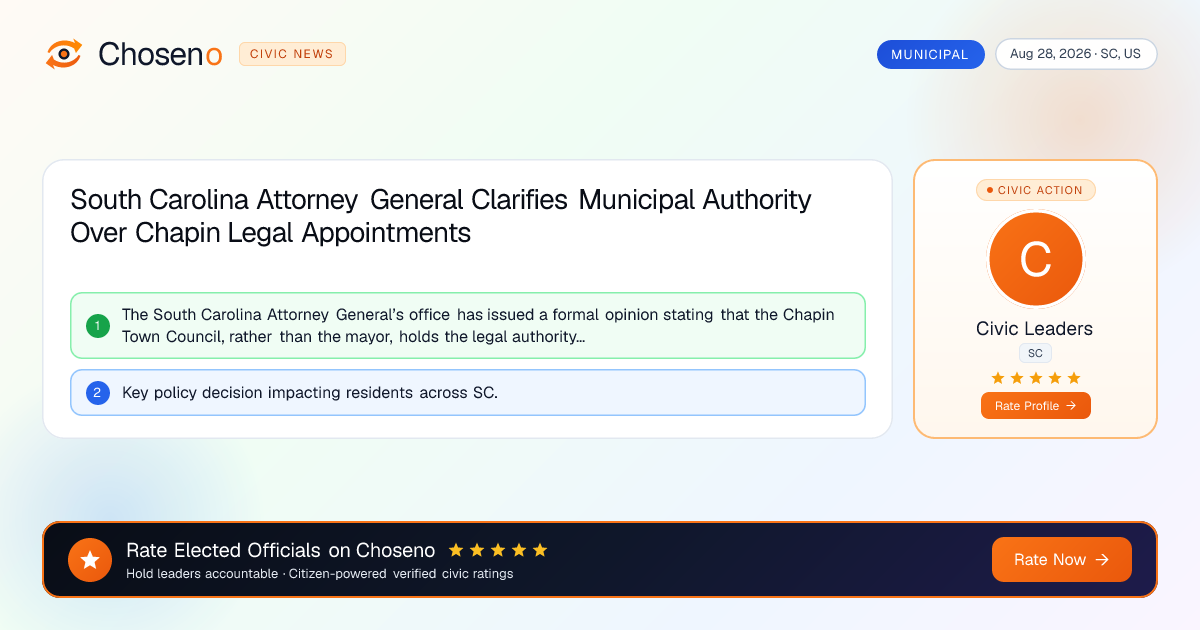
Washoe County Fire Victims Receive Emergency Housing Fund Allocation from Governor
Governor Joe Lombardo has directed state housing resources to support residents displaced by recent fires in Washoe County. This reallocation aims to provide immediate relief for those impacted by the disaster.
Read full article
Municipal
US Aug 28, 2026
Boston City Hall Hosts Private Elopement for Tricia Robredo and Partner
Tricia Robredo, daughter of Naga Mayor Leni Robredo, finalized a marriage ceremony at Boston City Hall. The event represents a private civil union with no reported impact on municipal tax expenditures.
Read full article