BREAKING
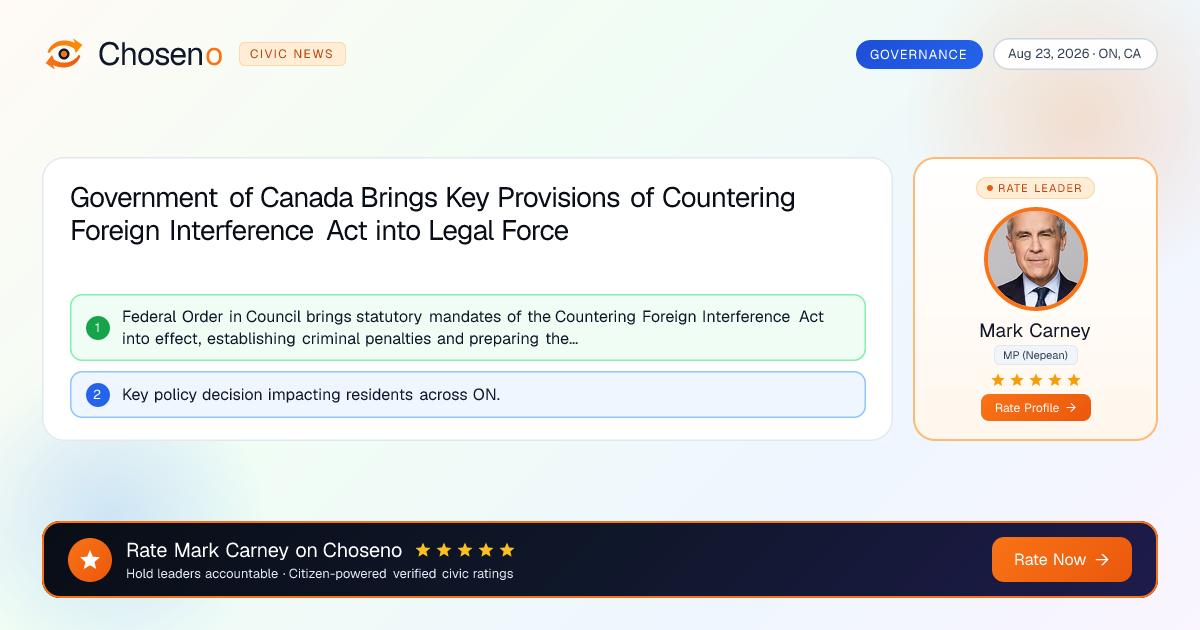
Government of Canada Brings Key Provisions of Countering Foreign Interference Act into Legal Force
Federal Order in Council brings statutory mandates of the Countering Foreign Interference Act into effect, establishing criminal penalties and preparing the mandatory Foreign Influence Transparency Registry.
Choseno National Security & Legal Desk August 24, 2026 1 min read ON, CA
★ Choseno Civic Briefing
Key Leaders
OTTAWA, ON — The Government of Canada announced that key statutory enforcement provisions of the Countering Foreign Interference Act (formerly Bill C-70) have officially entered into legal force following an Order in Council published in the Canada Gazette.
Strengthening Democratic Integrity and National Security
The enacted provisions establish new Criminal Code offenses for deceptive or covert acts conducted on behalf of foreign state entities to influence parliamentary proceedings, democratic elections, or community diaspora groups. The statute also equips the Canadian Security Intelligence Service (CSIS) with updated intelligence-sharing authorities to brief municipal mayors, provincial premiers, and university research institutions regarding specific threat vectors.
Public safety and justice ministers stated that defending Canadian democratic institutions against foreign interference is essential to protecting national sovereignty and safeguarding diverse cultural communities.
Transparency Registry Framework
Public Safety Canada is finalizing operational staffing for the Office of the Foreign Influence Transparency Commissioner, which will oversee public registration requirements for individuals lobbying on behalf of foreign principals.
Civil liberties federations emphasized the necessity of transparent administrative guidelines to prevent disproportionate scrutiny of lawful diplomatic or cultural exchange programs.
Full Registry Launch Timeline
The digital Foreign Influence Transparency Registry portal will officially launch for public filings in November 2026.
Sources
Rate the people mentioned in this article

Related Coverage in Governance
See all Governance newsGovernance
US Aug 24, 2026
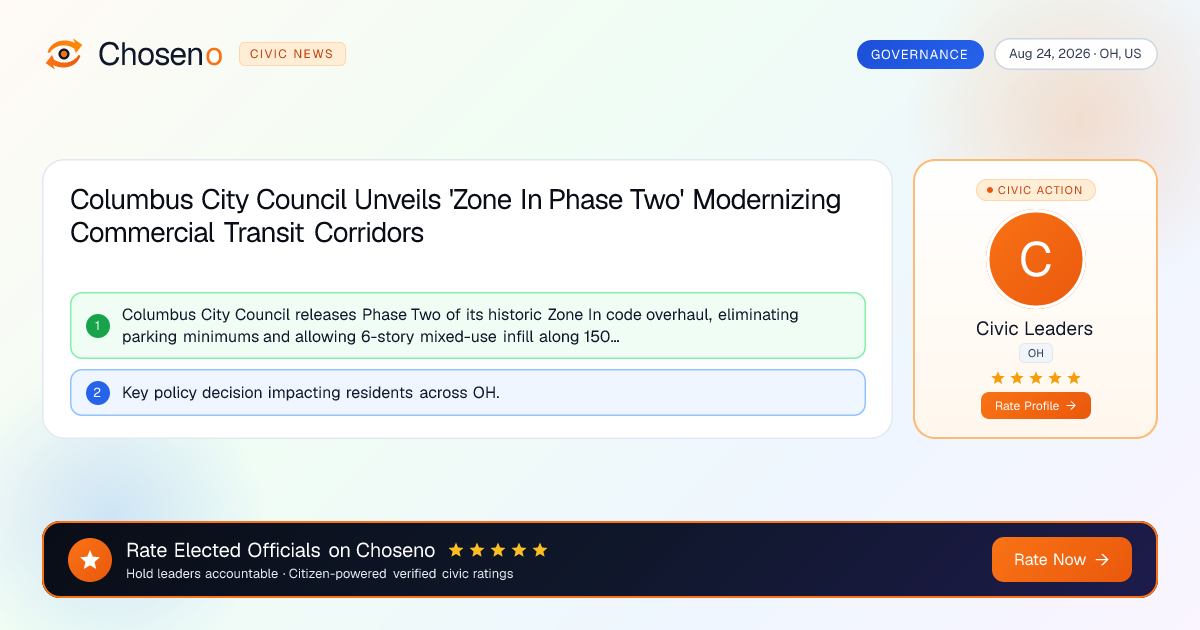
Columbus City Council Unveils 'Zone In Phase Two' Modernizing Commercial Transit Corridors
Columbus City Council releases Phase Two of its historic Zone In code overhaul, eliminating parking minimums and allowing 6-story mixed-use infill along 150 miles of arterial bus transit corridors.
Read full article
Governance
US Aug 24, 2026
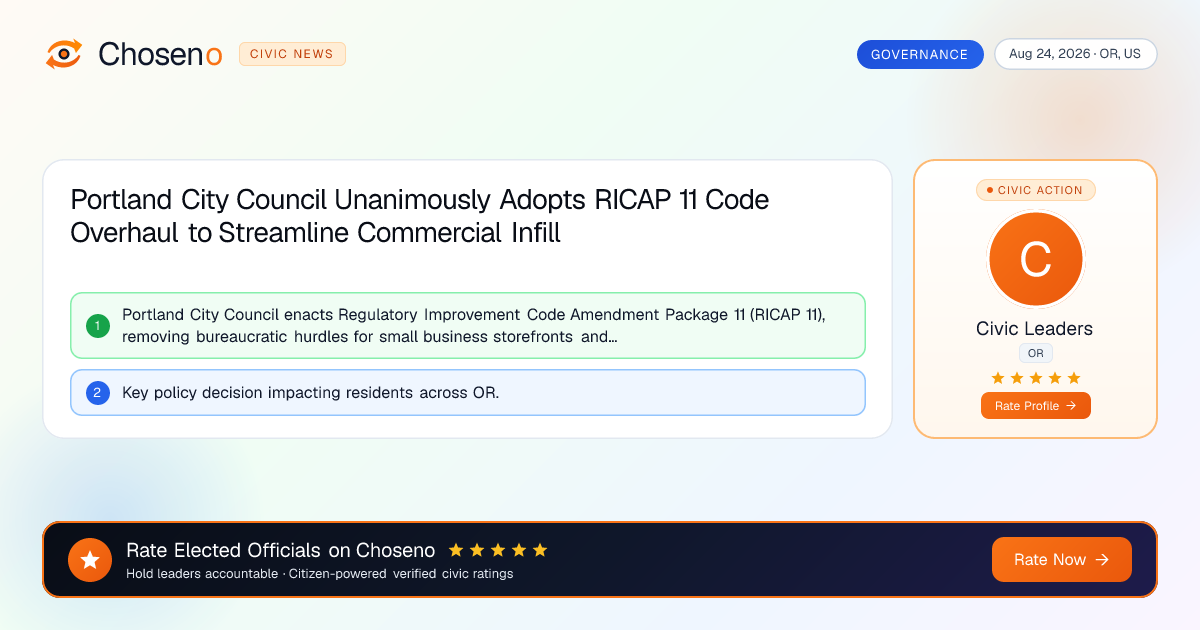
Portland City Council Unanimously Adopts RICAP 11 Code Overhaul to Streamline Commercial Infill
Portland City Council enacts Regulatory Improvement Code Amendment Package 11 (RICAP 11), removing bureaucratic hurdles for small business storefronts and adaptive reuse projects.
Read full article
Governance
CA Aug 24, 2026
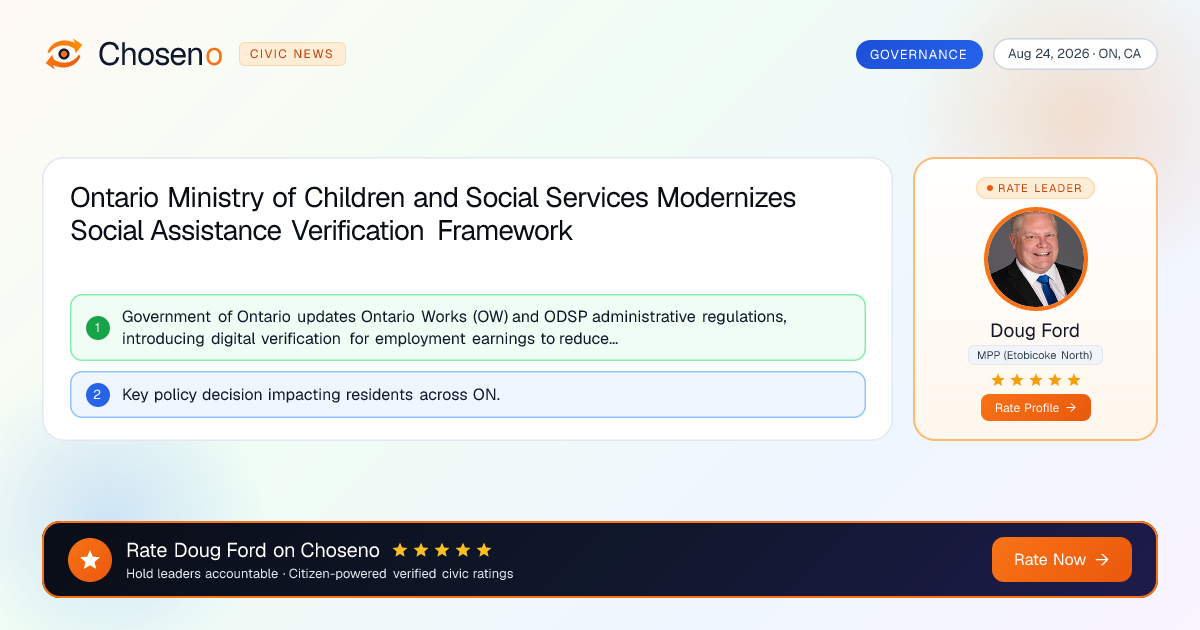
Ontario Ministry of Children and Social Services Modernizes Social Assistance Verification Framework
Government of Ontario updates Ontario Works (OW) and ODSP administrative regulations, introducing digital verification for employment earnings to reduce bureaucratic delays for recipients.
Read full article