Houston Misdemeanor Marijuana Arrests Surge Twelvefold Under Mayor John Whitmire Ahead of Ballot Vote
Houston Police Department data reveals misdemeanor marijuana arrests rose twelvefold under Mayor John Whitmire, fueling intense debate ahead of a November ballot referendum to deprioritize enforcement.
Choseno Justice & Civic Affairs Bureau September 4, 2026Updated September 6, 2026 3 min read TX, US
What do you think of the people in this story? Rate them anonymously — tap a face below.
HOUSTON — Misdemeanor marijuana arrests across Houston have escalated dramatically during the administration of Mayor John Whitmire, surging to more than twelve times the annual rate recorded under his predecessor, according to municipal law enforcement records disclosed through public records inquiries.
Records maintained by the Houston Police Department and published by Houston Public Media reveal that officers have made approximately 440 misdemeanor marijuana possession arrests annually under Whitmire's tenure. By comparison, the department recorded an annual average of roughly 35 misdemeanor marijuana arrests between 2021 and 2023 under former Mayor Sylvester Turner, highlighting a stark shift in frontline policing practices within Texas's most populous municipal jurisdiction.
The disclosure arrives less than two months before Houston voters head to the polls to decide the fate of the Houston Freedom Act, a certified municipal ballot initiative scheduled for the November 3 general election. Spearheaded by the grassroots advocacy organization Ground Game Texas after collecting more than 40,000 verified voter signatures, the referendum would formally direct the Houston Police Department to make the enforcement of Class A and Class B misdemeanor marijuana possession its lowest operational law enforcement priority.
The data presents a direct contrast to previous public statements by Mayor Whitmire. Speaking to reporters in August, Whitmire dismissed the upcoming ballot initiative as unnecessary, asserting that low-level cannabis possession had not been an active enforcement priority for municipal patrol officers in a considerable time. However, the internal department figures demonstrate an active rebound in custodial bookings, prompting renewed scrutiny from criminal justice reform advocates and civil rights organizations.
The records also document persistent demographic disparities in municipal enforcement. An analysis of five years of Houston policing data revealed that Black residents accounted for approximately 72% of all marijuana-related arrests across the city, despite comprising roughly 22.7% of Houston's total population according to U.S. Census Bureau estimates. Reform advocates argued that low-level arrests disproportionately burden minority communities with criminal records that restrict employment, housing, and educational opportunities.
Under Texas statutory law, possession of two ounces or less of marijuana constitutes a Class B misdemeanor punishable by up to 180 days in jail and fines up to $2,000, while possessing between two and four ounces is classified as a Class A misdemeanor. Although Harris County operates a pre-charge diversion framework designed to redirect eligible first-time offenders into educational programs rather than jail booking, police officers retain statutory discretion regarding whether to execute formal custodial arrests.
Representatives for the Houston Police Officers' Union suggested that variations in how misdemeanor citations and secondary charges are logged in departmental databases could account for statistical shifts, noting that patrol officers frequently encounter marijuana during traffic stops involving illegal firearms or outstanding felony warrants.
With the November election approaching, the clash between municipal enforcement data and ballot reform advocates is set to dominate local civic debates, testing voter support for municipal decriminalization initiatives in an otherwise conservative state legal environment, as civic groups mobilize across Harris County. The impending vote will provide a critical measure of urban voter sentiment regarding local police discretionary authority and cannabis policy across Texas.
Rate the people mentioned in this article

Related Coverage in Governance
See all Governance newsGovernance
US Sep 8, 2026
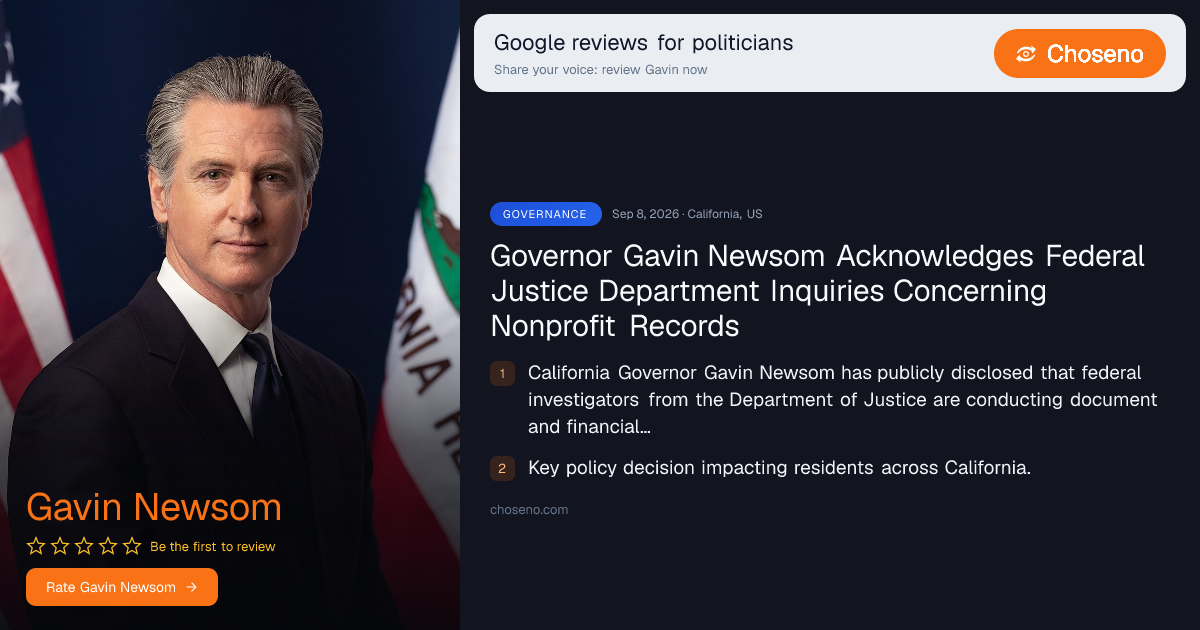
Governor Gavin Newsom Acknowledges Federal Justice Department Inquiries Concerning Nonprofit Records
California Governor Gavin Newsom has publicly disclosed that federal investigators from the Department of Justice are conducting document and financial inquiries involving him and First Partner Jennifer Siebel Newsom, prompting a fierce dispute over federal oversight impartiality and nonprofit compliance.
Read full article
Governance
US Sep 8, 2026
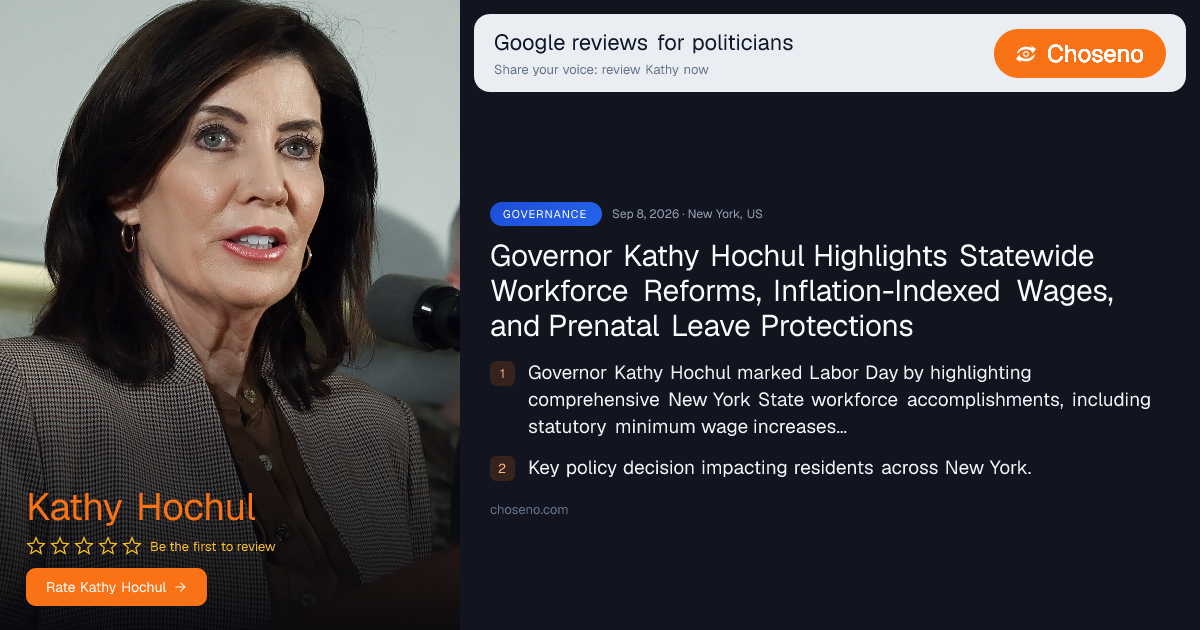
Governor Kathy Hochul Highlights Statewide Workforce Reforms, Inflation-Indexed Wages, and Prenatal Leave Protections
Governor Kathy Hochul marked Labor Day by highlighting comprehensive New York State workforce accomplishments, including statutory minimum wage increases indexed to inflation, implementation of the nation first mandatory paid prenatal leave law, and the full elimination of the state unemployment insurance debt.
Read full article
Governance
US Sep 7, 2026
New Jersey Governor Mikie Sherrill Reaches Agreement With 17 Public Sector Unions Waiving Health Premium Hikes
New Jersey Governor Mikie Sherrill and 17 state employee labor unions have finalized an agreement waiving scheduled 2027 health benefit contribution rate increases and creating an advisory working group to overhaul the State Health Benefits Program.
Read full article