North Carolina Initiates Labor Day 'Booze It & Lose It' Enforcement Campaign
The state of North Carolina has launched a targeted enforcement initiative aimed at reducing impaired driving during the Labor Day holiday period. This campaign involves increased law enforcement presence on roadways to enhance public safety.
Choseno Civic News Desk August 28, 2026 1 min read NC, US
Dateline Lead
RALEIGH, NC — The state of North Carolina has officially launched its annual Labor Day "Booze It & Lose It" enforcement campaign. This initiative, reported by WCTI, focuses on heightened police presence and traffic monitoring throughout the holiday period.
Policy & Taxpayer Impact
The campaign functions as a specialized enforcement operation designed to deter impaired driving. Taxpayer resources are directed toward increased patrol hours and administrative coordination between state and local law enforcement agencies to ensure compliance with traffic safety laws during high-travel periods.
Political & Legal Stakes
State officials utilize these campaigns to uphold traffic safety statutes and reduce the frequency of alcohol-related vehicular incidents. The legal framework relies on existing impaired driving laws, with the campaign serving as a high-visibility enforcement mechanism to ensure these laws are strictly observed.
The Debate
Proponents of the campaign argue that the increased visibility of law enforcement is a necessary deterrent that saves lives by preventing impaired drivers from entering the road. Conversely, critics often raise concerns regarding the allocation of public funds toward saturation patrols and the potential for increased traffic stops to impact civil liberties, suggesting that resources might be better utilized in long-term educational or infrastructure-based safety programs.
Public Accountability Context
As the "Booze It & Lose It" campaign proceeds, the state remains responsible for reporting the outcomes of these enforcement efforts. Citizens can evaluate the effectiveness of this policy by monitoring subsequent state reports on traffic incident statistics and the number of citations issued during the Labor Day window.
Related Coverage in Public Safety
See all Public Safety newsPublic Safety
US Aug 25, 2026
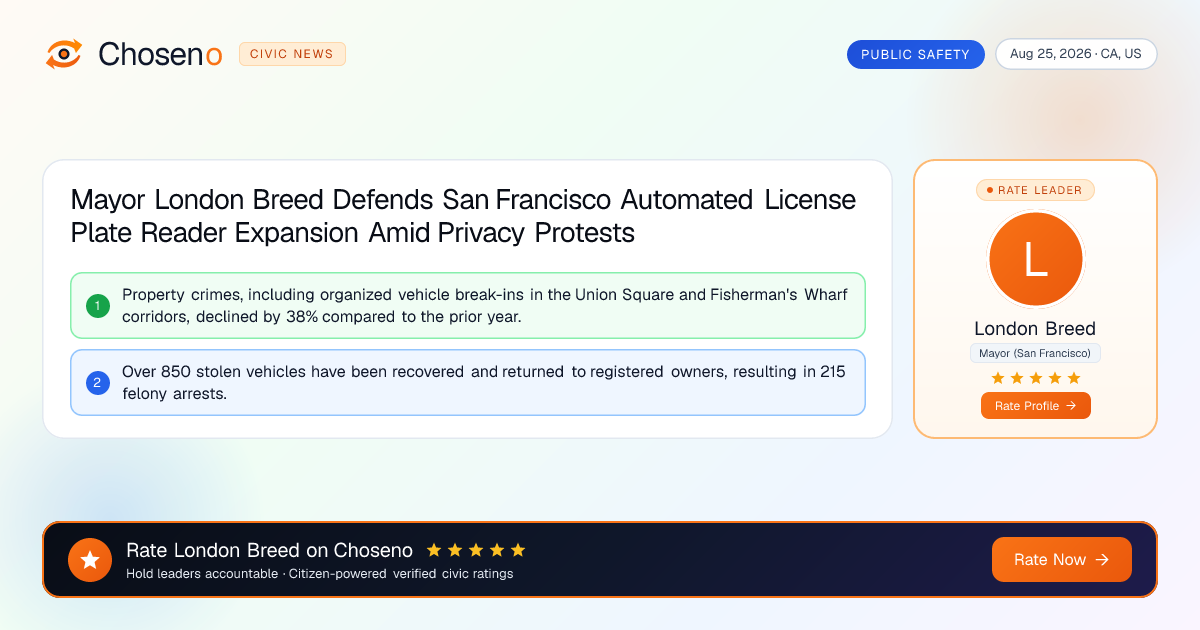
Mayor London Breed Defends San Francisco Automated License Plate Reader Expansion Amid Privacy Protests
San Francisco Mayor London Breed and the SFPD defend the deployment of 400 automated license plate readers across city intersections, clashing with privacy advocates over surveillance oversight.
Read full article
Public Safety
US Aug 25, 2026
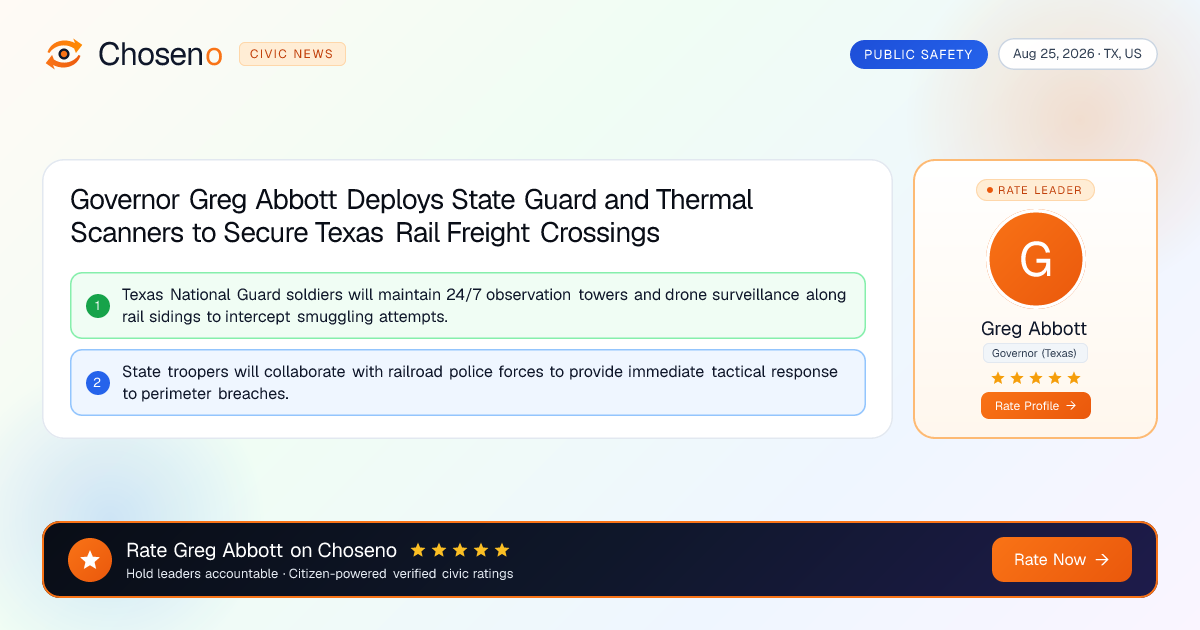
Governor Greg Abbott Deploys State Guard and Thermal Scanners to Secure Texas Rail Freight Crossings
Texas Governor Greg Abbott orders the deployment of Texas National Guard units and high-capacity optical thermal scanners along international railway bridges in Eagle Pass and El Paso.
Read full article
Public Safety
US Aug 25, 2026
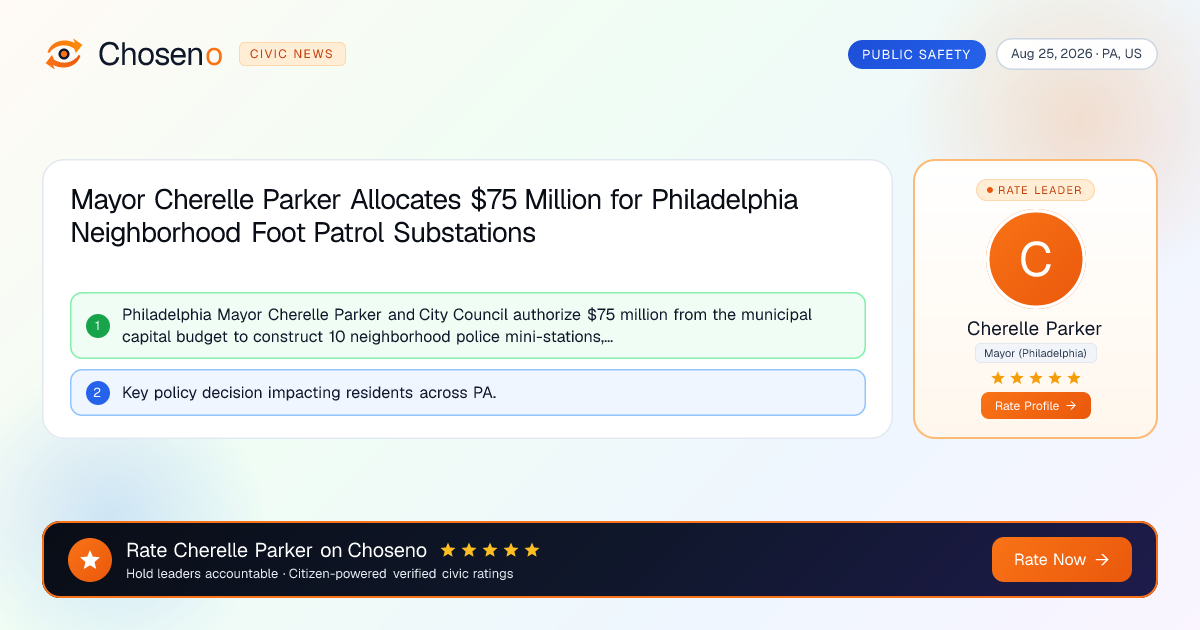
Mayor Cherelle Parker Allocates $75 Million for Philadelphia Neighborhood Foot Patrol Substations
Philadelphia Mayor Cherelle Parker and City Council authorize $75 million from the municipal capital budget to construct 10 neighborhood police mini-stations, deploy 200 walking beat officers, and install high-definition commercial corridor camera networks.
Read full article