Wyoming Governor Challenges Federal Election Monitor Presence in State
Governor Mark Gordon has formally expressed opposition to the conduct of federal election monitors operating within Wyoming. The dispute centers on the scope of federal oversight during the state's electoral processes.
Choseno Civic News Desk August 28, 2026 1 min read WY, US
Governor Mark Gordon has publicly criticized the presence and conduct of federal election monitors currently operating within Wyoming. According to reporting by The Washington Post, the governor characterized the behavior of these federal representatives as aggressive, signaling a growing tension between state election administration and federal oversight efforts.
The governor’s concerns highlight an ongoing debate regarding the extent of federal authority in local and state-level election management. While federal monitors are occasionally deployed to ensure compliance with federal voting rights laws, state officials often maintain that the primary responsibility for conducting elections rests with local and state authorities. By labeling the monitors' actions as aggressive, the governor is asserting that the federal presence has exceeded the bounds of standard observation and has instead become an intrusive element in the state's democratic process.
This development reflects broader national discussions about the balance of power between state governments and federal agencies during election cycles. As states continue to manage their own voting procedures, the friction caused by federal intervention remains a significant point of contention for officials who prioritize state sovereignty in election administration. The governor’s stance serves as a formal pushback against the current scope of federal monitoring, emphasizing the state's desire to maintain control over its own electoral environment without what it perceives as undue external pressure.
Rate the people mentioned in this article

Related Coverage in Politics
See all Politics newsPolitics
CA Aug 28, 2026
North Bay MPP Travel Expense Allocation Under Review Following Split-Billing Disclosure
Questions have emerged regarding the practice of splitting travel expenses by a North Bay MPP. The scrutiny focuses on the transparency and procedural adherence of provincial reimbursement claims.
Read full article
Politics
US Aug 28, 2026
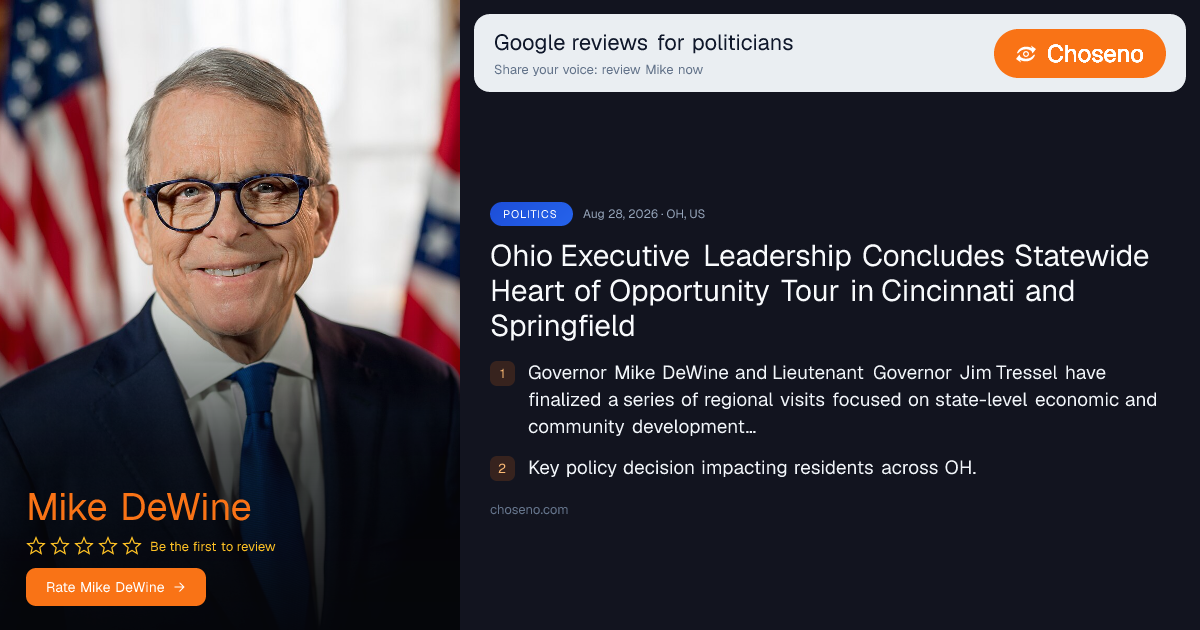
Ohio Executive Leadership Concludes Statewide Heart of Opportunity Tour in Cincinnati and Springfield
Governor Mike DeWine and Lieutenant Governor Jim Tressel have finalized a series of regional visits focused on state-level economic and community development initiatives. The tour served as a concluding engagement for the administration's current outreach efforts across Ohio's urban centers.
Read full article
Politics
US Aug 28, 2026
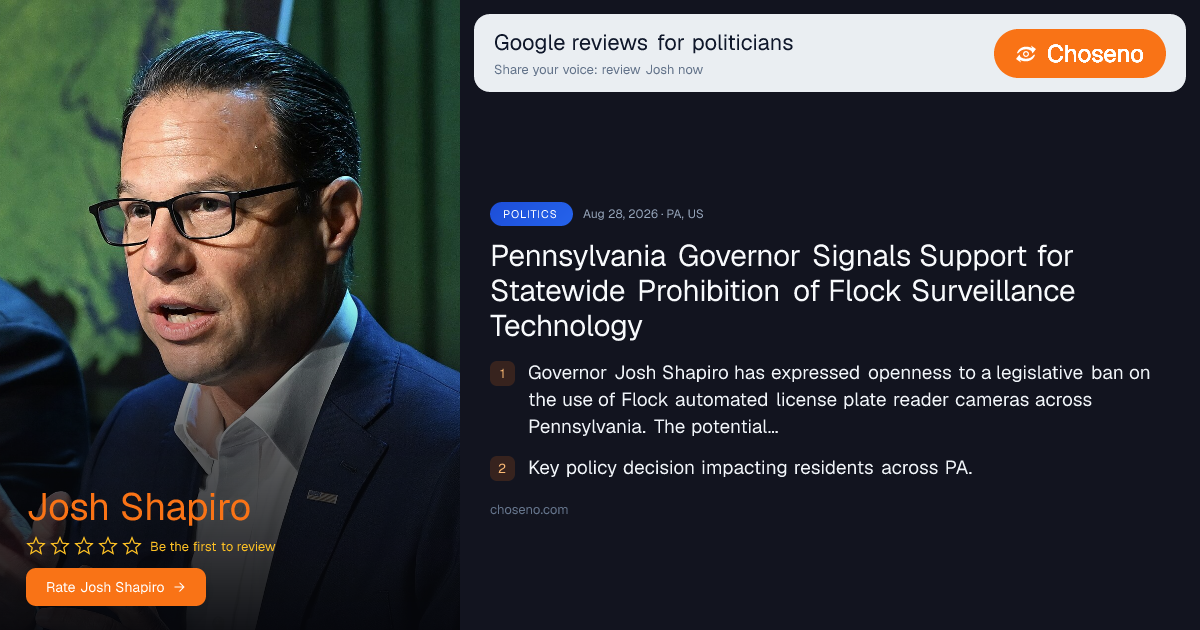
Pennsylvania Governor Signals Support for Statewide Prohibition of Flock Surveillance Technology
Governor Josh Shapiro has expressed openness to a legislative ban on the use of Flock automated license plate reader cameras across Pennsylvania. The potential policy shift follows ongoing public and legislative discourse regarding the privacy implications of widespread automated surveillance.
Read full article